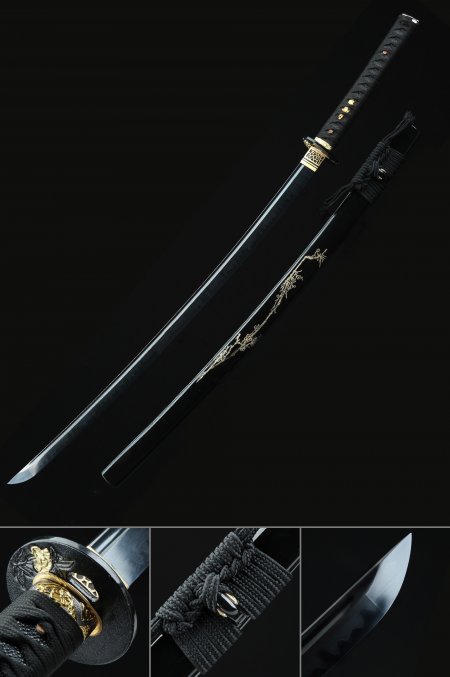
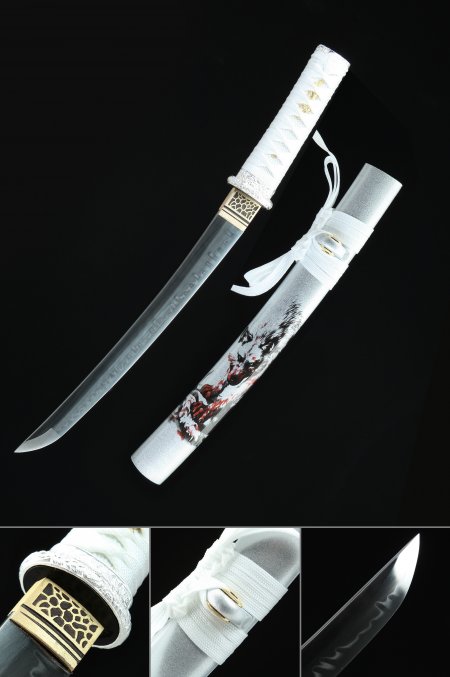
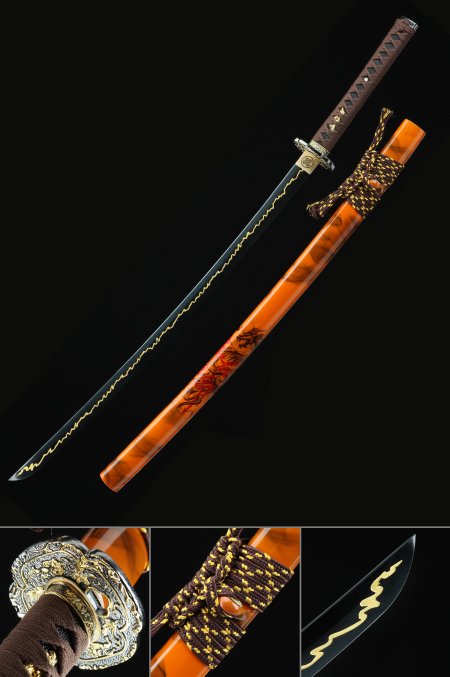
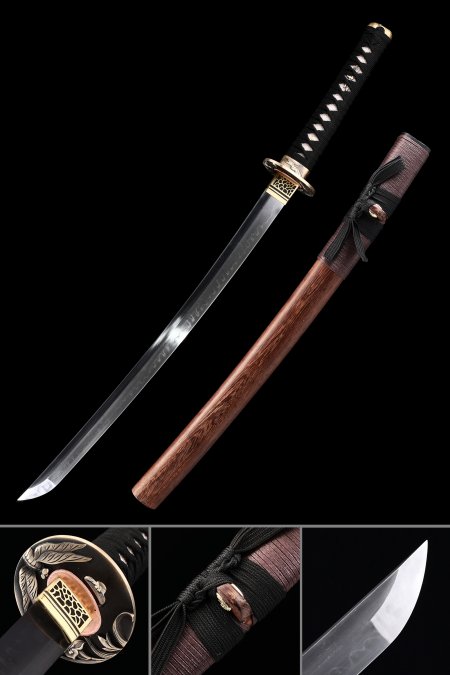
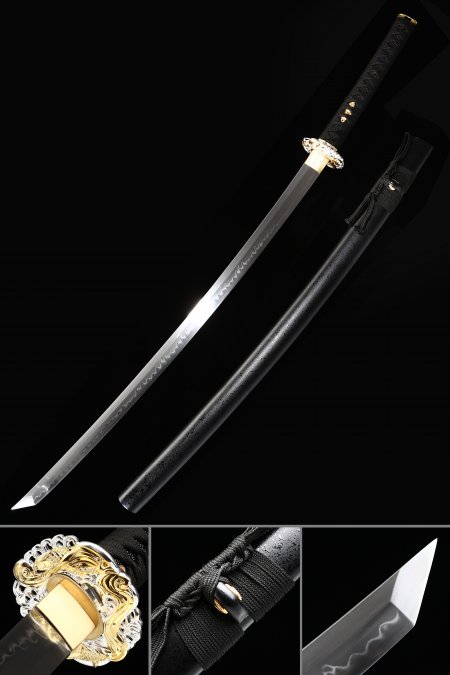
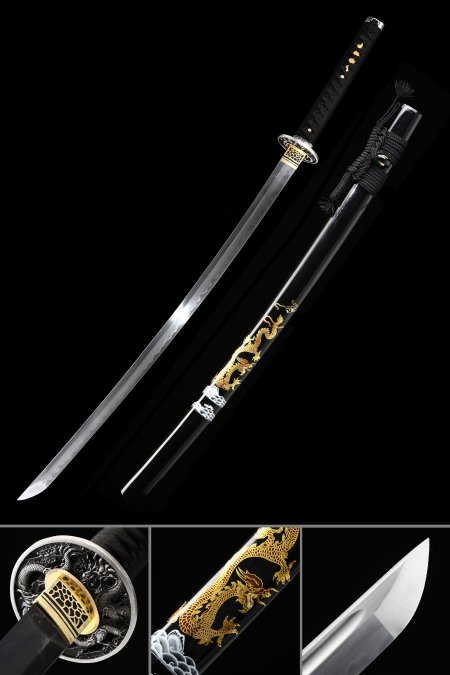
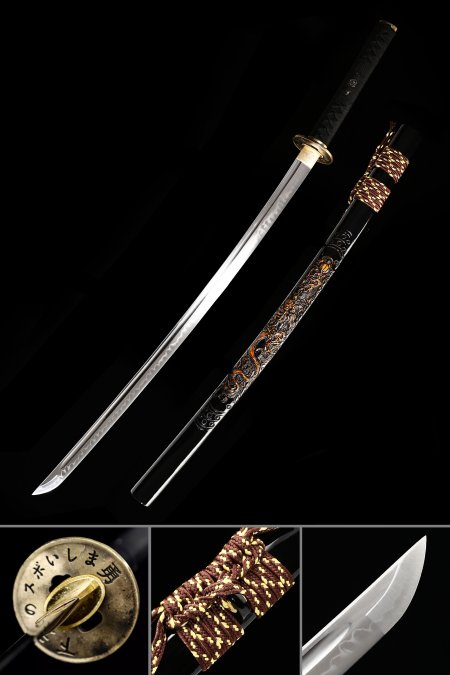
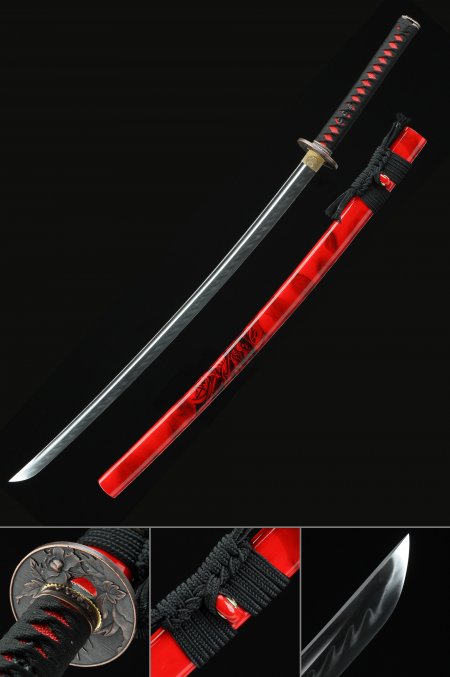
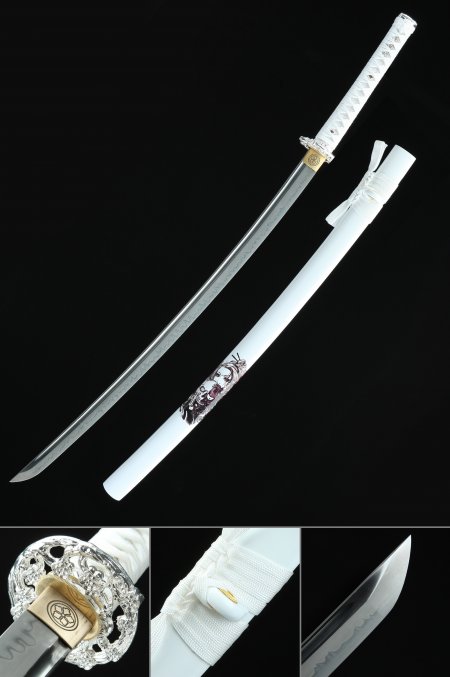
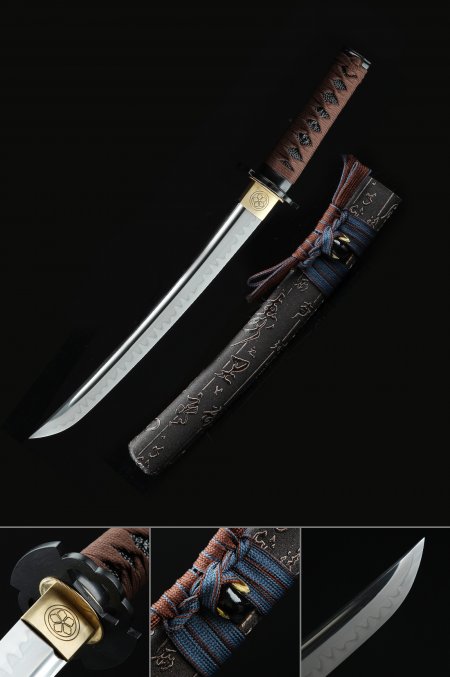
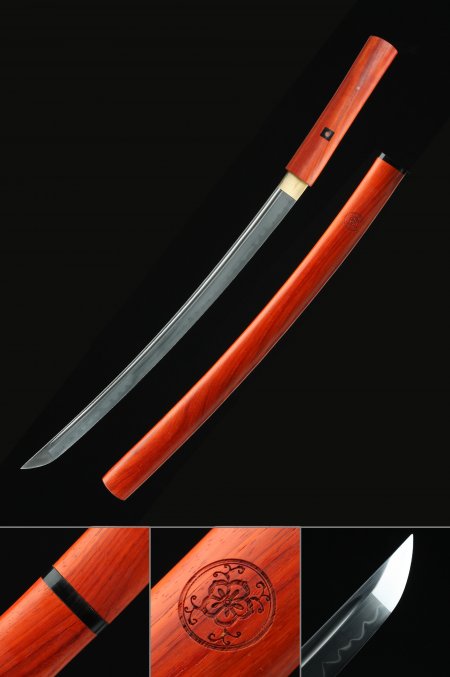
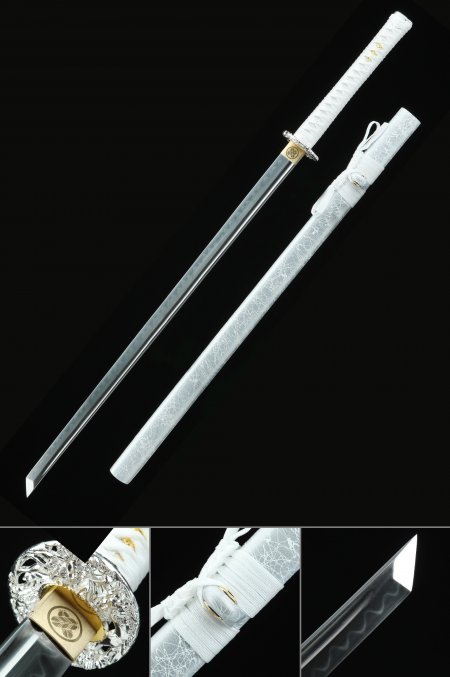
How does clay tempering affect the hamon on these katana?
Updated Mar 2026
Clay tempering is a differential heat-treatment process in which a layer of clay is applied along the spine of the blade before quenching. The clay insulates the spine, allowing it to cool more slowly and remain relatively soft and tough, while the exposed edge cools rapidly and hardens to a higher Rockwell rating. The boundary between these two zones is the hamon — a visible crystalline activity line that runs the length of the blade. Because the clay is applied by hand, no two hamon are identical; each shows a distinct pattern of nie (fine martensitic crystals) and nioi (misty crystalline activity). On 1065 and T10 carbon steel blades, this process produces the most pronounced and collectible hamon, and is one of the primary quality markers collectors use to assess a sword's authenticity and craftsmanship.