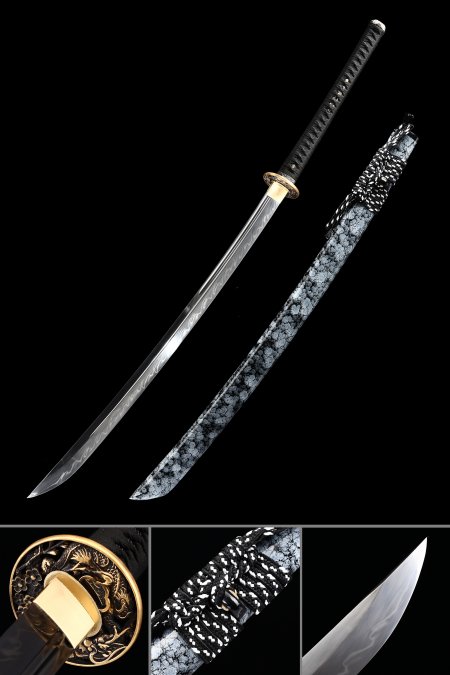
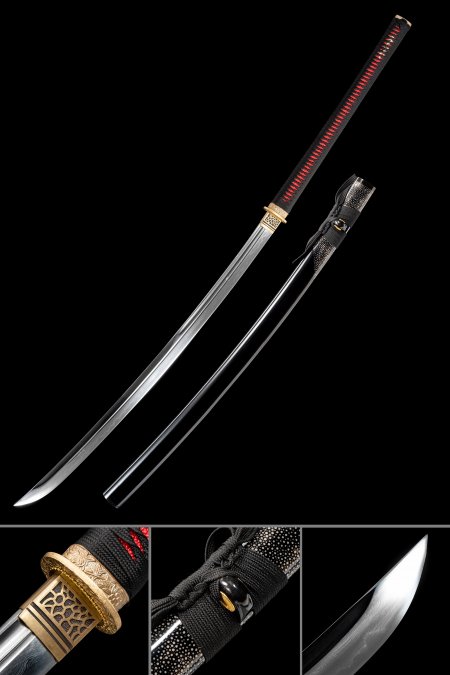
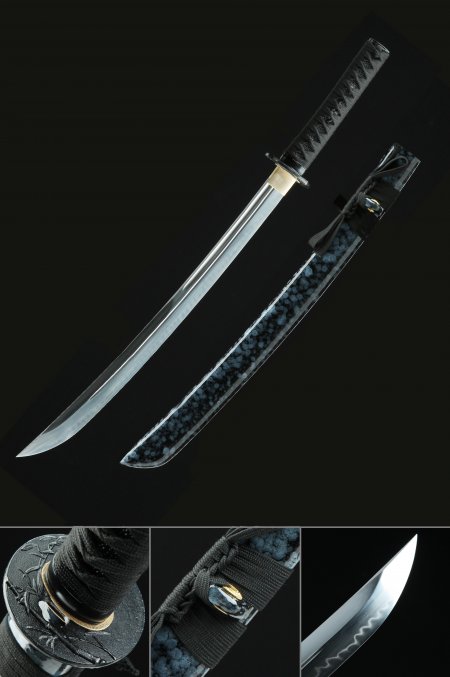
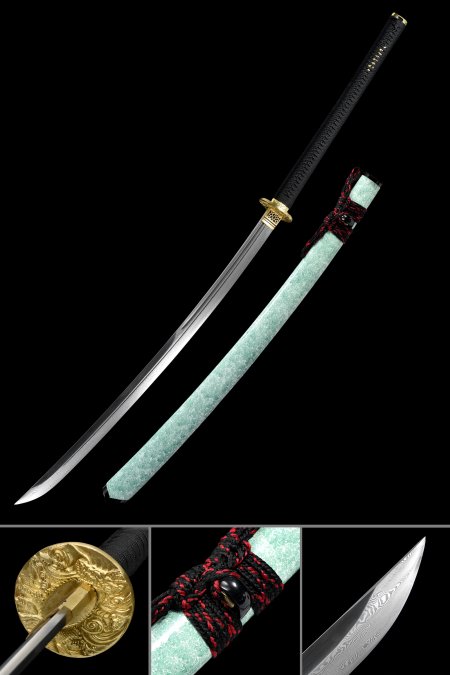
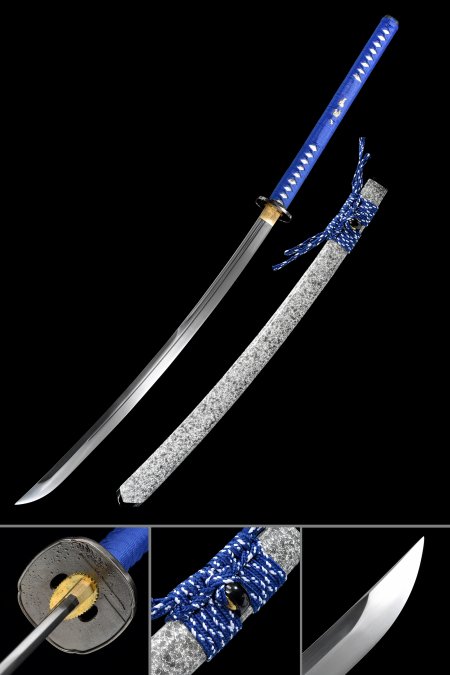
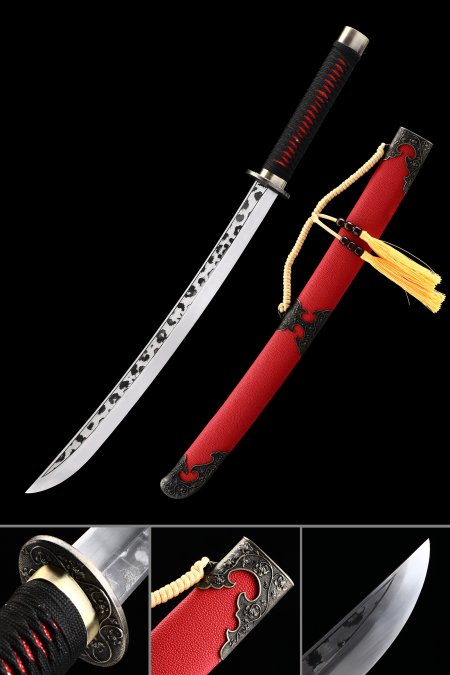
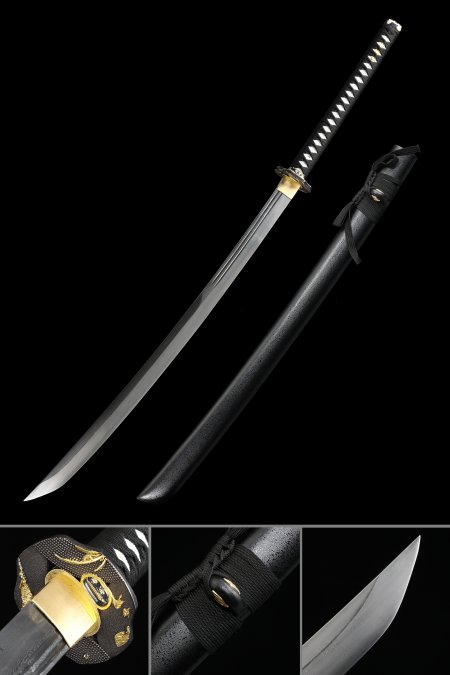
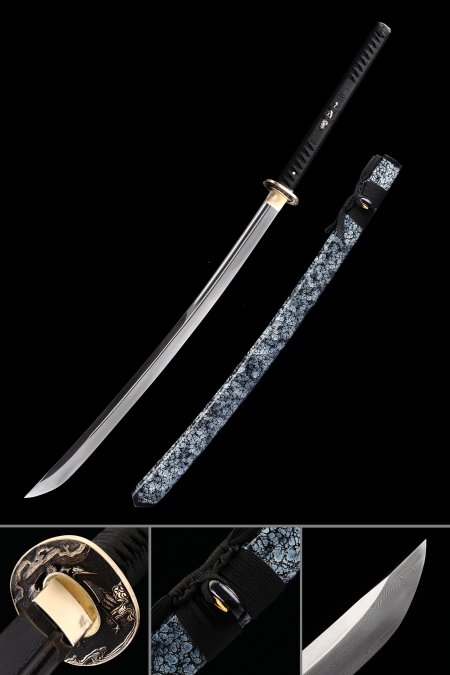
Can I tell if a hamon is real or just etched onto the blade?
Updated Feb 2026
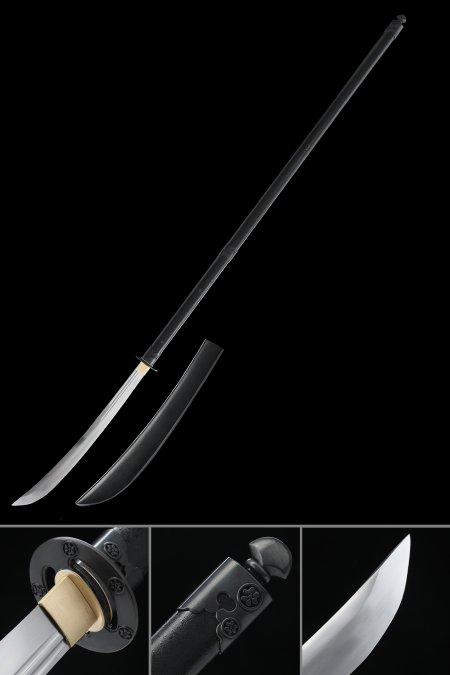
A genuine hamon created through clay tempering is embedded in the steel's crystalline structure, so it appears as a subtle, three-dimensional boundary visible under shifting light. Tilt the blade slowly under a single light source: a real hamon will reveal depth, with the harder edge zone and softer spine zone reflecting light at slightly different angles and intensities. An etched or acid-applied line, by contrast, sits on the surface and looks uniformly flat regardless of the viewing angle. All naginata in this collection are clay tempered by hand, producing authentic hamon lines that can be verified through this simple tilt test. Close inspection with a loupe will also show nie (individual martensite crystals) along the boundary in a genuinely tempered blade.