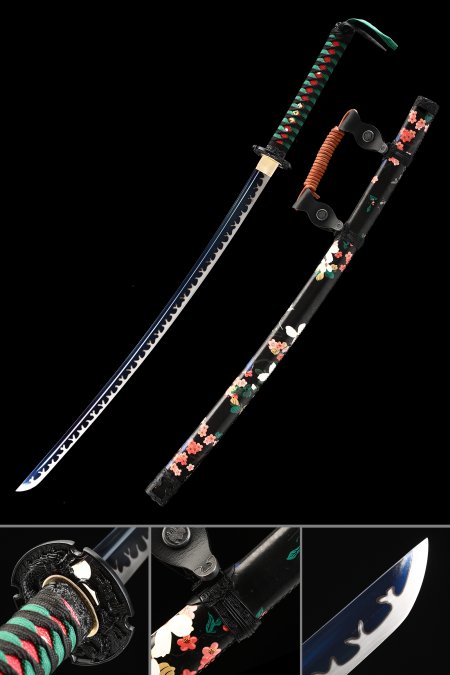
Teal Sageo Tachi

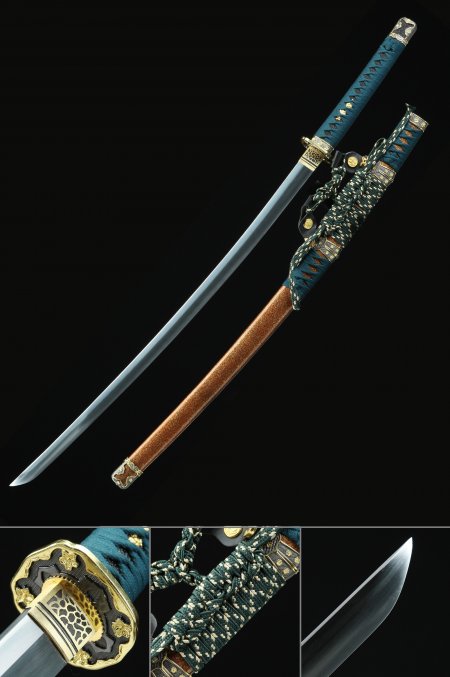
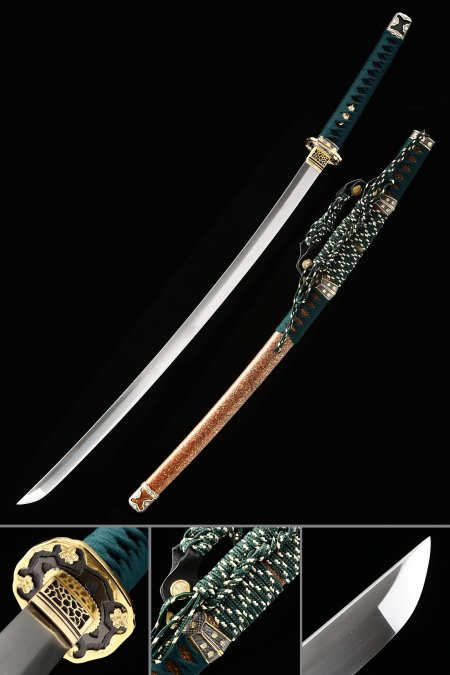
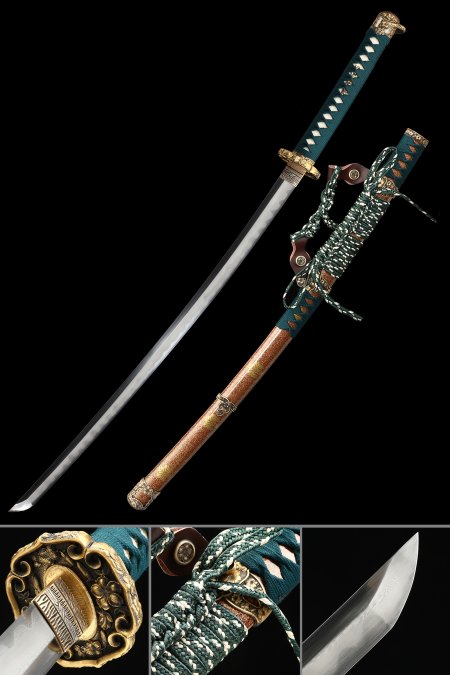
Teal sageo tachi swords bring together the sweeping elegance of classical Japanese tachi mounts and the vivid artistry of hand-wrapped teal silk ito and coordinated sageo cord. Each piece in this collection is crafted with forged high-carbon or high-manganese steel blades, ornate tsuba, and lacquered hardwood saya - assembled as a complete koshirae for serious display and collecting. Enjoy free shipping on your order, with hassle-free returns backed by our collector-focused service.
Showing 4 Products

Related Collections

Snake Tsuba Katana41 items


86 Reviews

Flower Tsuba Katana61 items


389 Reviews

Vine Saya Katana47 items


297 Reviews

Wave Tsuba Katana40 items


169 Reviews

Frequently Asked Questions

What makes tachi koshirae different from katana mounts?
A tachi koshirae is designed for suspension from the waist with the edge facing downward, which directly influences its proportions and fittings. The saya on a tachi typically features two sets of kurikata - the knobbed fixtures through which the sageo cord is threaded - allowing the sword to hang securely in the correct carry position rather than being thrust through a sash as a katana would be. The tsuka (handle) is also generally longer and more curved to accommodate the different draw angle. On display, a complete tachi koshirae with matched sageo cord, ito wrap color, and tsuba design presents a far more unified aesthetic than a blade mounted with uncoordinated fittings - which is why collectors pay close attention to the harmony of the full ensemble rather than focusing on the blade alone.
How does clay-tempered 1095 differ from high-manganese steel?
Clay-tempered 1095 high-carbon steel undergoes a two-zone hardening process: a layer of refractory clay is applied to the spine before quenching, causing the edge zone to harden rapidly into a tough martensitic structure while the spine cools more slowly and retains flexibility. The result is a visible, naturally formed hamon line along the edge - a feature that distinguishes hand-forged work from machine-ground production. High-manganese steel, by contrast, achieves its hardness through alloy chemistry rather than differential heat treatment. It is harder across the full cross-section and offers excellent resistance to surface wear and environmental oxidation, making it well-suited for long-term display in varied humidity conditions. For collectors who value traditional forging signatures, clay-tempered 1095 is the more historically resonant choice; for those prioritizing surface durability with minimal maintenance, high-manganese steel is a practical alternative.
Does the sageo cord serve any functional purpose on a display piece?
On historically functional tachi, the sageo was threaded through the kurikata to secure the saya during movement and to tie off the saya when the sword was drawn. On a display or collectible tachi, the sageo still plays an important role - not functional, but compositional. A well-dressed sageo cord that matches the ito wrap color (such as teal on teal) reinforces the visual unity of the koshirae, signals attention to detail in the mounting, and completes the silhouette of the piece when displayed on a stand. Collectors often evaluate koshirae completeness by whether the sageo is original to the mount or mismatched, so pieces offered with a coordinated sageo are generally considered more display-ready and collectible than those without.
How should I store a tachi to preserve the ito and saya finish?
Tachi-length pieces should ideally rest horizontally on a two-tier sword stand sized for odachi or tachi proportions - stands sized for katana are often too short and can stress the saya at the koiguchi. Keep the display area away from direct sunlight, which can fade teal ito and alter lacquer color over months of exposure. For the saya, dust with a clean, dry microfiber cloth rather than applying any liquid polish, which can lift lacquer or dull matte finishes. Twice a year, remove the blade from the saya, wipe away any residual oil, and apply a light coat of choji oil or food-grade mineral oil before re-seating it. Avoid storing a steel blade inside a lacquered saya for extended periods in high-humidity environments without periodic airing, as trapped moisture can cause surface oxidation against the wood interior.
Are teal ito tachi pieces a good choice as a collector's gift?
Teal ito tachi pieces make a distinctive gift for collectors interested in Japanese sword aesthetics because the color choice is less common than standard black or navy wraps, giving the piece an individual character that stands out in a display. A complete koshirae - with matching sageo, fitted tsuba, and lacquered saya - communicates that the gift was thoughtfully selected rather than picked at random. For someone building a themed display around a specific color palette or period aesthetic, a teal-mounted tachi can serve as the visual centerpiece around which other pieces are organized. It is worth selecting a piece where the tsuba metalwork (gold, bronze, or shibuichi tones) complements the teal ito rather than clashing with it, as cohesion between fittings is what separates a display-quality collectible from a generic decorative piece.

Customer Reviews

Harris Collins North Carolina, United States

It was very nice, and very sharp as stated in the in the details. My only problem was the gold cap at the end of the sheath was not properly secured and popped right off. It wasn't a big deal because I was able to fix it myself, but you would hope when you are spending 100s of dollars on these that they would take the time to properly do everything. Besides that though, it truly was a nice buy.

Clay Tempered 1095 Carbon Steel Tachi Sword with Teal Ito Wrap and Bronze-Shimmer Saya in Gold Fittings Clay Tempered 1095 Carbon Steel Tachi Sword with Teal Ito Wrap and Bronze-Shimmer Saya in Gold Fittings
Cart 0 Items

Your cart is empty