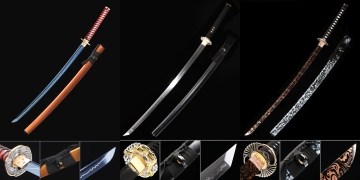
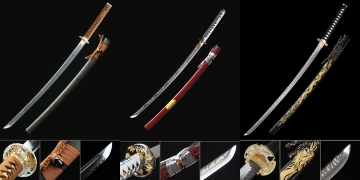
What makes a tachi different from a katana in terms of design?
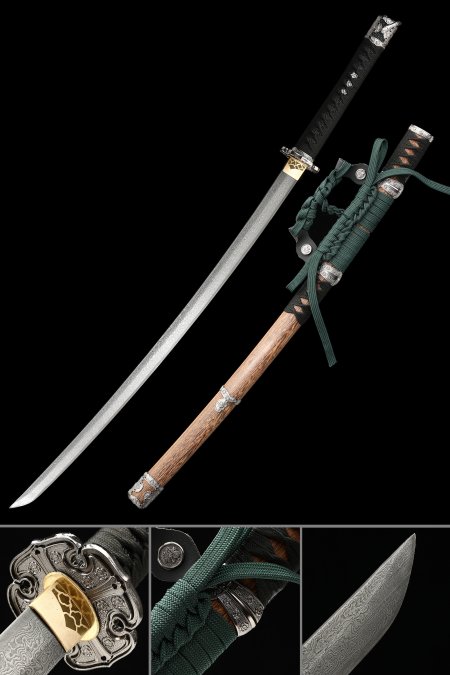
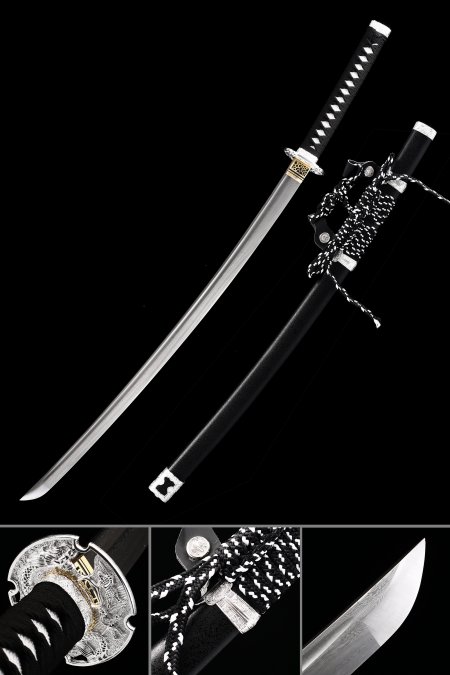
The tachi is generally longer than a katana, with a more pronounced curvature along the blade and a nagasa that often exceeds 70 cm. Historically, the tachi was suspended edge-down from the belt using specific hardware called the ashi, while the katana was thrust edge-up through the obi. This difference in carry orientation led to subtle distinctions in how the kissaki, sori, and overall geometry were optimized. For collectors, recognizing these proportional differences is key to appreciating why a tachi display stand positions the sword edge-down — it's not a stylistic choice, but a historically accurate presentation standard.
How are silver and gold tsuba finishes applied to these swords?
The tsuba on these tachi swords feature metallic silver and gold toning achieved through a combination of base casting, surface finishing, and applied patination or gilding techniques depending on the specific piece. Unlike simple paint or powder coating, quality metallic tsuba work involves layering and polishing that gives the surface a dimensional quality — different lighting conditions reveal different depths within the same fitting. The tsuba is then seated against the habaki and secured by the seppa washers on either side, ensuring the fitting is stable and properly integrated into the sword's overall assembly rather than simply decorative.
Is Damascus steel on a tachi purely decorative or does it affect durability?
Damascus steel on display tachi serves both an aesthetic and a structural role. The folded-layer construction creates the characteristic watered-grain visual pattern across the blade surface, which is a major draw for collectors. From a material standpoint, the forging process that produces those layers also works the steel, refining its grain structure. That said, for a display and collectible piece, the visual impact of Damascus patterning is the primary value proposition. Each blade will show a slightly unique pattern, meaning no two Damascus tachi in this collection are visually identical — a meaningful distinction for collectors who value individuality in their pieces.
How should I maintain and store a tachi with metallic fittings?
Maintaining a tachi with silver or gold-toned fittings requires attention to both the blade and the koshirae components. For the blade, apply a thin coat of choji oil every few months using a soft cloth, working from habaki to kissaki to prevent oxidation. Avoid touching the polished blade surface directly with bare hands — skin oils accelerate surface spotting. For the metallic tsuba and other fittings, a dry microfiber cloth is sufficient for light dust removal; avoid oil on the fittings themselves as it can attract particulate and discolor softer metal surfaces over time. Store the sword horizontally in a low-humidity environment, ideally in a wooden sword bag or on a proper display stand away from direct sunlight or heat sources.
What should I look for when pairing a tachi with a display stand?
Pairing a tachi with the right stand comes down to orientation and proportional fit. Because tachi are displayed edge-down, you need a stand specifically designed for this mounting style — a standard katana rack will invert the presentation and misrepresent the sword's historical context. Length is equally important: tachi commonly run longer than katana, so confirm the stand's resting arms are spaced to support the blade and saya without stressing the habaki junction. For silver and gold tsuba tachi, a dark lacquered wood stand creates strong visual contrast that allows the metallic fittings to stand out as the focal point. Some collectors also prefer matching tsuba shapes to stand carvings for a cohesive display aesthetic.