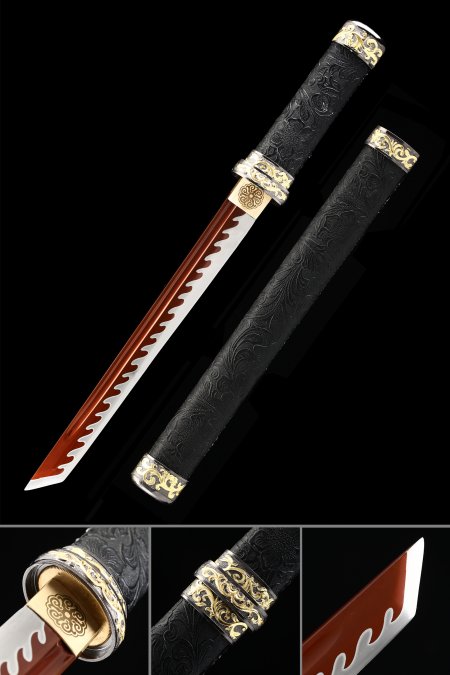
What makes a tanto a hamidashi style?
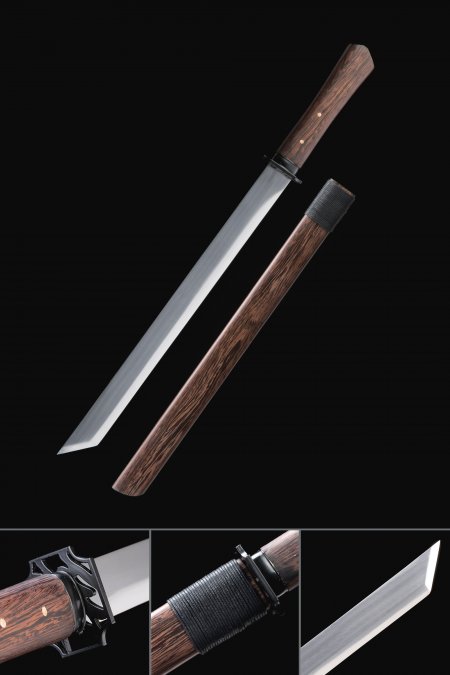
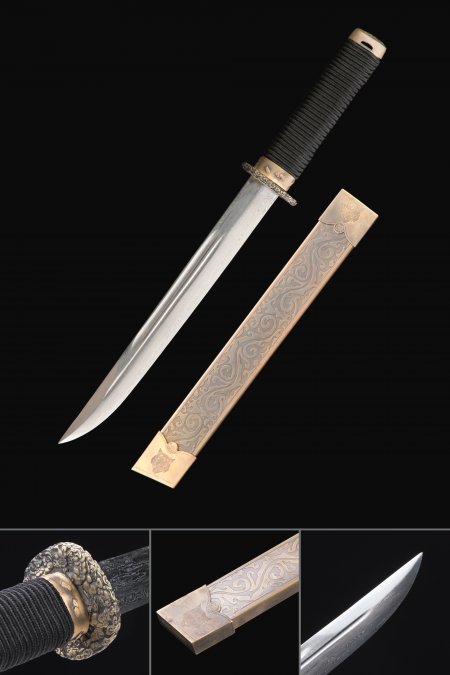
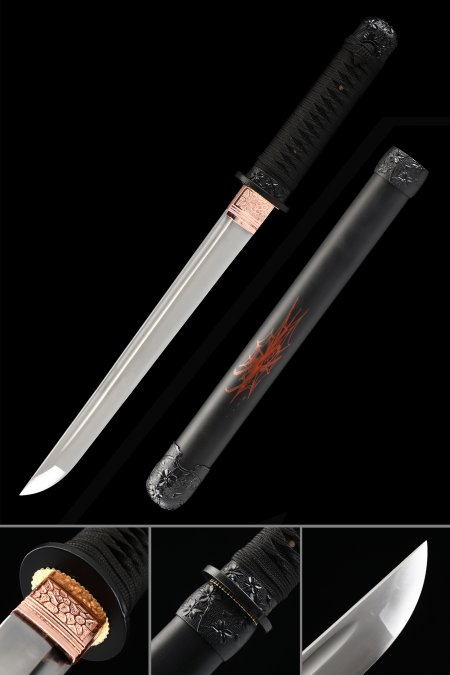
A hamidashi tanto is distinguished by its guard format: a small tsuba with a single notch (the "hamidashi" cutout) that sits flush against the habaki, the blade collar. This is the middle ground between the fully guardless aikuchi tanto and a standard tanto fitted with a full-size tsuba. The hamidashi guard is intentionally compact, typically 2–3 cm in diameter, allowing the hilt assembly to remain sleek while still providing a defined visual separation between handle and blade. In classical Japanese blade culture, this mounting style was associated with refined personal carry pieces, often fitted with higher-quality metalwork than utilitarian short blades. For display collectors today, the hamidashi format is prized because the small tsuba acts as a focal point for decorative engraving, casting, and patination work without dominating the overall composition.
How does manganese steel compare to T10 or Damascus in a tanto collectible?
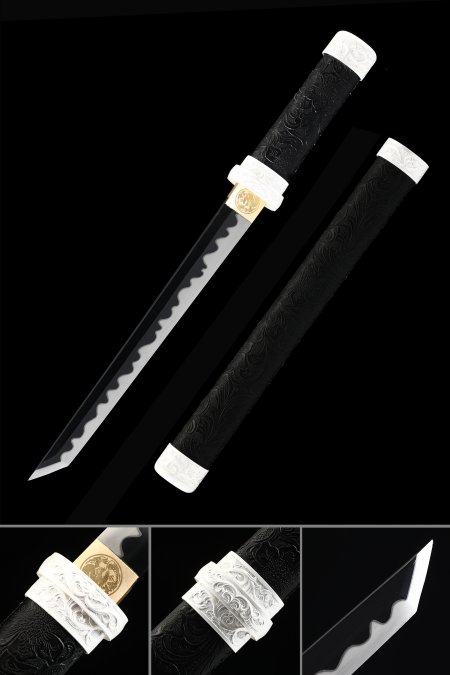
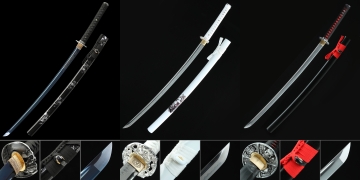
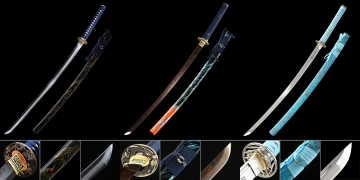
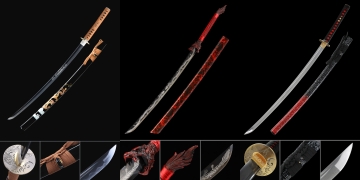
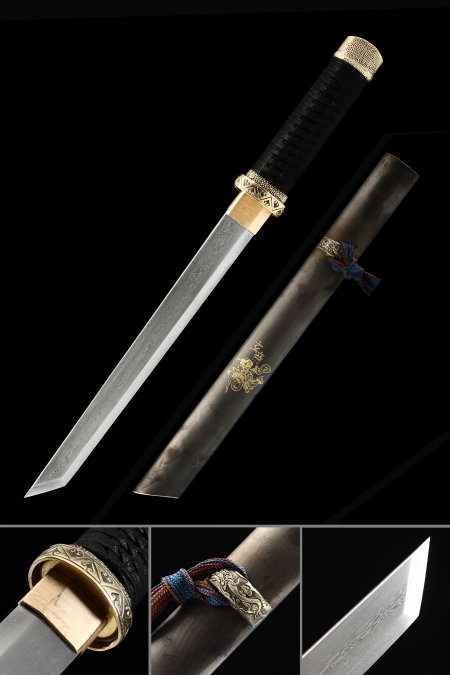
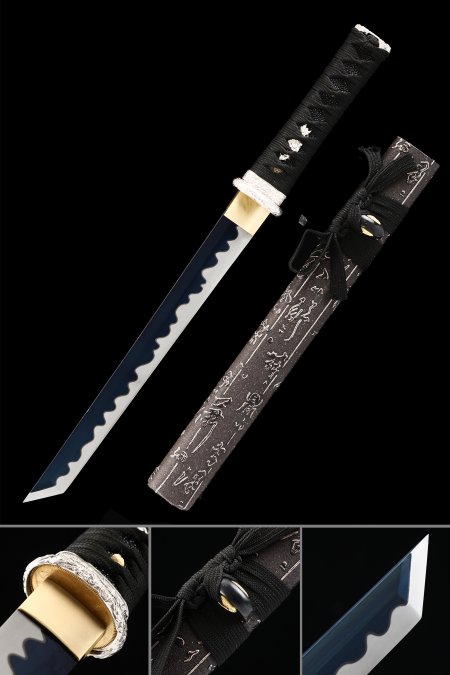
These three materials serve different collector priorities. Manganese steel is an industrial-grade alloy prized in this context for its ability to accept vivid surface treatments — the deep blue and red blade finishes seen in several pieces in this collection are achieved through controlled oxidation or coating processes that manganese steel holds particularly well. T10 is a high-carbon tool steel that responds to clay-tempering during forging, producing a genuine hamon (temper line) and a finer crystalline surface. It is the preferred choice for collectors who prioritize historical process fidelity. Damascus steel — here referring to pattern-welded billets — is selected for its visual surface complexity: the layered folds create unique wave or woodgrain patterns that emerge clearly after etching, making every blade one-of-a-kind. None of these is inherently superior; the right choice depends on whether your collection emphasizes surface artistry, historical technique, or visual drama.
What engraving styles appear on scroll tsuba designs?
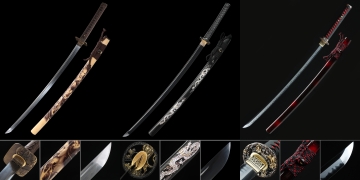
The scroll motifs on these tsuba draw primarily from two classical Japanese decorative traditions. Karakusa is a continuous vine-and-scroll pattern originally derived from Tang Chinese textile art, later absorbed deeply into Japanese metalwork and lacquer design during the Heian and Muromachi periods — it appears as flowing, symmetrical curves that suggest organic growth without depicting a specific plant. Dragon engravings represent a separate iconographic tradition, rooted in both Buddhist and Shinto cosmology, where the dragon is a symbol of transformation, elemental water, and celestial power rather than malevolence. Bronze and rose gold alloys are common tsuba materials here because their natural patina development over time actually enhances engraved detail — oxidation settles into recessed lines, increasing contrast and visual depth without any additional treatment.
How should I store and maintain a lacquered saya display piece?
Lacquered hardwood saya require consistent environmental conditions to stay in optimal display shape. The primary risks are humidity fluctuation and direct UV exposure. High humidity causes the wood substrate to expand, which can crack or lift the lacquer layer over time; low humidity causes contraction and checking. Aim to store display pieces in an environment between 45–55% relative humidity, away from heating vents or air conditioning drafts. Direct sunlight will fade both the saya finish and any cord-wrapped handle over months — indirect ambient lighting or UV-filtering display cases are strongly preferred. For the blade itself, a very light application of mineral oil or traditional choji oil (clove-based) on the steel surface every few months prevents surface oxidation during long-term storage. Never store the blade seated in the saya for extended periods without occasional airing, as trapped moisture accelerates surface patination.
Is a hamidashi tanto a good gift for a Japanese blade collector?
For a collector with existing interest in Japanese blade culture, a hamidashi tanto in ornate koshirae (full mountings) is a particularly thoughtful gift because it represents a category that is visually distinctive from the more common katana-length display pieces. Its compact size — typically 25–35 cm in overall length — makes it easy to display on a desk stand, in a shadow box, or as part of a layered wall arrangement without requiring the dedicated wall space a katana demands. Pieces with matched metalwork throughout — scroll tsuba, fuchi, and kashira in the same alloy and motif — signal craft intentionality that experienced collectors notice immediately. If the recipient collects thematically (dragon motifs, specific historical periods, or specific steel types), the range within this collection allows for a choice that complements an existing display rather than duplicating it.