What makes a tachi different from a katana in terms of design?
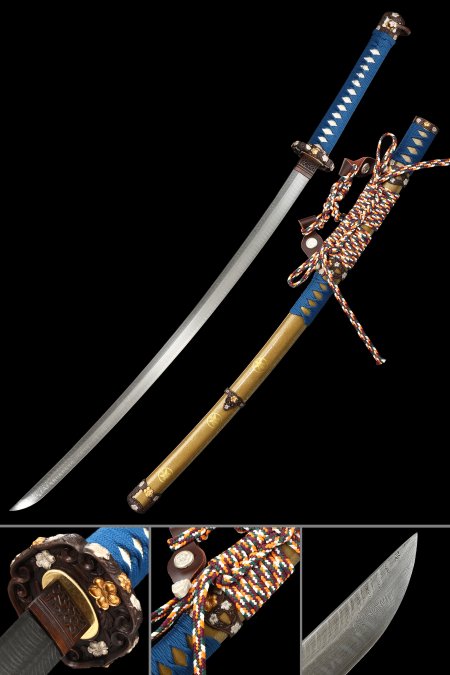
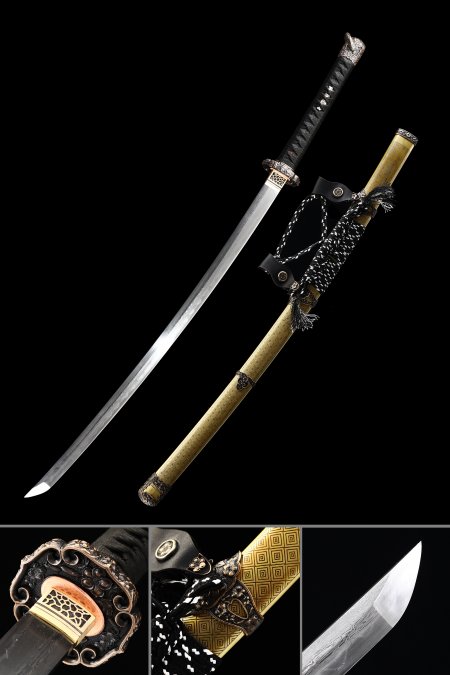
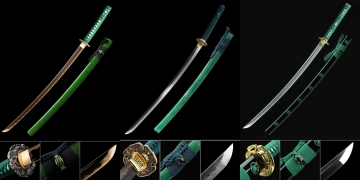
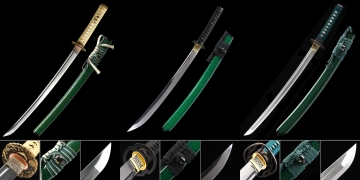
The tachi predates the katana and was traditionally worn suspended edge-down from the belt, in contrast to the katana which is worn edge-up thrust through the obi. This difference in carry method required a more pronounced curvature along the blade so the cutting edge could clear the scabbard cleanly when drawn by a mounted samurai. Tachi blades are also typically longer, often exceeding 70 cm in nagasa, and tend to have a deeper sori (curvature) toward the base of the blade. On display pieces like those in the olive tachi collection, this curvature gives the sword a sweeping, architectural silhouette that distinguishes it immediately from a standard katana presentation.
What does the Damascus steel pattern on these blades actually indicate?
The Damascus patterning visible on these blades - sometimes called hada - results from repeatedly folding and forge-welding layers of steel during construction. As the layers compress and elongate, the different carbon content in each layer creates contrasting light and dark bands that become visible after grinding and polishing. On the olive tachi pieces, this patterning runs continuously across the flat of the blade and gives each sword a visually unique surface. No two Damascus blades are identical because the folding process distributes the layers differently each time. Collectors value this variability precisely because it makes each display piece one-of-a-kind rather than a mass-produced uniform finish.
How do I read the hamon line on a display tachi blade?
The hamon is a visible boundary line that appears along the lower portion of a blade, separating the hardened edge zone from the body of the steel. On traditionally made blades it results from clay coating applied before quenching - areas covered by clay cool slowly and remain softer, while the exposed edge quenches rapidly and hardens. On select pieces in the olive tachi collection, this line is present and polished to stand out against the Damascus surface. To appreciate it properly, view the blade under a single directional light source held at a low angle. The hamon will appear as a misty, undulating line with a distinct activity pattern. A straight hamon is called suguha; a wavy or irregular pattern is called notare or gunome. Knowing the style present on your piece adds meaningful context to your collection.
How should I store and maintain a Damascus tachi on display?
Damascus steel is more reactive to humidity than monosteel blades because the folded layers can develop micro-surface variation that traps moisture. For long-term display, keep the sword in a climate-controlled room with relative humidity between 40% and 55%. Apply a thin coat of choji oil or a purpose-made blade oil to the entire surface every two to three months, wiping away any excess with a clean lint-free cloth. Avoid touching the blade directly with bare hands - skin oils accelerate surface oxidation. Store the sword in its saya when not actively displayed, and if using a horizontal wall mount, ensure the edge faces upward to prevent oil from pooling unevenly along the hamon area. Remove the blade from the saya entirely once or twice a year to check for moisture trapped at the habaki collar.
Are olive tachi swords a good choice as a collector's gift?
Olive tachi pieces make a compelling gift for collectors who already own one or two katana and are ready to expand into classical Japanese sword formats. The combination of a visually distinctive olive and gold color palette with Damascus patterning and detailed tsuba castings gives the recipient something immediately recognizable as a step above entry-level display swords. The plum blossom tsuba motif, present on certain pieces in this collection, carries cultural significance in Japanese aesthetics - it represents endurance through hardship - which adds a meaningful layer for someone who appreciates symbolism alongside craftsmanship. If the recipient is particular about their display setup, pairing a tachi with a dedicated floor stand creates a full presentation that fills vertical space elegantly in a study or dedicated collection room.