What makes the gold black tsuba significant on a naginata?
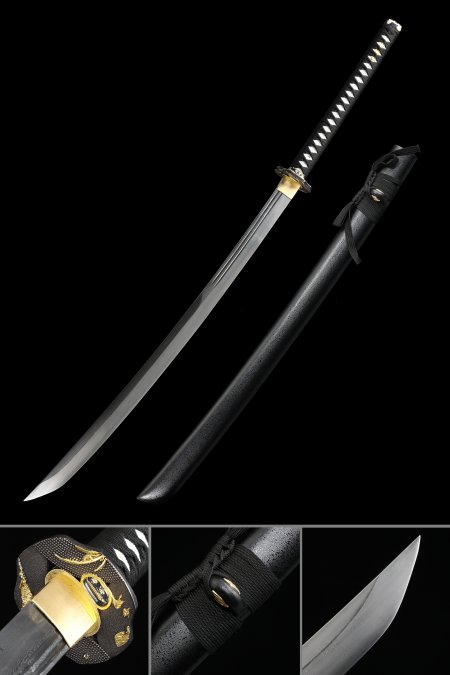
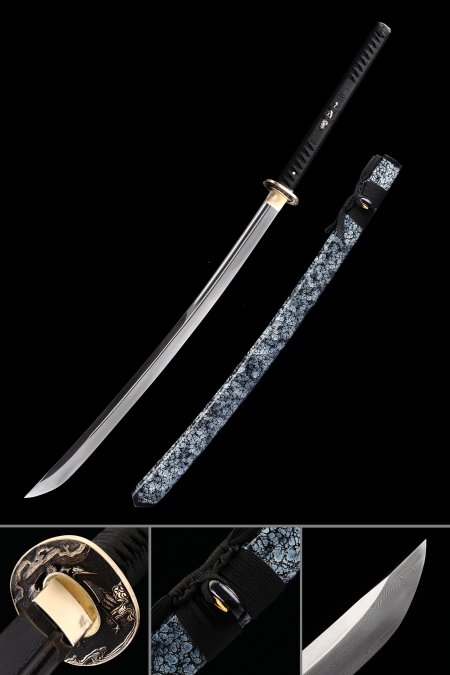
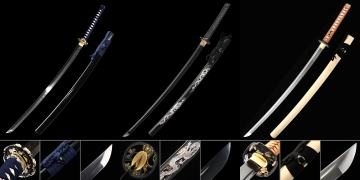
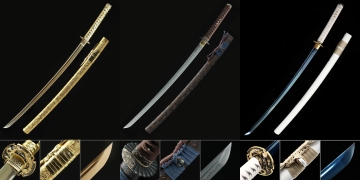
On a naginata, the tsuba sits at the junction between the blade and the handle, making it one of the most visually prominent fittings on the assembled piece. A gold-and-black tsuba uses contrasting metal finishes - typically a blackened iron or steel base with gilded surface treatment - to create a focal point that draws the eye and references historical Japanese metalwork traditions like nunome-zogan inlay and shakudo alloy work. For collectors, this two-tone treatment elevates the tsuba from a purely structural component to a decorative statement, and it pairs particularly well with both lacquered and textured saya finishes. The contrast also photographs exceptionally well, which matters to collectors who display and document their pieces.
How does Damascus steel differ from high-carbon monosteel in naginata blades?
Damascus pattern steel is formed by forge-welding multiple steel billets together, then repeatedly folding and drawing out the material to create layered internal structure. The acid-etching step applied after grinding and polishing reveals this layered grain as a flowing, visible pattern across the blade surface - no two pieces are identical. Monosteel naginata blades, by contrast, are ground from a single billet of uniform composition, producing a clean, mirror-like or satin finish without surface patterning. For display and collectible purposes, Damascus construction is prized because the pattern itself is evidence of the forging process - a visual record of the maker's work that gives each piece a one-of-a-kind character. Both constructions can achieve a functional edge, but the aesthetic distinction is the primary driver in collector markets.
What are the differences between granite saya and black lacquer saya?
Granite saya features a textured, matte finish that mimics the irregular surface of natural stone, achieved through a multi-coat finishing process applied over the wood substrate. This finish tends to absorb and diffuse light, giving the assembled naginata a grounded, tactile presence. Black lacquer saya is built up in multiple thin coats of lacquer that are sanded and polished between applications, producing a smooth, reflective surface. The lacquer finish is more formal in appearance and amplifies the gilded tones in a gold-black tsuba by reflecting light back toward the fitting. In practical display terms, lacquer surfaces show fingerprints and dust more readily but are generally easier to wipe clean. Granite finishes are more forgiving in high-traffic display environments.
How should I care for a Damascus naginata kept on long-term display?
Damascus pattern steel is reactive to humidity and airborne moisture, so the single most important care step for displayed pieces is controlling the environment. A stable indoor humidity between 40-55% relative humidity minimizes oxidation risk. Every two to three months, apply a thin coat of choji oil or a high-quality camellia oil to the blade surface using a clean lint-free cloth - this maintains the visibility of the Damascus pattern and creates a barrier against moisture. Inspect the habaki seating and tsuba fitment periodically; seasonal temperature changes can cause minor wood movement in the handle assembly, and reseating any loose components early prevents wear at the fitting edges. Avoid placing the display near air conditioning vents, exterior walls, or direct sunlight, all of which accelerate surface degradation.
Is a gold black tsuba naginata a good gift for a Japanese sword collector?
It is an excellent choice for a collector who already owns one or more katana and is looking to expand into polearm formats. The naginata represents a distinct category within Japanese edged collectibles - its length, curvature, and historical associations with warrior monks and samurai households make it a conversation piece that stands apart from a standard sword display. The gold-and-black tsuba treatment gives the piece a finished, presentation-quality appearance that does not require additional customization. Full-tang Damascus construction signals to knowledgeable collectors that the piece was built with care rather than purely for decorative purposes. Packaging the naginata with a quality display stand or wall mount hardware adds practical value and makes the gift immediately displayable upon arrival.