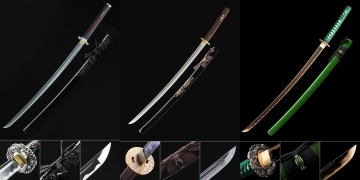
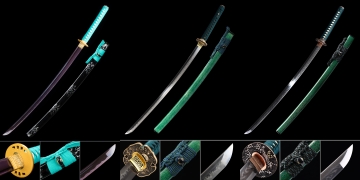
What makes a tanto a hamidashi style?
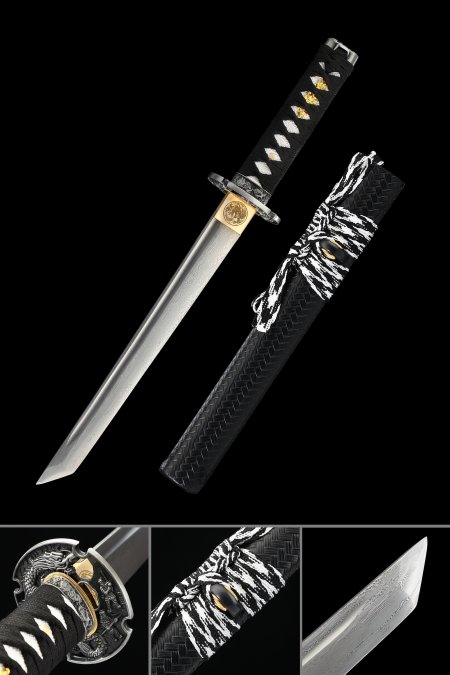
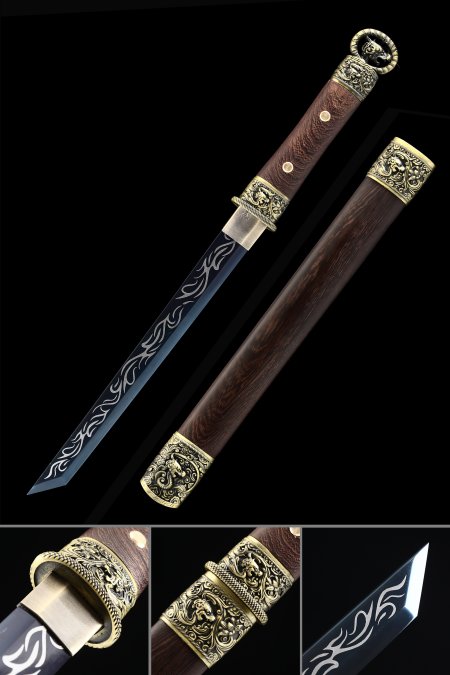
The term hamidashi refers specifically to the tsuba size relative to the saya opening. On a standard tanto, the tsuba is noticeably wider than the koiguchi (the saya mouth). On an aikuchi tanto, there is no tsuba at all. The hamidashi sits between these two forms - its tsuba extends only marginally beyond the koiguchi, creating a compact, flush appearance when sheathed. This design was historically favored for its low-profile elegance and is now highly sought by collectors who appreciate the nuanced vocabulary of Japanese blade furniture. The restraint of the form actually draws more attention to the quality of the tsuba's decorative work, since there is less surface area to compensate with bulk.
How does T10 steel differ from stainless in a display tanto?
T10 is a high-carbon tool steel containing approximately 1.0% carbon along with trace amounts of silicon and tungsten, which increase wear resistance and contribute to a finer grain structure after heat treatment. When differentially hardened, T10 can develop a visible hamon - the temper line along the edge - that is considered one of the most aesthetically desirable features in Japanese-style blade collecting. Stainless steel, by contrast, typically cannot produce an authentic hamon and is more difficult to polish to a mirror or satin finish that shows the blade's geometry clearly. For display collectors, T10 rewards closer inspection: the interaction between the polished surface and the hamon is a significant part of the visual appeal that stainless simply cannot replicate.
What does the dragon symbolize on the tsuba of these tantos?
In Japanese tradition, the ryū (dragon) is associated with water, celestial power, and noble virtue - quite different from its Western counterpart. On sword fittings, dragon imagery was historically reserved for high-ranking samurai and symbolized authority and spiritual protection rather than aggression. A dragon tsuba communicates the owner's aspiration toward strength of character and mastery. From a collector's perspective, dragon motifs also tend to be among the most technically demanding to execute in cast or chiseled metalwork, as the creature's scaled body, clawed limbs, and expressive face must all be rendered in high relief within the small canvas of a tanto-sized guard. The quality of a dragon tsuba is therefore a direct indicator of the maker's skill.
How should I store a T10 steel tanto long-term?
T10's carbon content makes it more reactive to humidity than stainless alternatives, so proper storage is important for preserving both the blade and the finish. Apply a thin, even coat of choji oil or a high-grade mineral oil to the blade surface before storing, wiping off any excess to avoid pooling. Store the tanto horizontally or at a shallow angle in its saya in a low-humidity environment - ideally between 40-55% relative humidity. Avoid storing blades in leather-lined cases for extended periods, as leather can trap moisture and accelerate oxidation. Inspect the blade every two to three months, re-oil if the surface appears dry, and check the habaki and tsuba for any signs of surface discoloration.
Does this tanto pair well with a matching dragon katana for display?
Yes - a hamidashi tanto with dragon tsuba fittings creates a natural thematic pairing with a full-length katana featuring coordinated dragon furniture. In historical Japanese practice, a daisho - the paired long and short blade - was considered a unified presentation, with matching or complementary fittings that signaled the owner's taste and status. Recreating this aesthetic for a modern display collection is one of the more compelling approaches to organizing a Japanese blade collection thematically. Matching the metalwork finish (for example, pairing a brass-fitted tanto with a brass-fitted katana, or coordinating blackened iron across both) creates a visually cohesive wall or stand display that communicates genuine knowledge of the tradition.