What steel is used in cherry blossom tsuba tantos?
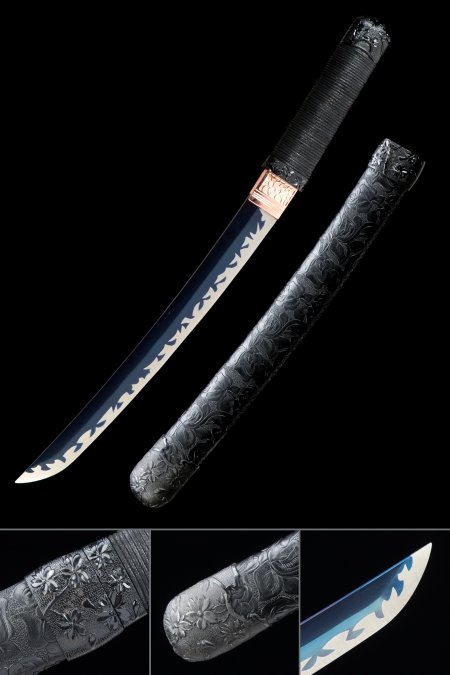
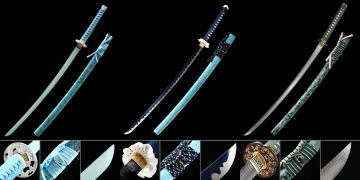
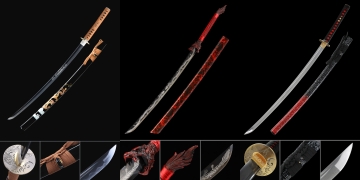
The tantos in this collection are forged from manganese steel, a high-carbon alloy known for its durability and its ability to take a refined surface finish. Manganese steel is particularly well-suited to hamon development — the visible temper line along the blade that results from differential heat treatment. During the hardening process, the edge and spine cool at different rates, producing a distinct boundary line that is both a functional signature and a decorative feature. On blue flame hamon pieces, controlled oxidation during polishing enhances this contrast further, creating an iridescent layered effect that shifts in appearance depending on the light angle. For display collectors, this means the blade's visual character is never static.
How is a cherry blossom tsuba typically made?
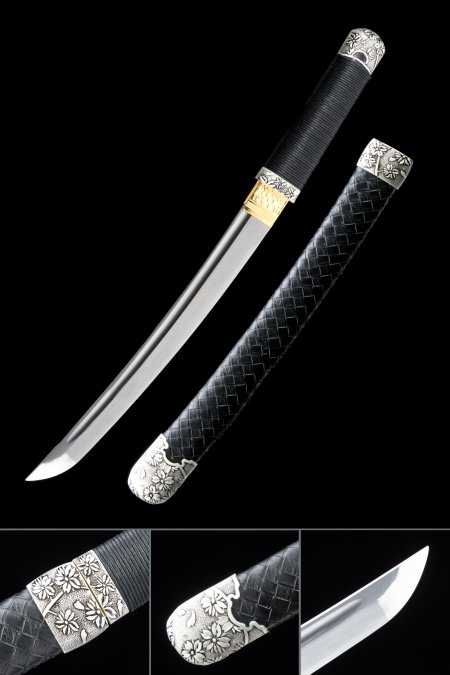
A cherry blossom tsuba is a hand-guard disc positioned between the blade and the handle, and in these pieces it is cast or machined with sakura petal motifs rendered in pierced or raised relief work. The silver-gold finish on select tsuba is achieved through layered plating or patina treatment over a base metal, creating tonal contrast that makes the floral pattern visually prominent. The tsuba is not merely ornamental — it also functions as a structural junction point between the blade assembly and the handle wrap. For collectors, the quality of the tsuba casting and the crispness of the floral detail are reliable indicators of overall fitting quality across the piece.
Carved saya vs. leather saya — which should I choose?
The choice between a carved wood saya and a leather-wrapped saya comes down to aesthetic preference and display context. A hand-carved wood saya with floral relief detail emphasizes traditional Japanese craft lineage — the texture and grain of the wood are visible beneath the lacquer, and the carved pattern adds depth that catches light differently from multiple angles. A leather saya, by contrast, offers a cleaner silhouette with a formal, restrained finish that complements the silver-gold tsuba without competing with it visually. For collectors building a themed display, the carved saya creates stronger visual cohesion with the sakura tsuba motif, while the leather saya suits those who prefer a quieter, more minimalist presentation.
How do I properly store and maintain a display tanto?
Maintaining a display tanto is straightforward but requires consistency. The blade should be lightly coated with a thin layer of choji oil or mineral oil every two to three months to prevent surface oxidation, particularly in humid climates. When applying oil, use a clean, lint-free cloth and work from the base toward the tip in single strokes — never wipe back and forth, as this can introduce micro-scratches to the polished surface. Store the tanto horizontally on a dedicated blade stand or within a sealed display case away from direct sunlight, which can fade lacquer finishes on the saya over time. Avoid storing the blade inserted in the saya for extended periods without occasional air exposure, as trapped moisture can affect both the steel and the interior lining.
Is a cherry blossom tanto a good gift for a collector?
A cherry blossom tsuba tanto makes an especially considered gift for someone with an established interest in Japanese blade aesthetics or East Asian decorative arts. The sakura motif carries widely recognized cultural resonance, making the piece meaningful beyond its material qualities, while the full-tang manganese steel construction and hand-finished fittings signal a level of craftsmanship that experienced collectors notice immediately. For gifting purposes, the compact scale of the tanto is practical — it displays well in limited space and does not require the dedicated wall mounting that a full-length katana demands. Pairing the tanto with a quality blade stand completes the presentation and makes it immediately displayable upon receipt.