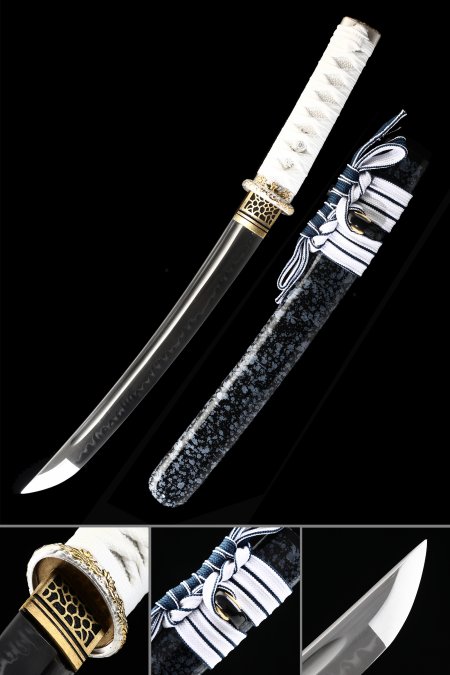
Cherry Blossom Saya Tanto

Cherry Blossom Saya Tanto blends the refined artistry of traditional Japanese tanto with sakura-inspired saya craftsmanship. Each piece is hand-forged and finished with meticulous attention to tsuka wrapping, fittings, and lacquer detail — making every tanto a worthy centerpiece for any serious collection. Free standard shipping on all orders, with hassle-free returns.
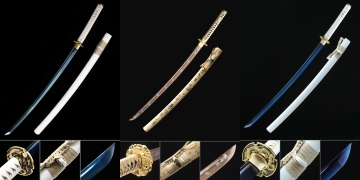
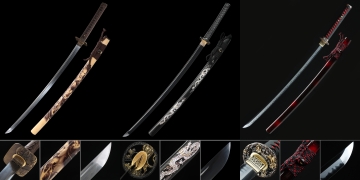
Showing 2 Products

Related Collections

Beige Sageo Katana24 items


109 Reviews

Lion Tsuba Katana27 items


107 Reviews

Teal Saya Katana26 items


43 Reviews

Phoenix Tsuba Katana28 items


63 Reviews

Frequently Asked Questions

What makes a cherry blossom saya different from a standard lacquered saya?
A standard lacquered saya typically features a single-color or plain finish — usually black or brown — with the primary function of protecting the blade. A cherry blossom saya goes several steps further by incorporating the sakura motif through techniques such as hand-painted lacquer detailing, carved wood relief, inlaid panels, or textile wrapping with floral patterning. The saya becomes a decorative object in its own right, not just a utilitarian sheath. In high-quality collectible tanto, the saya construction also includes proper koiguchi (opening collar) fitting and a well-seated kurikata (cord knob), maintaining structural authenticity alongside the ornamental design.
How does clay tempering affect the appearance of a T10 tanto blade?
Clay tempering — known as tsuchioki in Japanese smithing — involves coating the blade spine with a clay mixture before the quenching process. The insulated spine cools more slowly than the exposed edge, resulting in a harder edge and a softer, more flexible spine. The boundary between these two zones becomes visible as the hamon, a distinct temper line running along the blade's length. On T10 carbon steel, this line often appears as a misty, undulating pattern called nie or nioi, depending on the grain structure. Because the clay is applied by hand and no two quenches are identical, every hamon is a one-of-a-kind feature — one of the most valued visual characteristics among Japanese blade collectors.
What are the key differences between T10 and Damascus steel tanto?
T10 is a high-carbon tool steel with added silicon and tungsten, prized for its ability to hold a fine edge and produce authentic hamon when clay tempered. Its surface, when polished, is clean and mirror-like, allowing the temper line to stand out clearly. Damascus steel tanto, by contrast, are forged from multiple layers of steel folded and welded together, creating the distinctive swirling or banded pattern visible across the entire blade. Damascus pieces are valued for their visual complexity and the craftsmanship involved in the layering process. For collectors, T10 offers classical Japanese authenticity; Damascus offers striking surface artistry. Neither is inherently superior — the choice depends on which aesthetic and tradition resonates more with the individual collector.
How should I store and maintain a tanto with a lacquered saya?
Store the tanto horizontally in a low-humidity environment, ideally with a relative humidity level between 40–60%. Avoid placing it in direct sunlight, which can fade lacquer pigments and dry out any leather or textile components on the saya. For the blade, apply a thin coat of choji oil (or a high-grade mineral oil) every few months using a soft cloth or uchiko powder ball — this prevents oxidation on the carbon steel surface. Never store the blade inside the saya for extended periods without occasional removal to inspect for moisture buildup, which can cause rust even on well-maintained pieces. Handle the saya with clean, dry hands to avoid transferring oils onto the lacquer finish.
Are cherry blossom tanto a good choice as a display gift for collectors?
Cherry blossom tanto are an excellent gifting choice for anyone who appreciates Japanese culture, blade craftsmanship, or decorative art. The sakura motif carries universal cultural recognition, making the piece accessible even to recipients who are new to collecting. For established collectors, the combination of a hand-forged blade — whether T10 with a visible hamon or Damascus with patterned layers — and an artistically finished saya signals genuine quality rather than novelty. They display well in shadow boxes, on dedicated blade stands, or as part of a larger Japanese-themed arrangement. Pairing a tanto with a matching katana from the Cherry Blossom Katana collection creates a cohesive gift set with strong visual and thematic unity.

Customer Reviews

Kenisha Scarbrough- Lewis Louisiana, United States

This Tanto is absolutely beautiful. The detail and craftsmanship is amazing. It arrived timely and I really appreciated that I could track the product. The blade came oiled in a protective sleeve inside the sheath. The sheath it's is beautiful and looks exactly as pictured. I look forward to purchasing additional swords from this company.
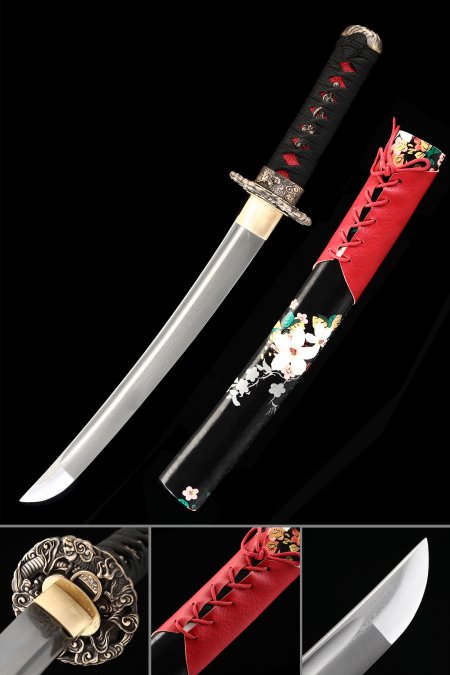
Damascus Steel Japanese Tanto with Cherry Blossom Saya in Black and Red Leather Lace-Up Design Damascus Steel Japanese Tanto with Cherry Blossom Saya in Black and Red Leather Lace-Up Design
Cart 0 Items

Your cart is empty