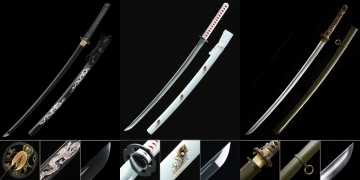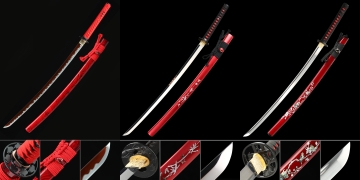
Brown 1095 Carbon Steel Tachi Swords

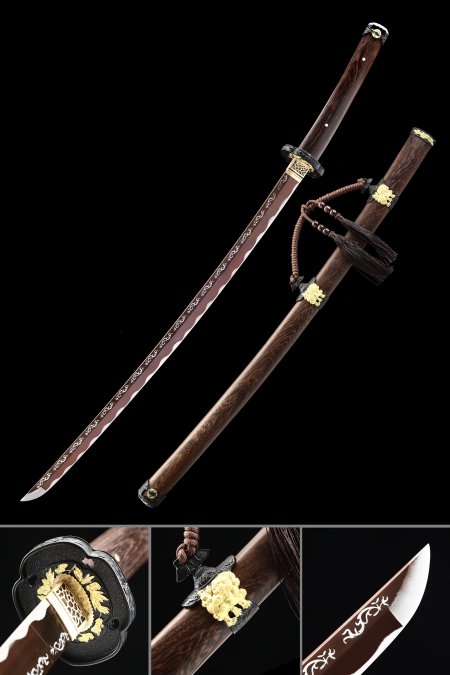
Brown 1095 Carbon Steel Tachi swords bring together classical Japanese long-sword proportions and the proven performance of high-carbon 1095 steel, finished in earthy brown tones that echo the aesthetic of feudal-era craftsmanship. Each piece in this collection is hand-forged and individually fitted, making it a distinctive centerpiece for any serious display or historical study. Enjoy free standard shipping on your order, along with a straightforward return policy designed to give collectors complete peace of mind.

Showing 2 Products

Related Collections

Frequently Asked Questions

What makes 1095 carbon steel a preferred choice for tachi collectors?
1095 high-carbon steel contains approximately 0.95% carbon, a concentration that allows skilled heat-treatment to produce a visible hamon — the temper line along the blade's edge that collectors regard as one of the primary markers of authentic craftsmanship. Stainless steels, while corrosion-resistant, generally cannot form a well-defined hamon because their chromium content interferes with the differential hardening process. For tachi collectors specifically, 1095 also produces a grain pattern that polishes to a layered, almost organic appearance, reinforcing the historical character of the long-sword form. It does require periodic light oiling to prevent oxidation, but most serious collectors consider that maintenance routine a natural part of stewardship rather than an inconvenience.
How does a tachi differ from a katana in construction and display?
The tachi predates the katana by roughly three centuries and differs in several measurable ways. Tachi blades are typically longer — often 70 cm or more — and carry a deeper, more pronounced curvature (sori). Historically, the tachi was worn edge-down suspended from the hip by a cord, while the katana was thrust through the belt edge-up. This distinction affects the mei, or maker's signature: on a tachi, the mei appears on the side of the tang that faces outward when worn edge-down. For display purposes, a tachi is traditionally presented on a horizontal stand with the edge facing downward, opposite the katana convention. Collectors who display both forms together often use tiered stands to make the orientation difference immediately visible and historically legible.
Why do brown-toned fittings matter for a display tachi?
Brown lacquers, natural hardwood saya, and bronze or shakudo fittings were among the most common finishing choices in classical Japanese sword mountings, particularly during the Heian through Muromachi periods. This palette was favored because it aged with dignity — the tones deepened rather than faded, and the materials developed a patina that enhanced rather than obscured their quality. For modern display collectors, brown-toned tachi offer strong visual coherence against wood furniture, tatami-style settings, or neutral wall mounts. They also photograph with natural warmth under standard indoor lighting, which matters for collectors who document their pieces. The combination of a dark red or brown blade finish with a brown hardwood saya creates a monochromatic depth that bright-lacquered alternatives rarely achieve.
How should I store and maintain a 1095 carbon steel tachi?
Carbon steel requires more attentive storage than stainless, but the routine is straightforward. After handling, wipe the blade with a clean, lint-free cloth to remove fingerprints, which carry oils that accelerate surface oxidation. Apply a thin, even coat of choji oil or mineral oil every two to four weeks, depending on your climate's humidity. In high-humidity environments, consider placing a silica gel packet inside the storage area to regulate moisture. Store the tachi horizontally in its saya with the edge facing downward, consistent with traditional tachi orientation. Avoid storing in leather-lined cases for extended periods, as leather can trap moisture against the steel. A wooden display stand in a climate-stable room is the ideal long-term solution for a collection piece.
Is a brown 1095 tachi a good centerpiece for a Japanese sword display?
A tachi works exceptionally well as a display centerpiece because its length and curvature command immediate visual attention. At 70 cm or more of blade length, it naturally anchors a horizontal wall mount or a floor-standing display stand. The earthy brown palette pairs well with secondary pieces — a tanto displayed in a small vertical stand nearby, or a matching wakizashi on a mid-height mount — without competing for visual dominance. Collectors often find that beginning with the longest, most historically distinctive piece, then building outward with complementary forms, produces the most coherent and visually satisfying display. The chrysanthemum tsuba and engraved vine motifs found on specific pieces in this collection also introduce thematic detail that elevates a functional display into a curated historical presentation.

Customer Reviews

Harris Collins North Carolina, United States

It was very nice, and very sharp as stated in the in the details. My only problem was the gold cap at the end of the sheath was not properly secured and popped right off. It wasn't a big deal because I was able to fix it myself, but you would hope when you are spending 100s of dollars on these that they would take the time to properly do everything. Besides that though, it truly was a nice buy.

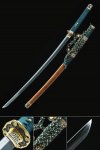
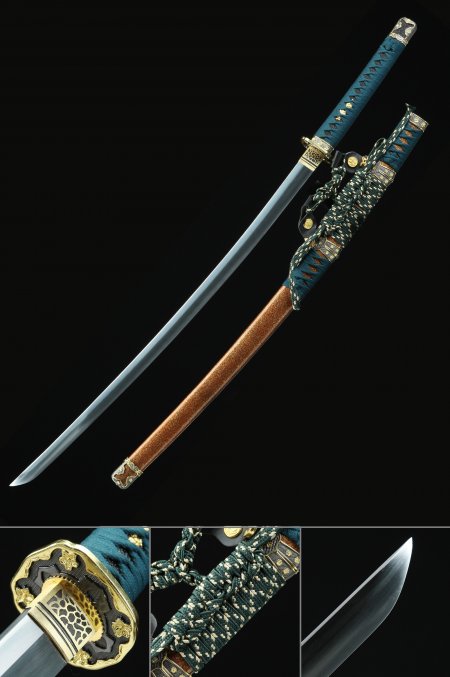
Clay Tempered 1095 Carbon Steel Tachi Sword with Teal Ito Wrap and Bronze-Shimmer Saya in Gold Fittings Clay Tempered 1095 Carbon Steel Tachi Sword with Teal Ito Wrap and Bronze-Shimmer Saya in Gold Fittings
Cart 0 Items

Your cart is empty