Can I tell a real hamon from an acid-etched one on these blades?
Updated Feb 2026
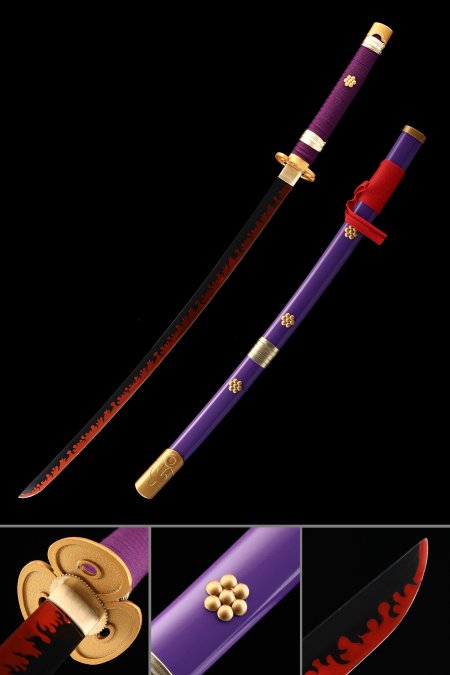
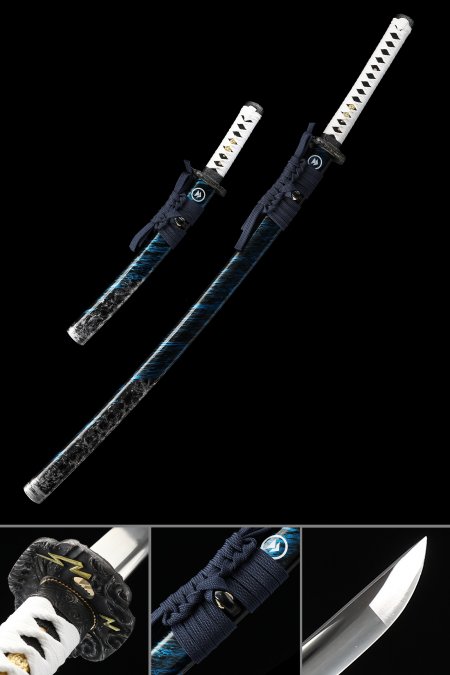
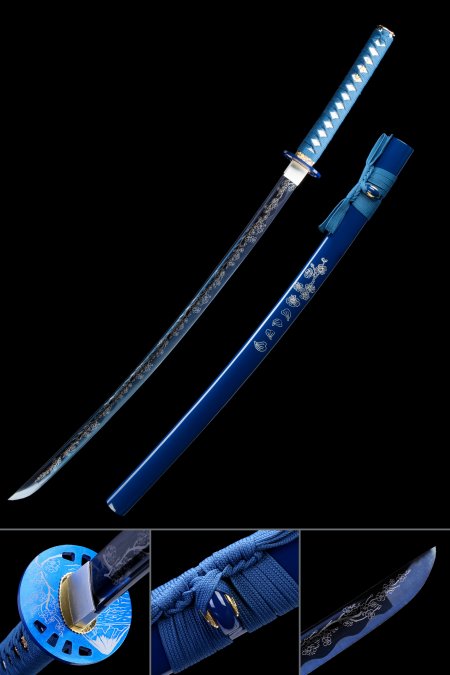
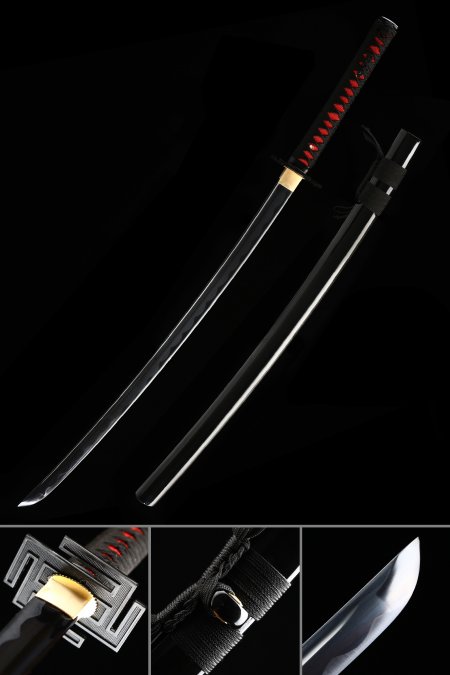
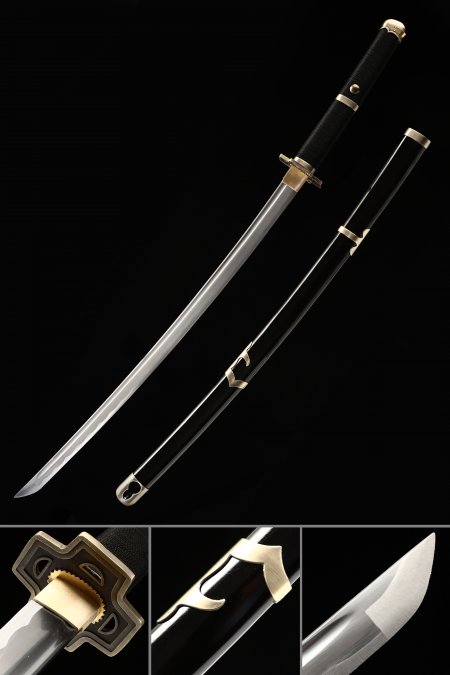
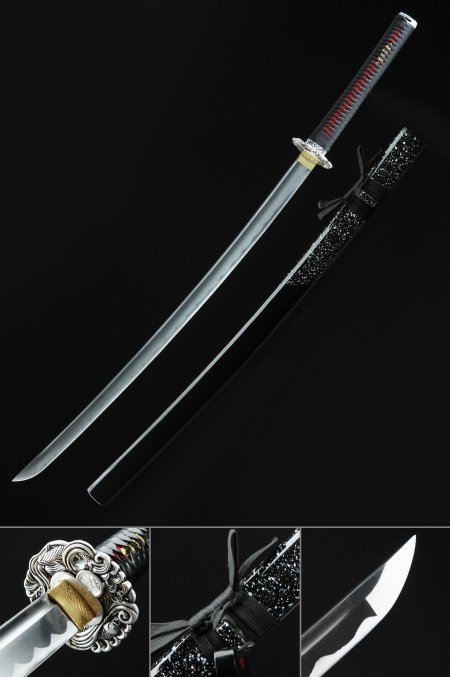
Yes, and the difference is significant to collectors. A genuine hamon produced by clay tempering and quenching shows microscopic crystalline structures — nie (individual martensite crystals visible to the naked eye) and nioi (a misty boundary of finer crystals) — along the transition zone. Under raking light, these features produce depth and movement that shifts as the viewing angle changes. An acid-etched line, by contrast, is a surface treatment applied after grinding: it sits flat on the steel, shows uniform width, and has no depth when examined closely. All blades in this collection are clay tempered with real hamon activity. Examining the hamon under a focused desk lamp at a low angle is the standard collector test — genuine activity appears three-dimensional rather than painted on.