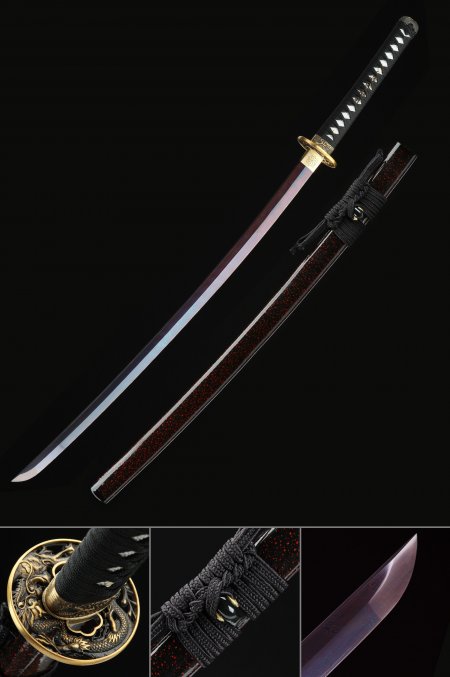
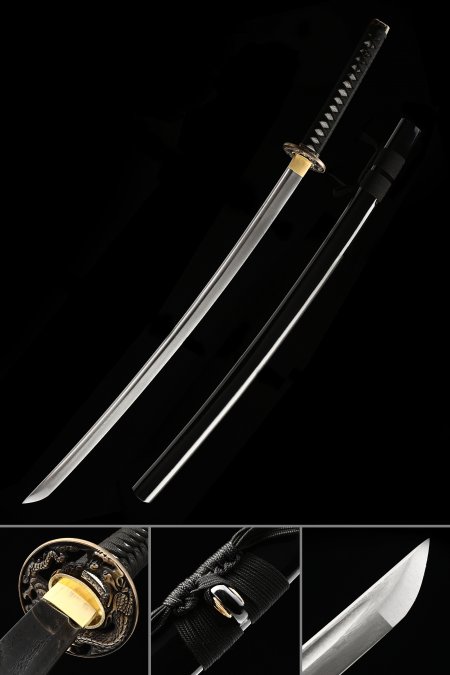
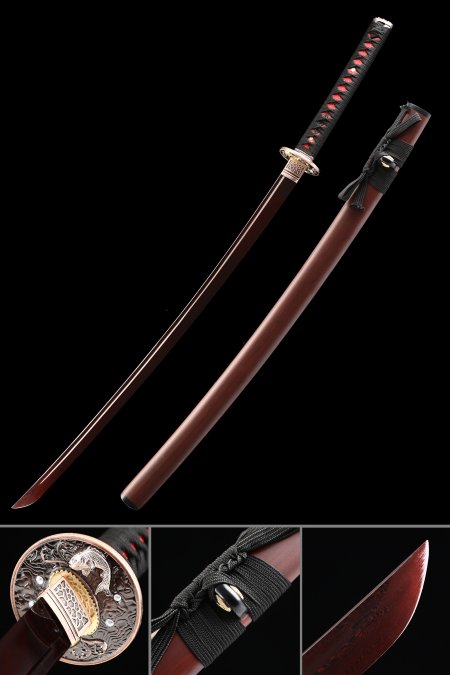
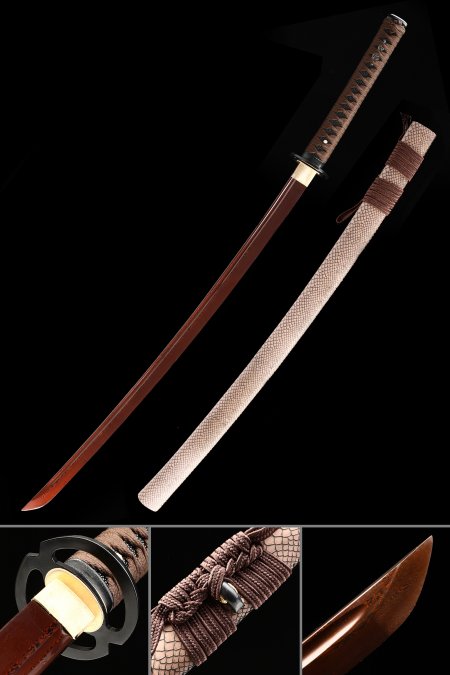
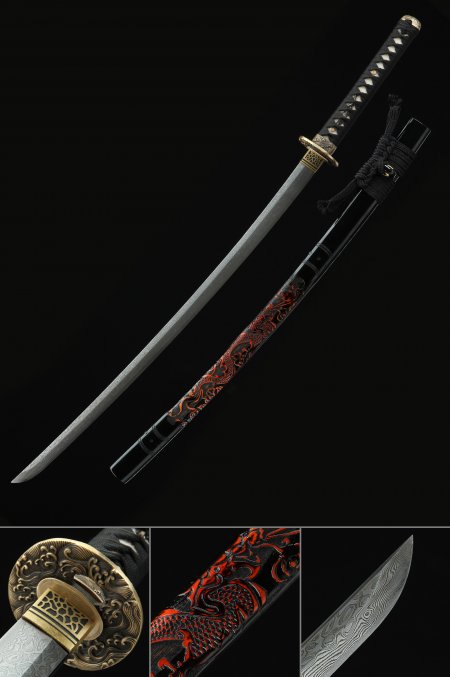
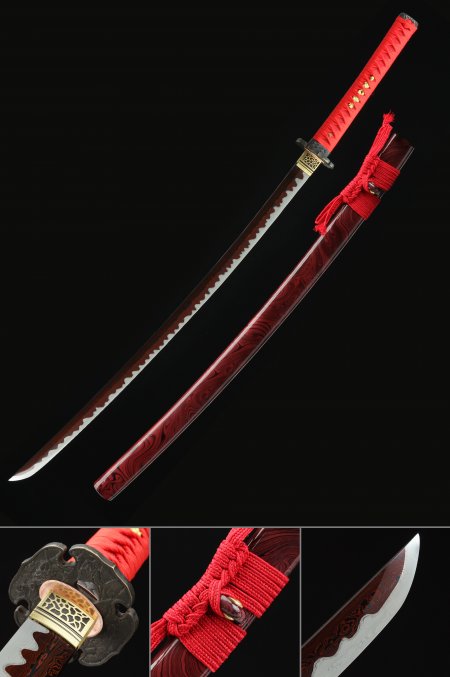
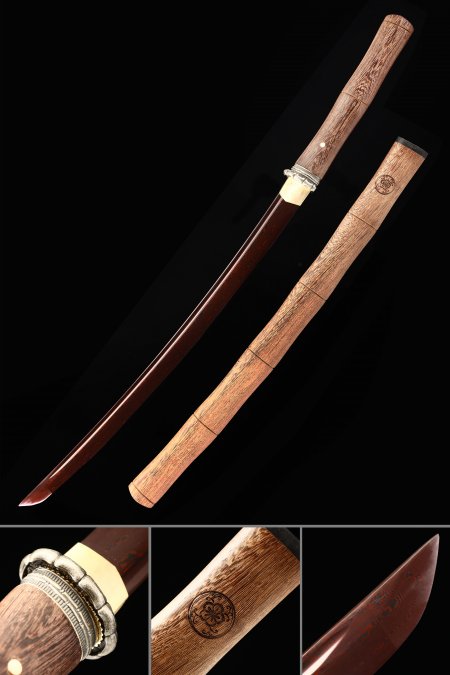
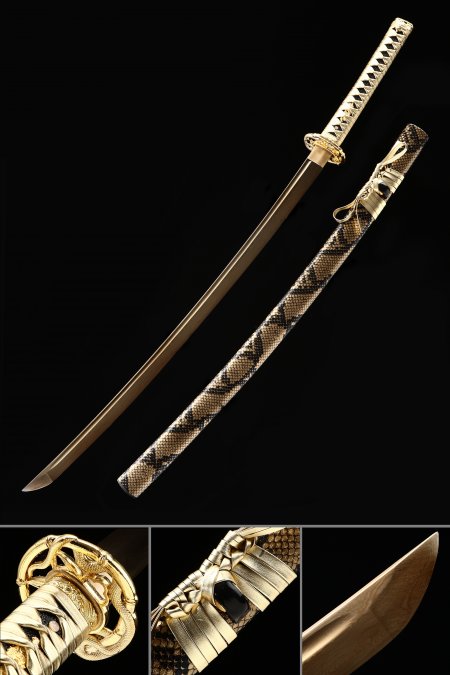
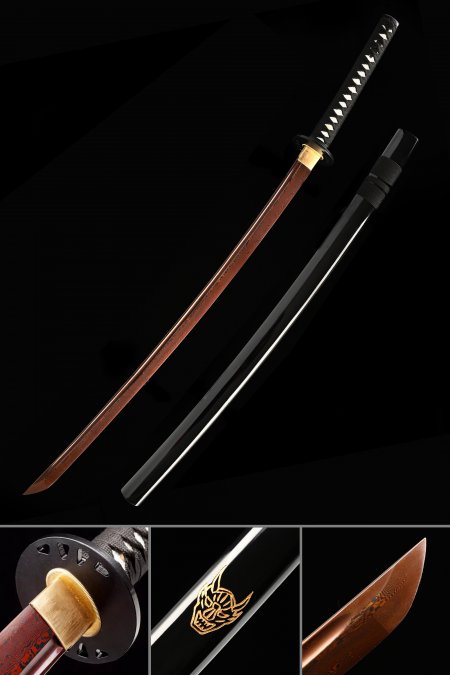
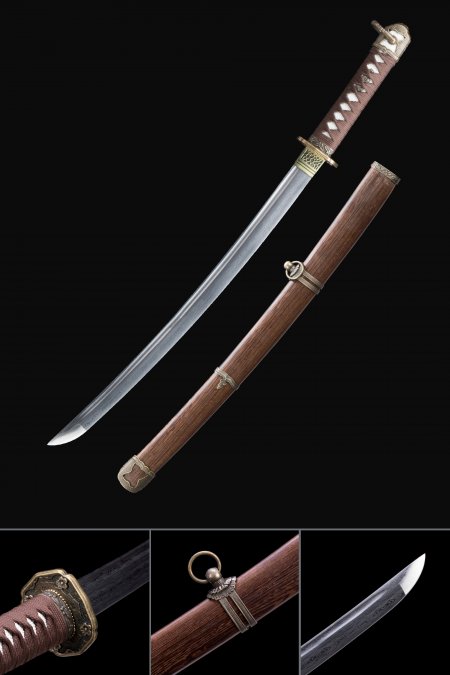
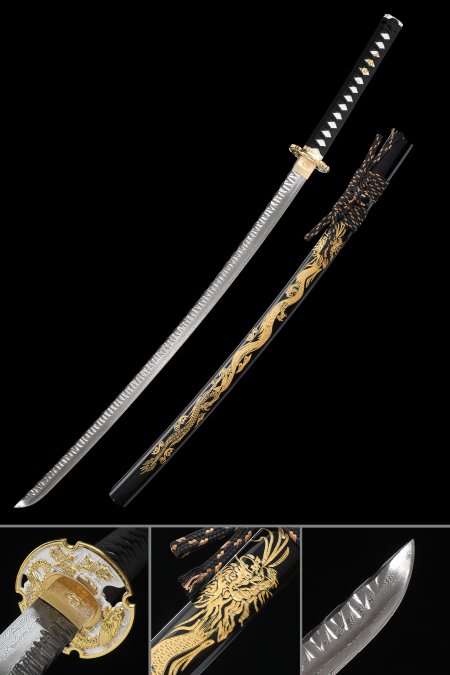
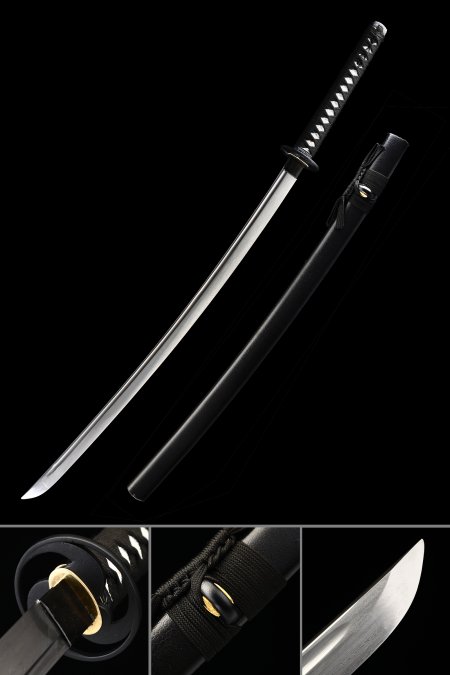
In this collection, yes - real hamon appears specifically on T10 steel blades that have undergone differential hardening using clay application before quenching. The clay insulates the spine, allowing it to cool slowly and remain relatively soft, while the exposed edge cools rapidly and hardens. The boundary between these two zones becomes the hamon. Blades made from 1045 carbon steel or high-manganese steel are typically through-hardened, which produces a uniform hardness but no visible temper line. Folded and Damascus pieces may show surface patterns from their construction method, but those are not hamon - they are forge-welding artifacts, which is a meaningful distinction for serious collectors.