What makes clay-tempered tanto different from standard production tanto?
Updated Feb 2026
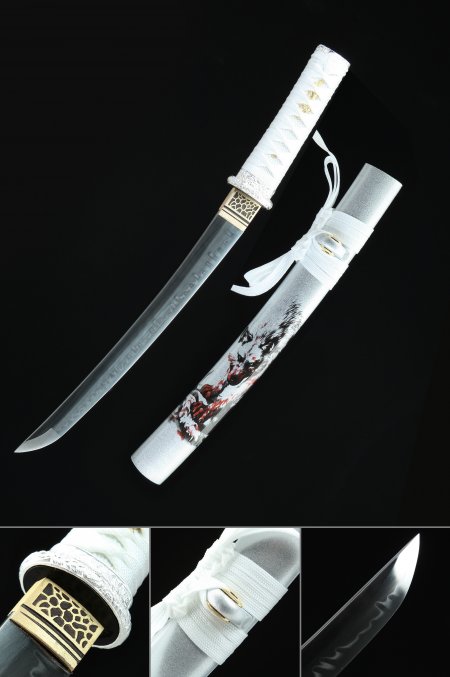
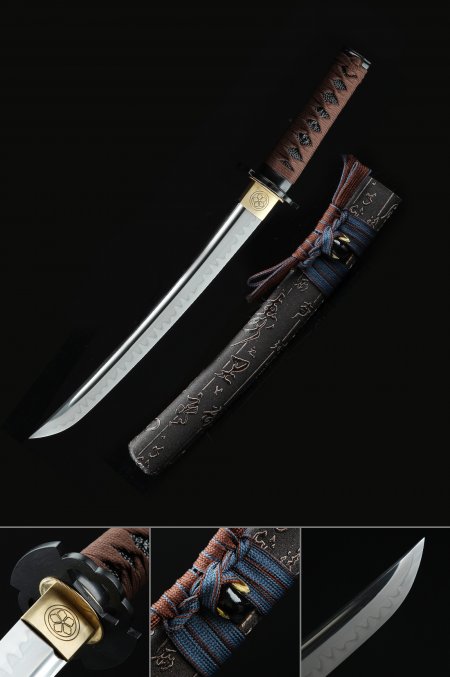
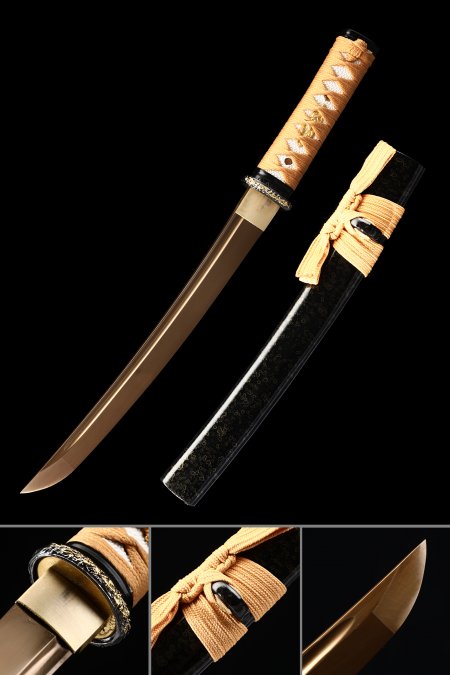
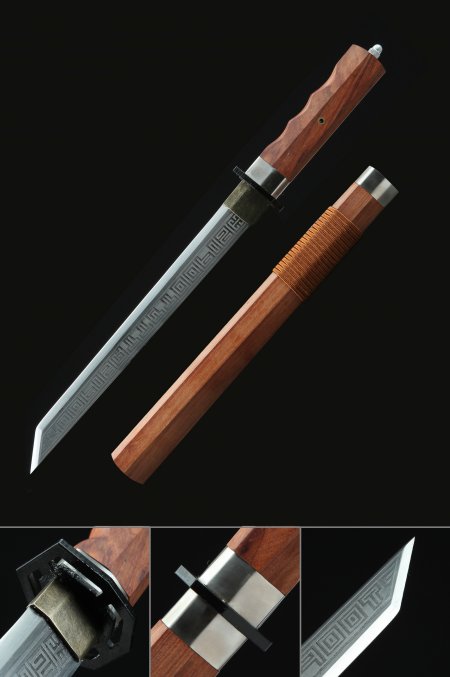
Clay tempering — known historically as tsuchioki — is a heat-treatment process where a layer of refractory clay is applied to the spine of the blade before the final quench. The clay insulates the spine, allowing it to cool slowly and remain relatively soft, while the exposed edge cools rapidly and hardens to a high Rockwell rating. This differential hardening creates the hamon, the visible temper line that runs along the edge. On a standard production tanto, any visible hamon line is typically acid-etched onto the surface and carries no structural meaning. On a clay-tempered tanto, the hamon is an authentic byproduct of the metallurgical process — you can observe it under light at multiple angles, and the activity within it (the misty regions called nie and nioi) shifts depending on how the blade is illuminated. For display collectors, this distinction matters considerably because a genuine hamon adds both visual depth and documentary value to the piece.