What makes a T10 tanto suitable for a serious samurai sword collection?
Updated Feb 2026
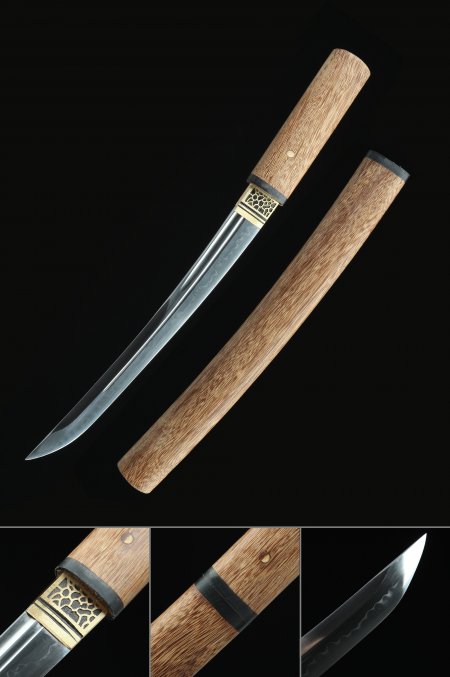
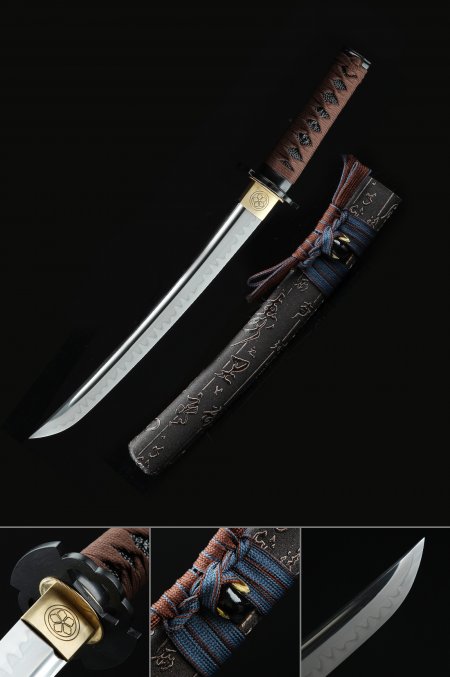
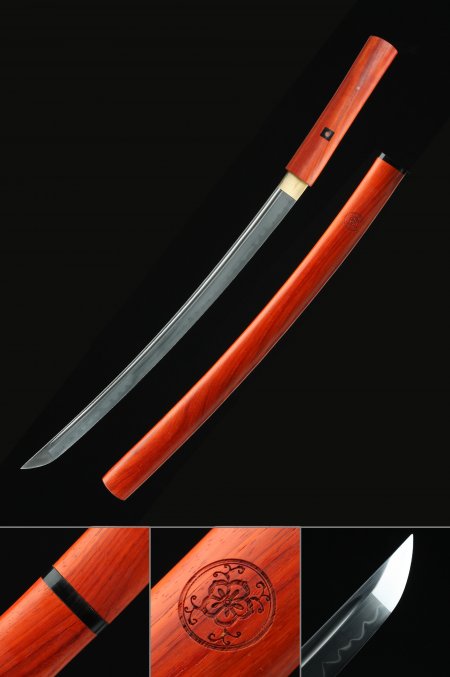
T10 carbon steel tanto are particularly well suited to serious Japanese sword collecting for two related reasons: the quality of the steel itself and the visual character it produces when properly heat-treated. T10 steel has a tightly controlled grain structure and a relatively high carbon content that makes it the grade most likely to produce a well-defined, visually impressive hamon when subjected to differential heat treatment. The hamon - the wave-patterned line that forms along the blade edge during the clay-tempering and quenching process - is the primary visual indicator of a blade that has been heat-treated to traditional Japanese standards, and its clarity, consistency, and the complexity of the patterns within it are among the criteria most seriously evaluated by experienced tanto collectors. On a tanto's compact blade, a well-defined T10 hamon is an especially striking detail because the blade's small scale means the hamon occupies a large proportion of the visible blade surface. A T10 tanto in a shirasaya presentation is particularly valued because the plain wood scabbard draws all attention to the blade, making the hamon the undisputed visual focus of the piece.