What hamon characteristics appear on T10 clay-tempered naginata blades?
Updated Feb 2026
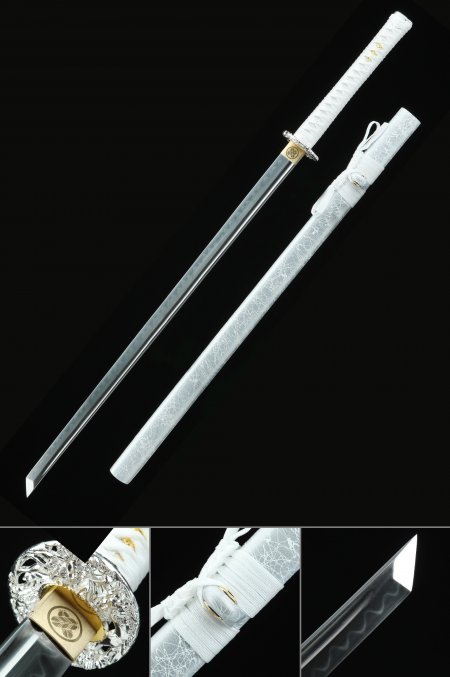
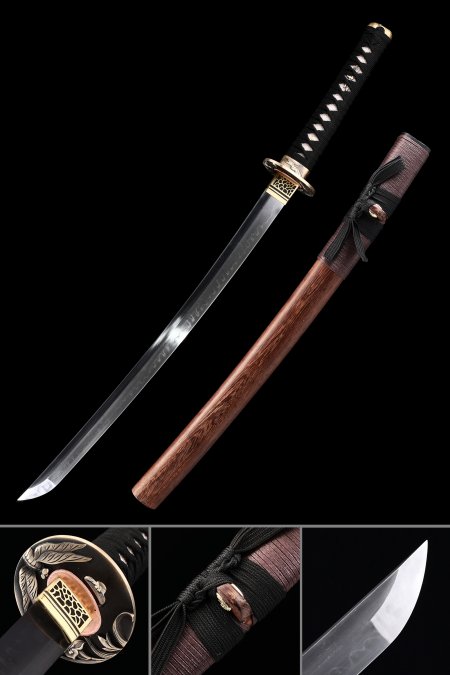
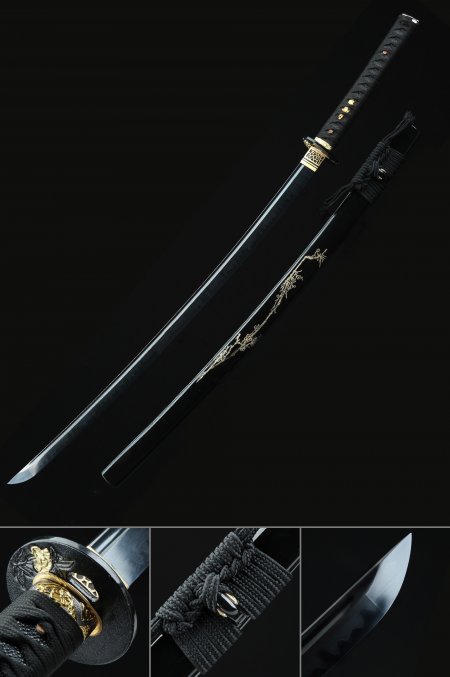
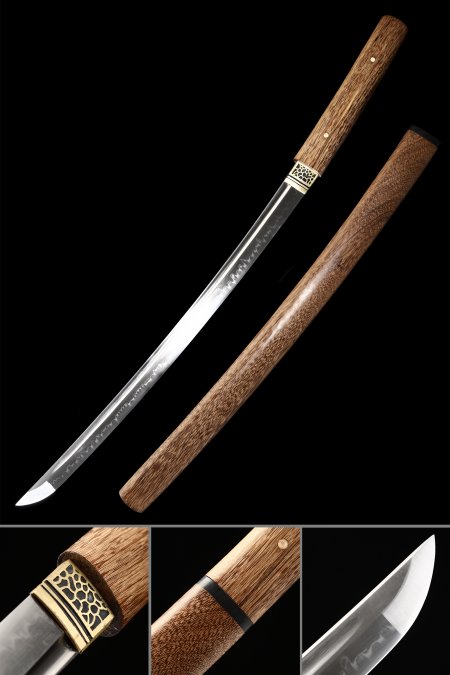
T10 clay-tempered naginata blades present the hamon in a particularly complete and visually dramatic format because of the naginata's construction. On a standard katana, the habaki blade collar sits at the base of the blade and the tsuba guard interrupts the view of the blade at that point. On a naginata, the blade transitions directly into the pole handle without a tsuba guard interruption, allowing the hamon to be viewed continuously from the base of the blade to the kissaki tip across the full blade length. This uninterrupted hamon run creates a complete presentation of the temper line that reveals the full pattern of hamon activity from where it begins near the habaki area through the mid-blade section and into the kissaki point. T10 clay-tempered naginata in this collection show hamon patterns that vary from piece to piece based on the specific clay application: straight suguha patterns, undulating notare patterns, and combinations of nie and nioi activity in the hamon zone are all represented across the collection. The extended blade surface of the naginata also means the hamon has more length to develop through its full pattern sequence.