What creates the distinctive layered patterns visible in Damascus steel swords?
Updated Feb 2026
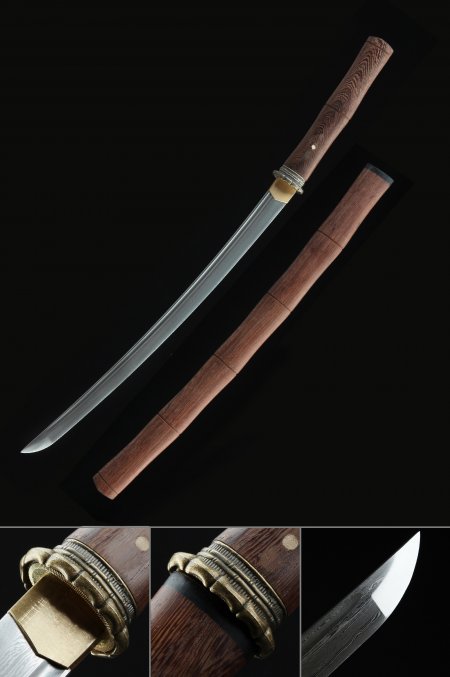
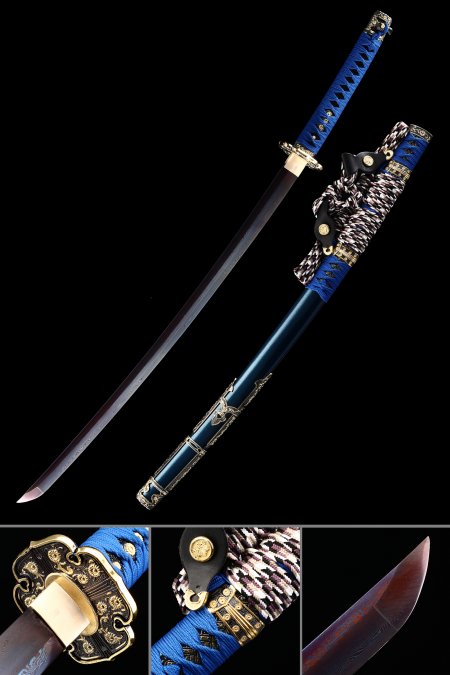
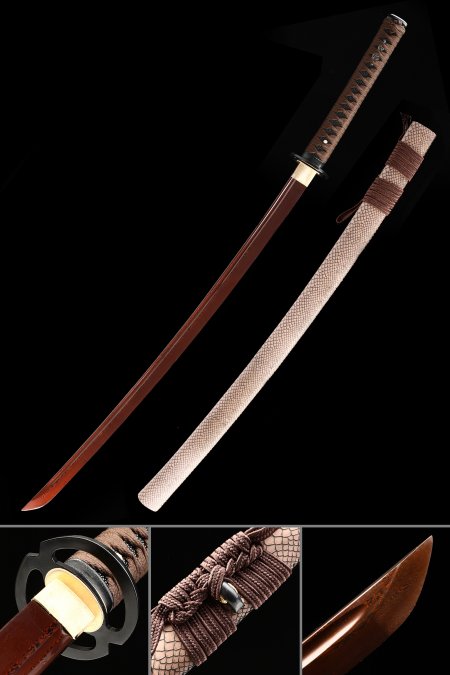
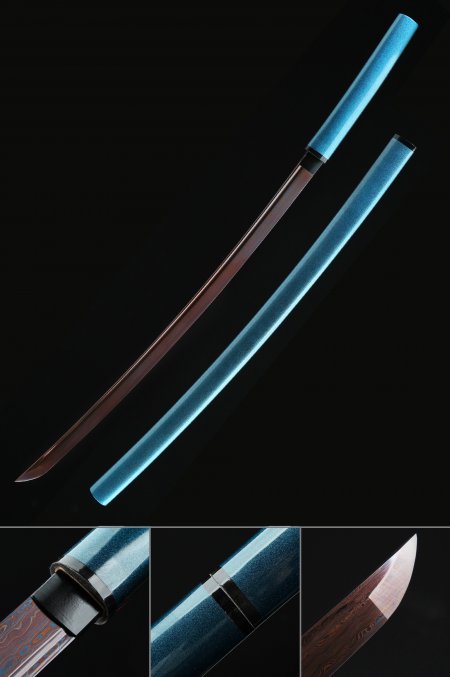
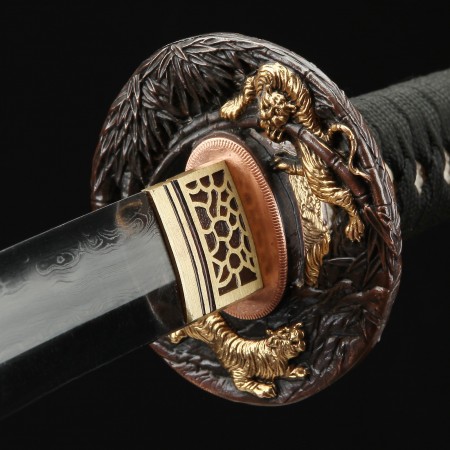
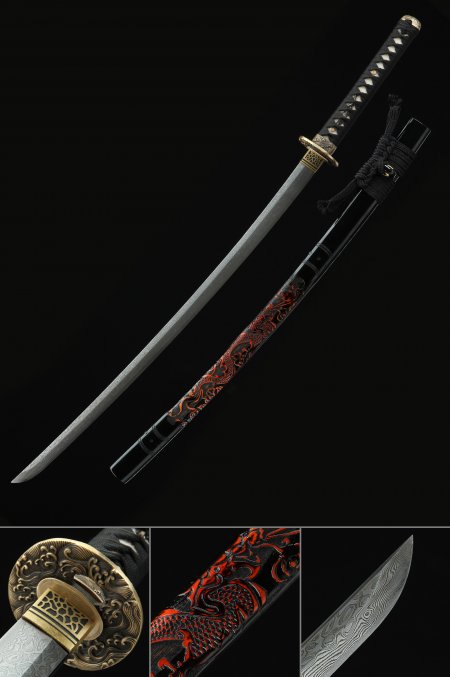
The layered patterns visible in Damascus steel swords are created through a process of repeatedly folding and welding two or more steel types with different carbon content together, then acid-etching the finished and polished blade surface to reveal the differential carbon distribution across the layers. During the folding process, the different steel types are stacked, heated, and hammered together repeatedly - each fold doubles the number of layers, so after ten folds the blade contains 1024 layers, after fifteen folds it contains 32,768 layers. As the high-carbon and low-carbon steel types flow and mix at their boundaries during folding, they create complex patterns whose specific configuration depends on the number of folds, the geometry of the folding, and any additional manipulation - twisting, cutting, and re-welding - that the smith applies to develop specific pattern types. After final shaping and polishing, the blade is etched in a mild acid that preferentially darkens the high-carbon areas, revealing the differential pattern as contrasting dark and light layers across the blade surface. Because no two folding sequences are identical, every Damascus blade has a unique pattern that cannot be exactly replicated.