What is a real hamon and why does it matter for collectors?
Updated Mar 2026
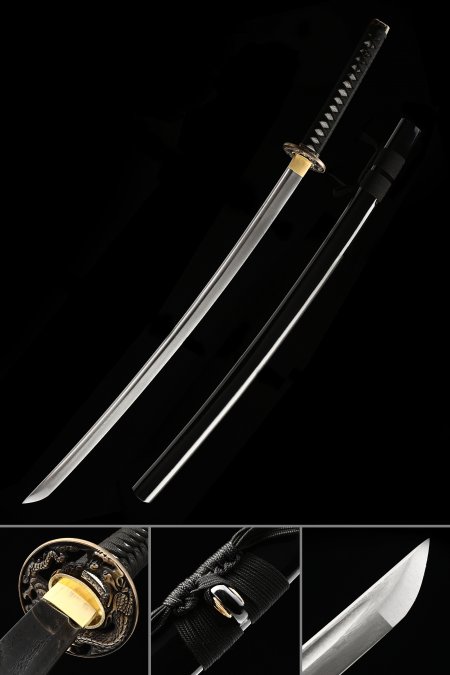
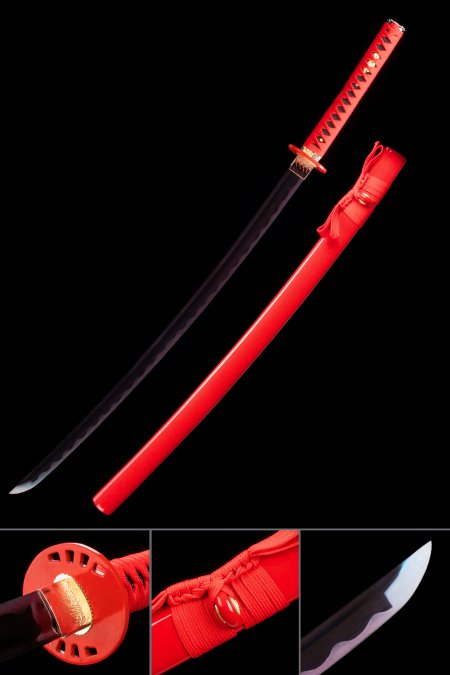
A real hamon - also called a natural hamon - is the transition line that appears along the blade edge as a result of differential hardening, a process in which clay is applied to the blade before heat treatment to control where rapid quenching occurs. The edge, exposed to quenching, becomes harder martensitic steel, while the spine retains a softer, more resilient structure. The boundary between these two zones appears as a misty, cloud-like line called the hamon, whose shape and activity are influenced by the clay pattern applied by the smith. An acid-etched hamon, by contrast, is a surface treatment applied to any blade regardless of its hardening process. For collectors, a real hamon represents genuine craft knowledge and a blade with authentic metallurgical structure - details that remain visible and verifiable over the lifetime of the piece.