What pattern types appear on Damascus steel wakizashi blades?
Updated Feb 2026
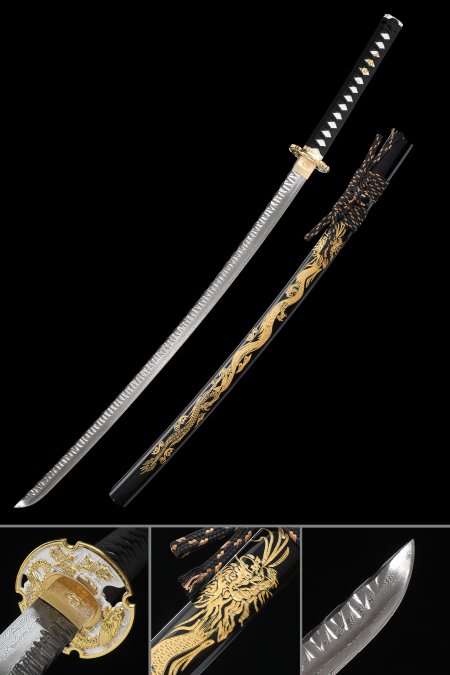
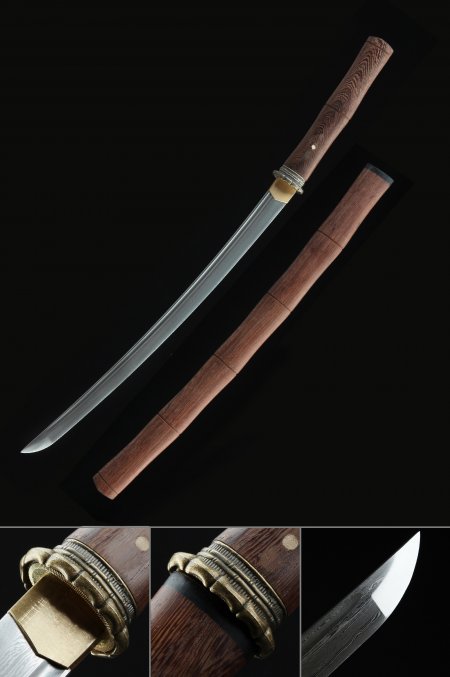
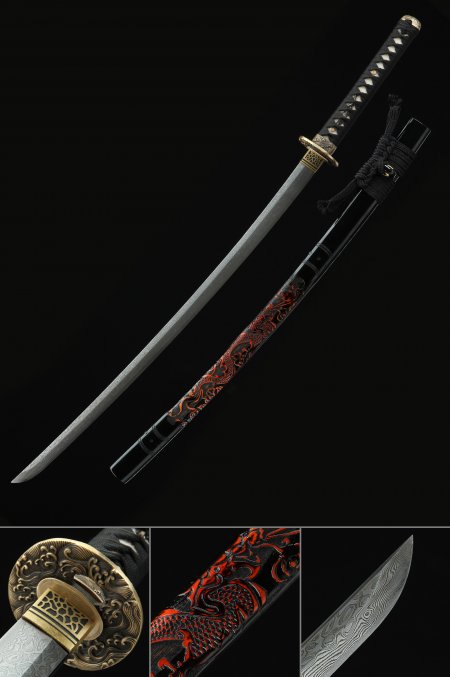
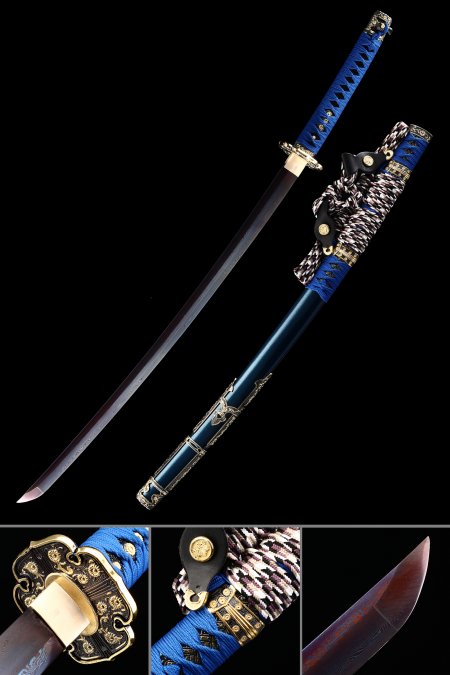
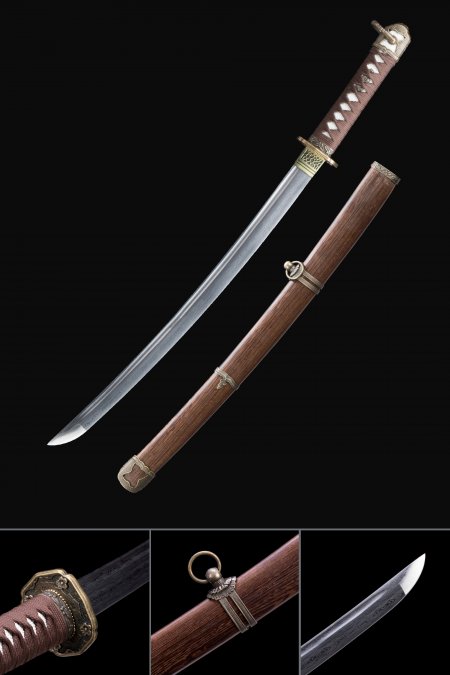
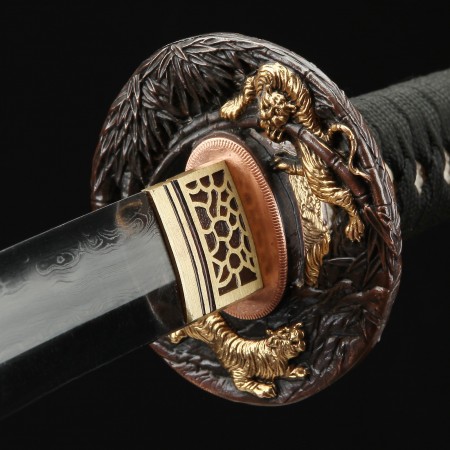
Damascus steel wakizashi in this collection feature patterns that result from the specific forging techniques used to manipulate the billet during production. The most common pattern types are the random or wild pattern - produced by a relatively free-form manipulation of the billet during folding - and the twist pattern - produced by twisting the billet at a specific stage to create a more regular, repeating visual structure. Random patterns tend to produce the flowing, water-like formations most commonly associated with Damascus steel in popular imagination, with waves and currents that follow the blade's length in an organic, non-repeating configuration. Twist patterns produce a more geometric, ladder-like structure that some collectors prefer for its regularity. Both pattern types are represented across the wakizashi collection. The acid-etching step that reveals the pattern also affects its final appearance - depth of etch, timing, and the specific steel types in the billet all influence the final contrast and visibility of the patterns. This means no two Damascus wakizashi blades will have exactly the same pattern even if they are produced using the same general technique.