Why is T10 carbon steel particularly well-suited for tanto production?
Updated Feb 2026
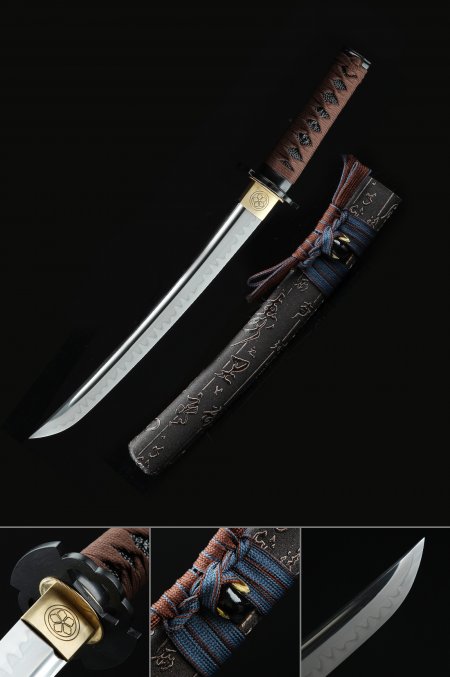
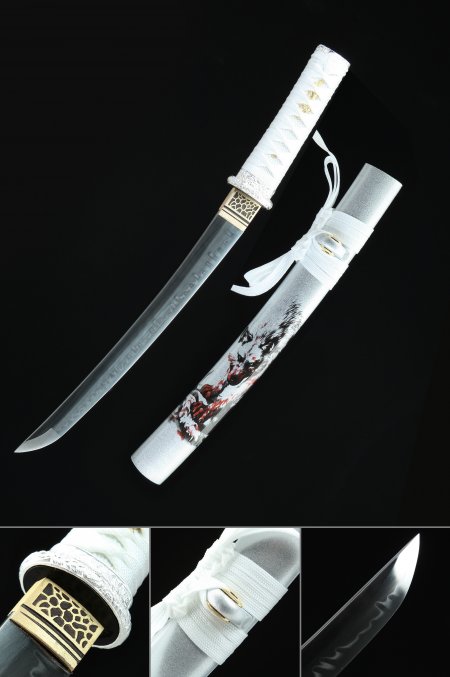
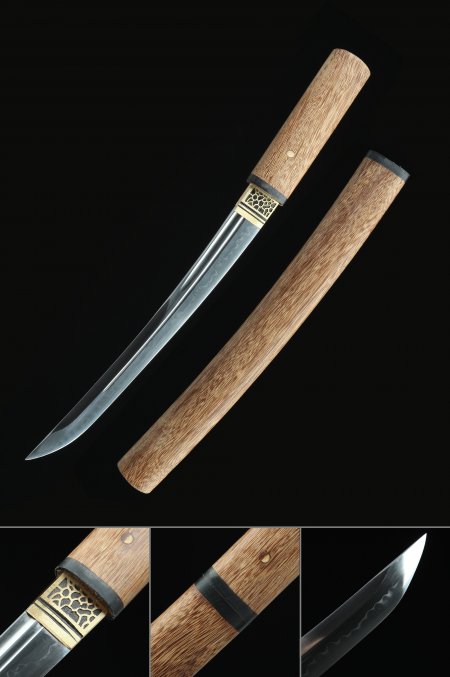
T10 carbon steel is well-suited for tanto production for reasons that are specific to the shorter blade format. At approximately 1.0% carbon content, T10 is harder when properly heat-treated than the lower-carbon steels commonly used for katana - 1045 at 0.45% and 1060 at 0.60% are both significantly softer at the edge. This higher hardness is particularly valuable in a short blade, where the edge geometry takes more localized stress per unit of length than a longer blade distributes over its full length. The T10 tanto can achieve an edge with superior hardness and sharpness retention compared to lower-carbon alternatives. Clay tempering with T10 produces a very clearly defined hamon line because the carbon content contrast between the fully hardened edge zone and the clay-protected spine is significant. The high carbon also makes the hamon line activities - the crystalline formations along the boundary - more pronounced and visible than they typically are on lower-carbon steels. For collectors who value the technical aspects of Japanese blade making, a T10 clay-tempered tanto shows these qualities at a scale where they can be examined closely and appreciated in detail.