Does the folding process affect blade performance compared to non-folded katana steels like T10 or 1
Updated Feb 2026
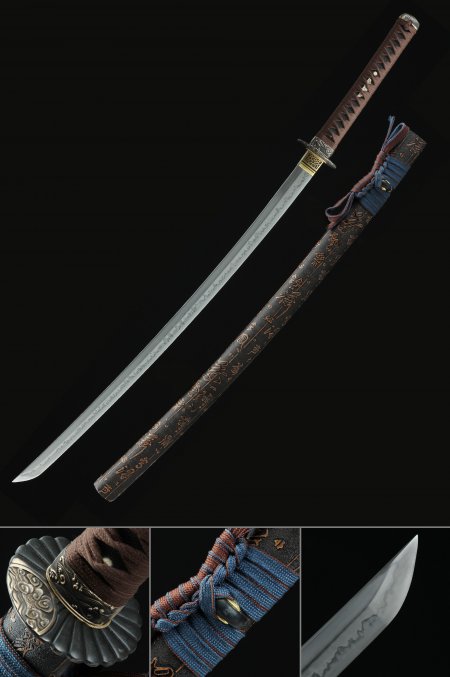
The folding process creates a blade with characteristics that differ from non-folded steels in specific ways. Folded steel blades benefit from the homogenization that repeated folding provides — the process distributes carbon and impurities more evenly through the steel, potentially reducing weak points from localized carbon concentration. The layer structure can also provide a degree of crack resistance, as cracks have difficulty propagating across layer boundaries. However, modern non-folded steels like T10 and 1095 are manufactured with highly controlled composition that already achieves the uniformity that historical folding was designed to produce. In terms of edge quality, properly heat-treated non-folded T10 or 1095 typically achieves equal or better edge refinement than folded steel because the homogeneous composition responds more predictably to heat treatment. Folded steel’s primary advantage in modern katana is visual rather than functional: the unique grain patterns are the primary reason collectors choose folded steel.