How does T10 clay-tempered steel compare to 1045 in this collection?
Updated Mar 2026
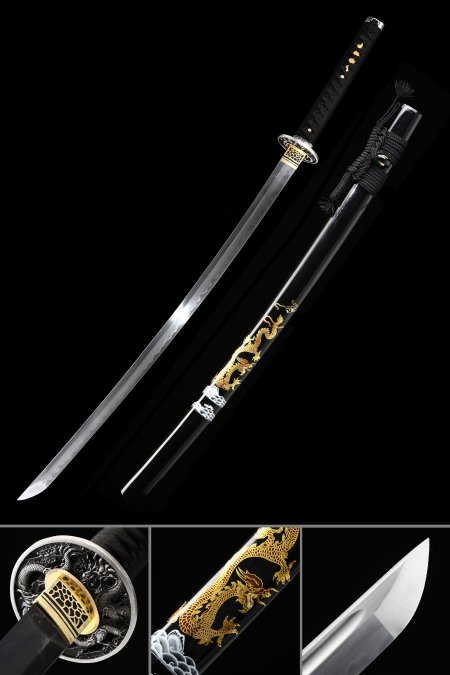
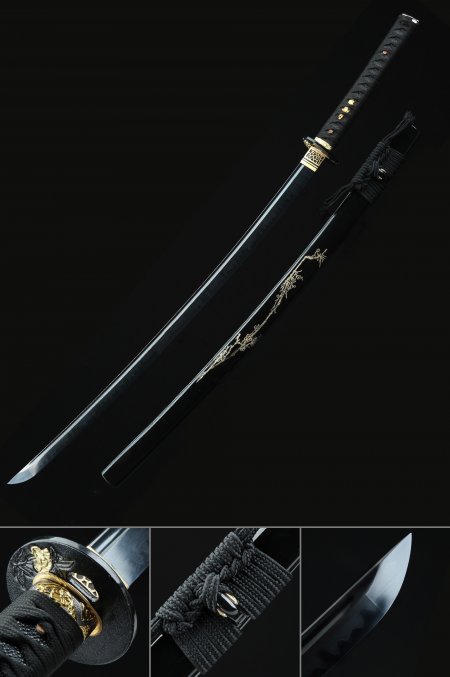
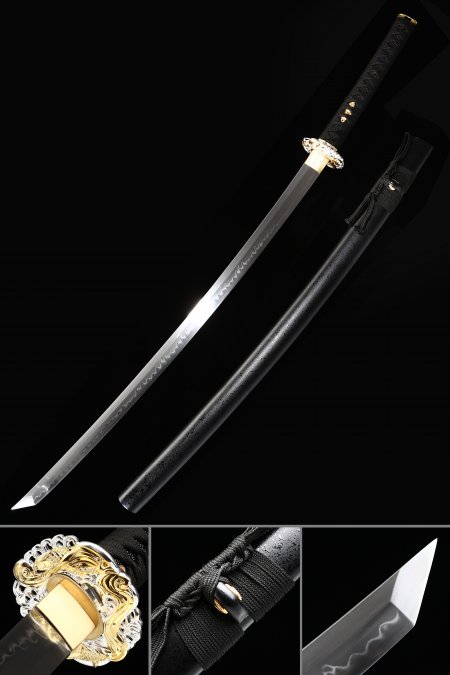
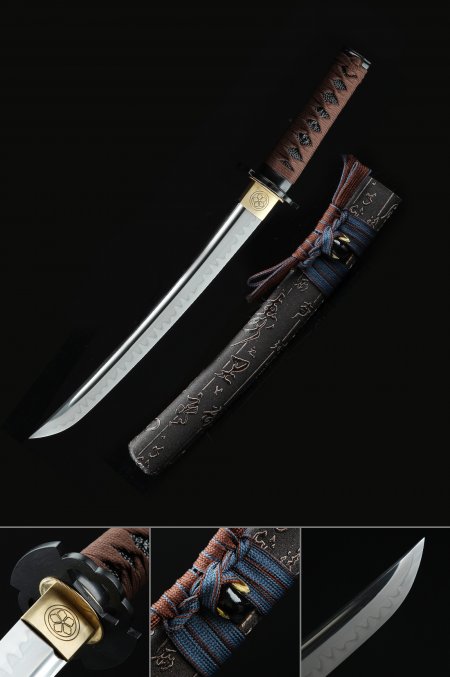
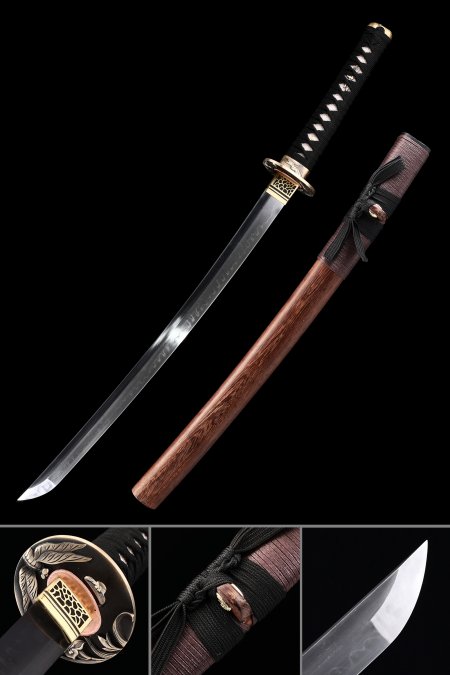
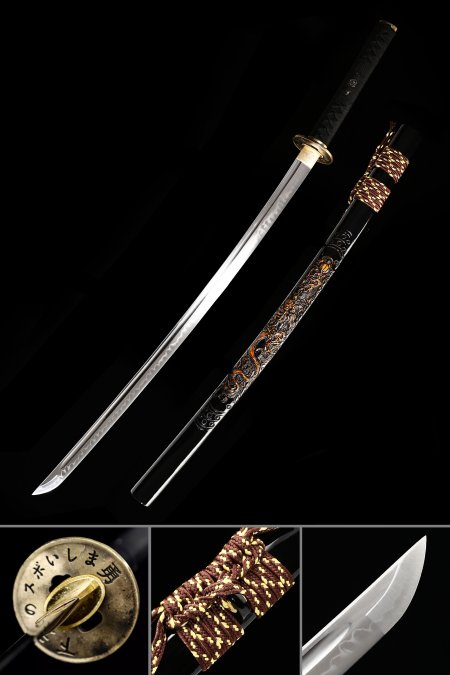
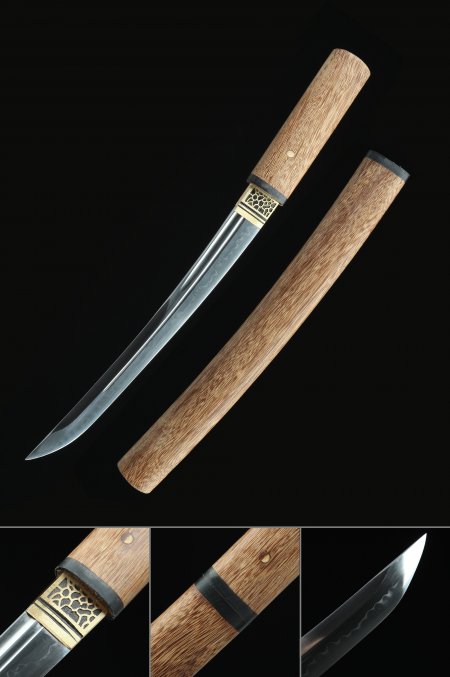
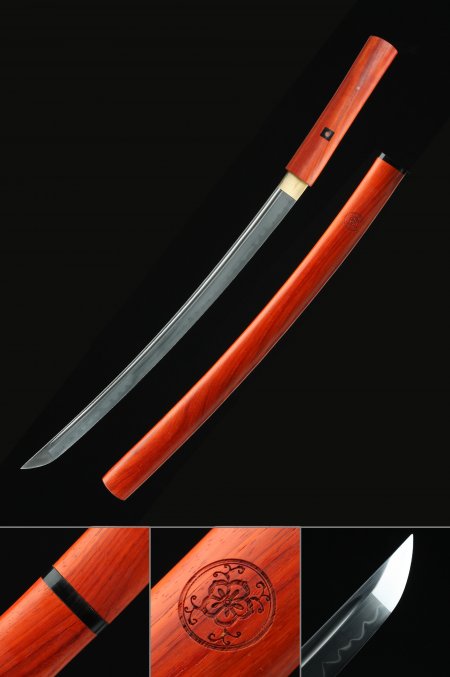
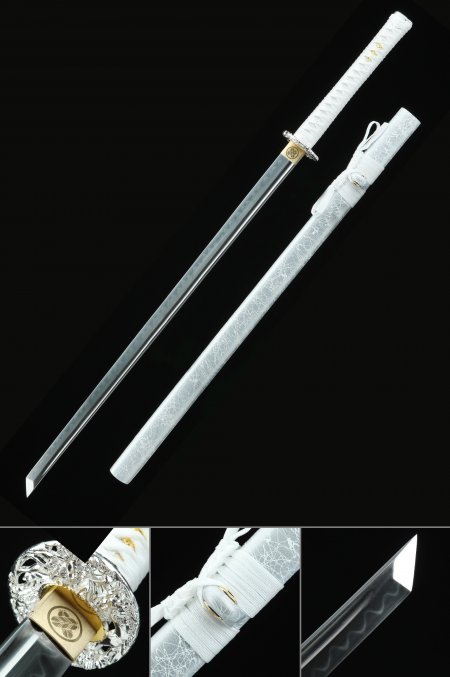
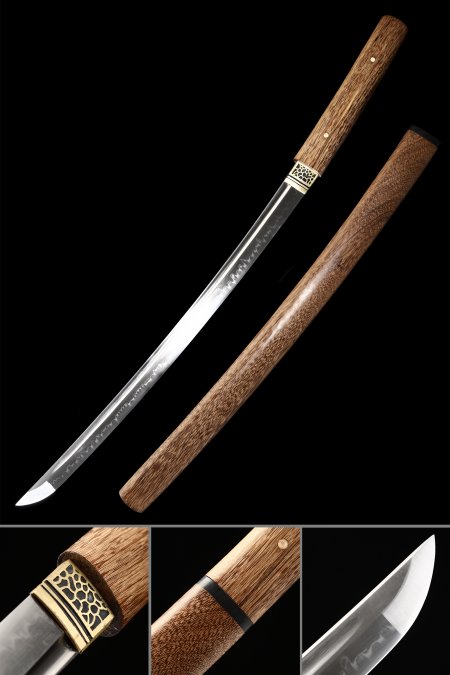
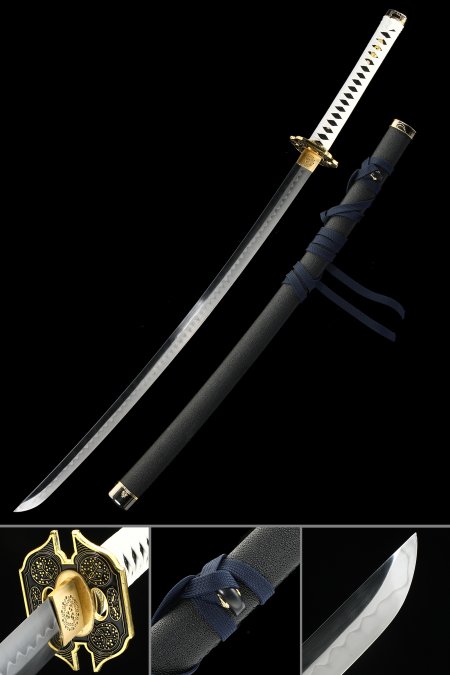
The two steels represent different tiers of both metallurgical complexity and visual distinction. 1045 high-carbon steel is a workhorse material - consistent, well-behaved under heat treatment, and widely used across the collectible katana market. It produces a blade with reliable hardness and a clean, uniform appearance. T10 tool steel, by contrast, contains trace amounts of silicon and tungsten that increase wear resistance and allow for more nuanced heat treatment. The defining characteristic of T10, however, is not its composition but the clay-tempering process applied to it. During firing, clay is applied selectively to the blade to create differential cooling rates along the edge versus the spine. The result is a visible hamon - an undulating crystalline boundary line that forms where hard martensite meets softer pearlite microstructure. No two hamons are identical, which means every T10 clay-tempered blade in this collection is genuinely unique. For collectors who value authenticity and visual complexity in their display pieces, T10 represents a meaningful step above standard carbon steel offerings.