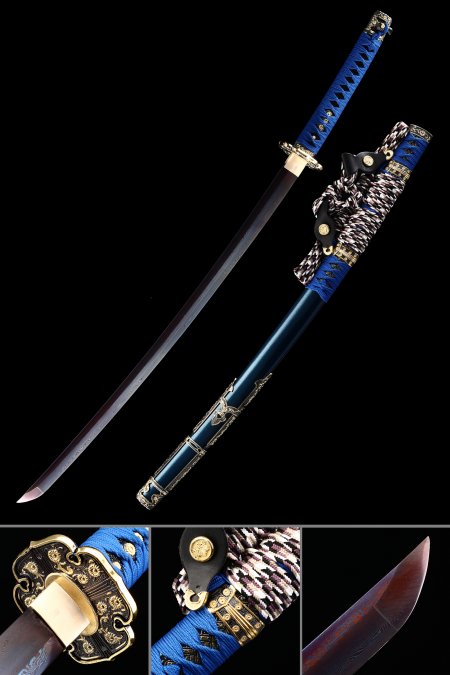
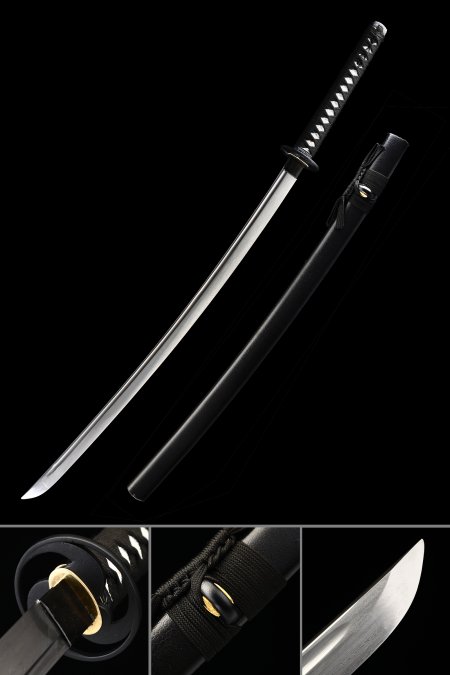
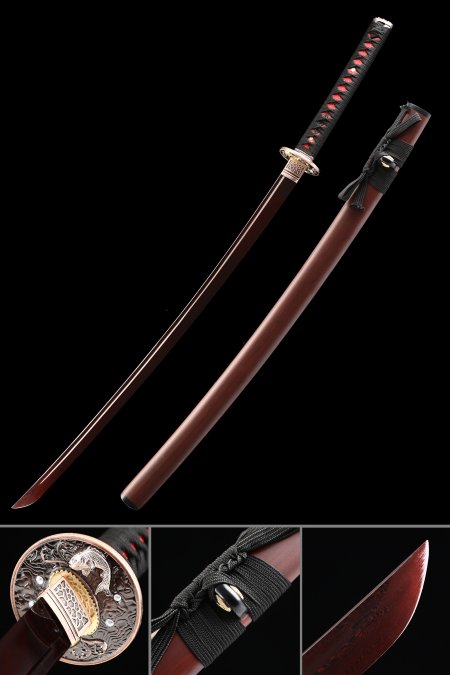
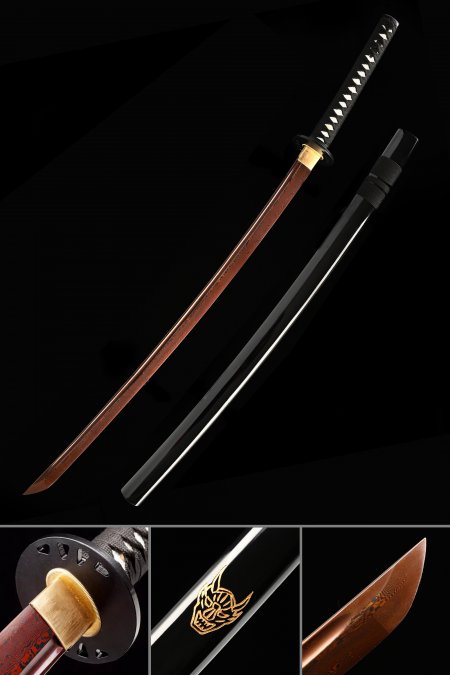
How is Damascus steel different from mono-steel in a display katana?
Updated Mar 2026
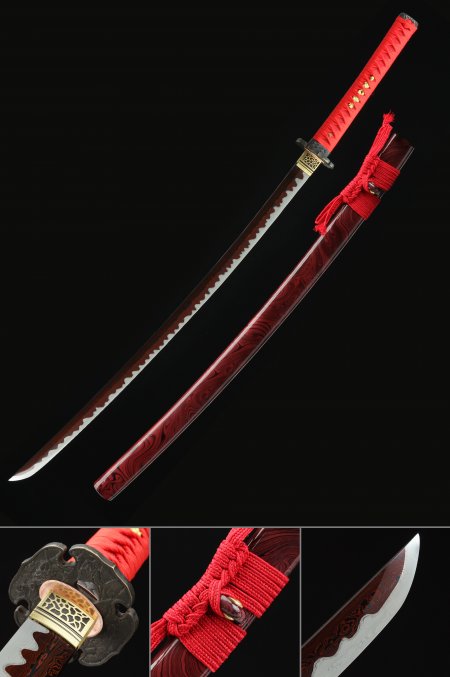
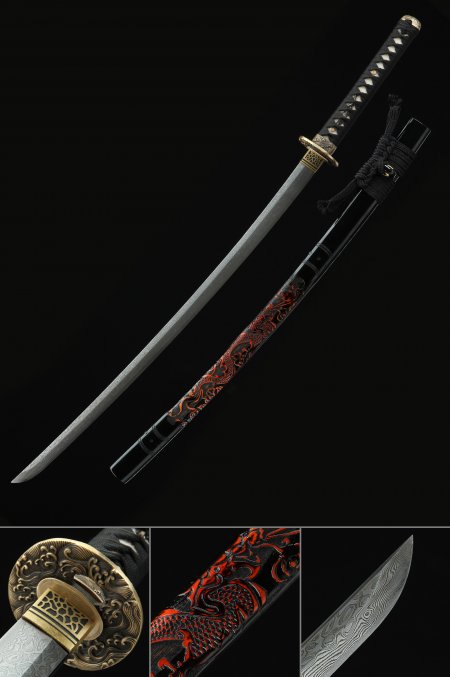
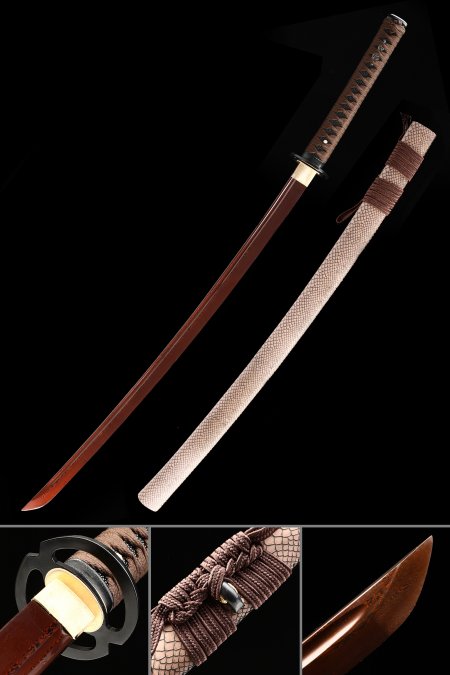
Mono-steel blades — those forged from a single billet of high-carbon steel — produce a clean, uniform surface with visible hamon (temper line) as the primary visual feature. Damascus, or pattern-welded steel, involves stacking and forge-welding multiple steel types together, then folding the billet repeatedly to create hundreds of layers. When acid-etched, the differing carbon content between layers reacts at different rates, producing the flowing, organic grain patterns Damascus is known for. For display collectors, this means every Damascus blade carries a surface that is visually richer and inherently one-of-a-kind — a significant distinction when the piece is meant to be seen rather than used.