What makes Damascus steel visually different from other blade types?
Updated Mar 2026
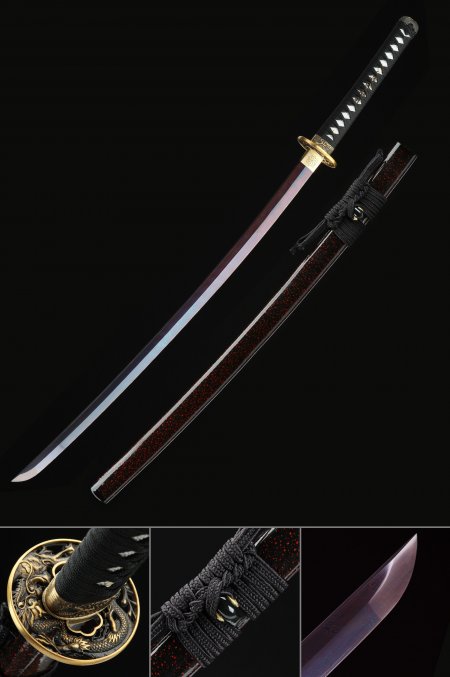
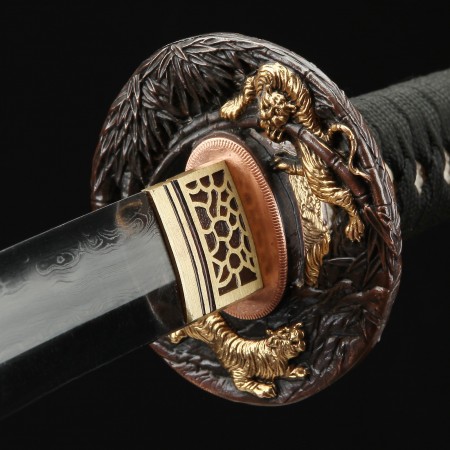
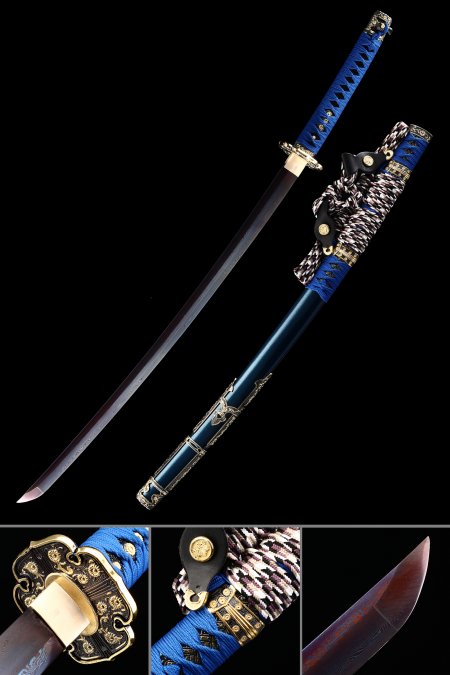
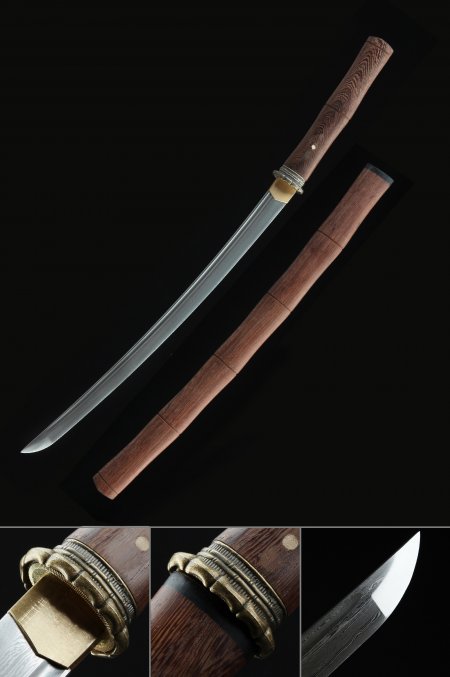
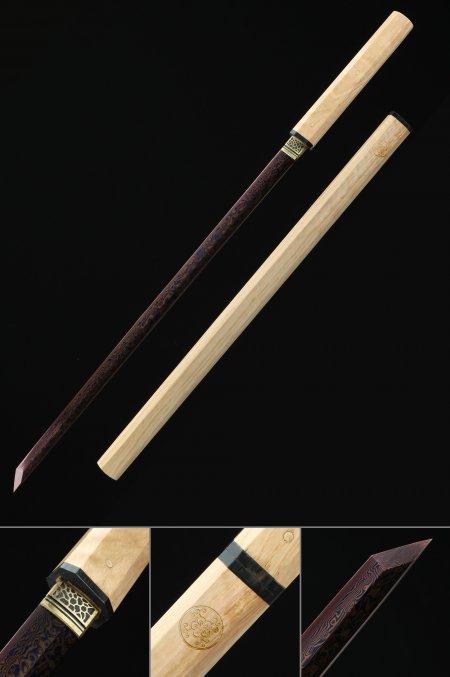
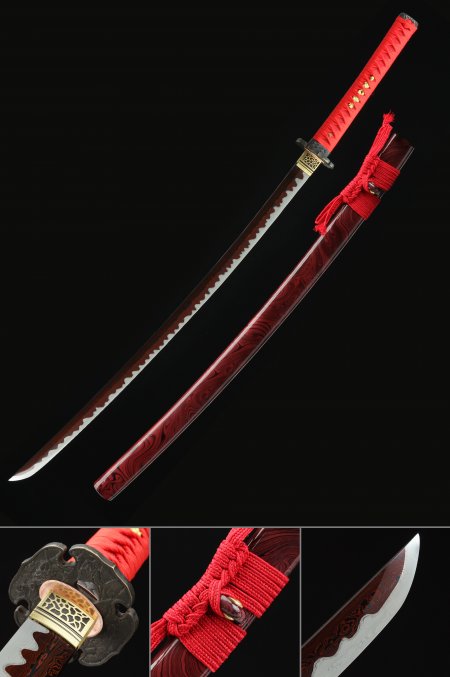
Damascus steel is produced by forge-welding multiple layers of high-carbon and lower-carbon steel together, then repeatedly folding and drawing out the billet. When the finished blade is etched - typically with ferric chloride or a mild acid solution - the different carbon contents react at different rates, revealing the flowing, layered grain pattern beneath the surface. No two Damascus blades share an identical pattern, because even small variations in folding angle, heat, and hammer pressure shift the final design. This is fundamentally different from monosteel blades, which show a uniform, featureless surface after polishing. On a purple-tinted Damascus katana, the etched pattern appears against the colored background, making the layering effect far more visible than it would be on a standard silver-grey finish - which is a significant part of why collectors prize these pieces as display items.