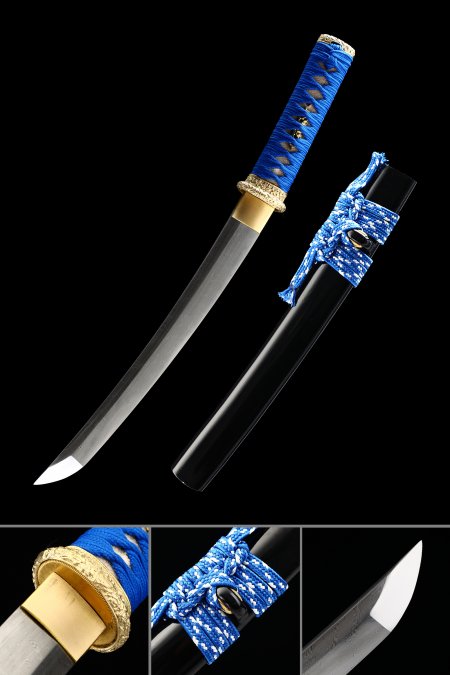
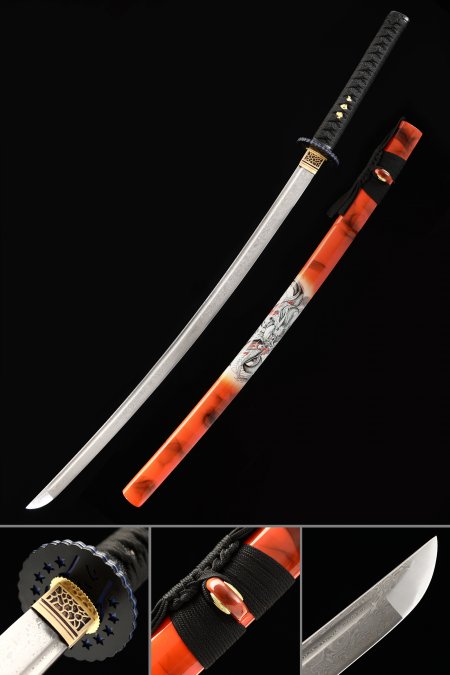
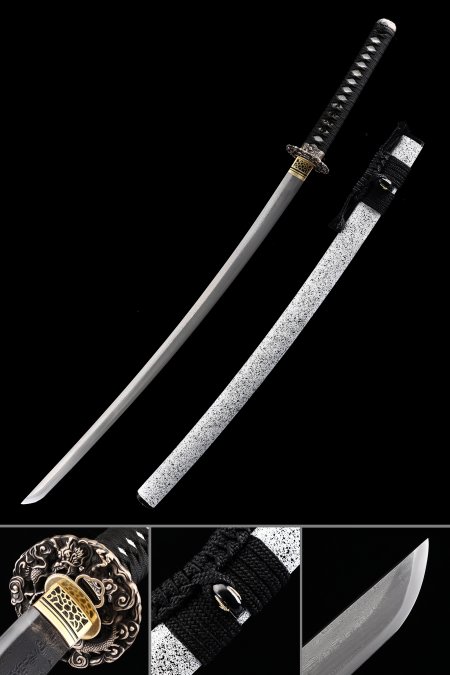
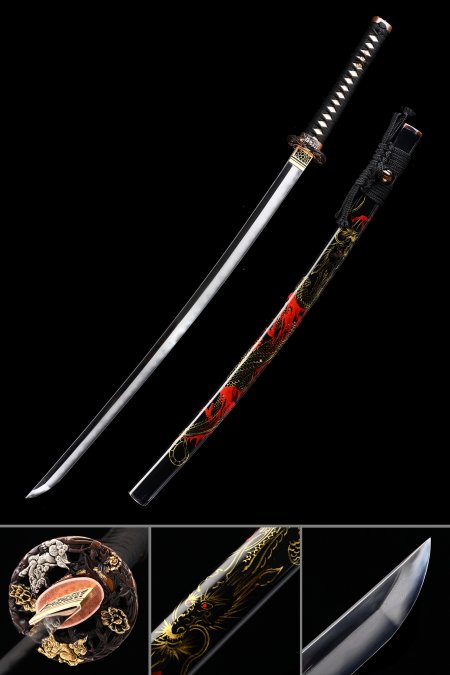
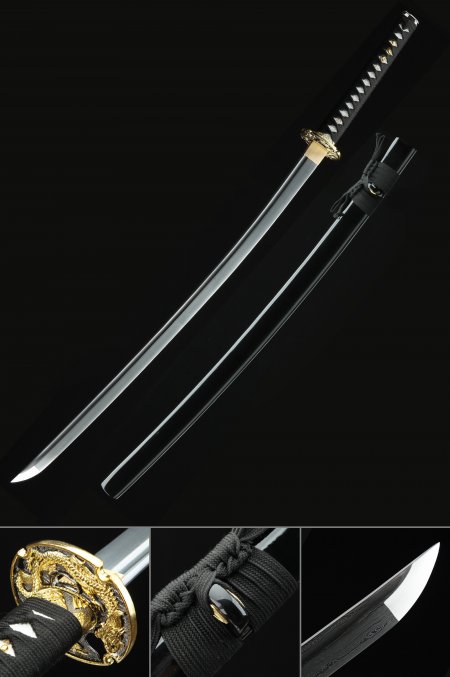
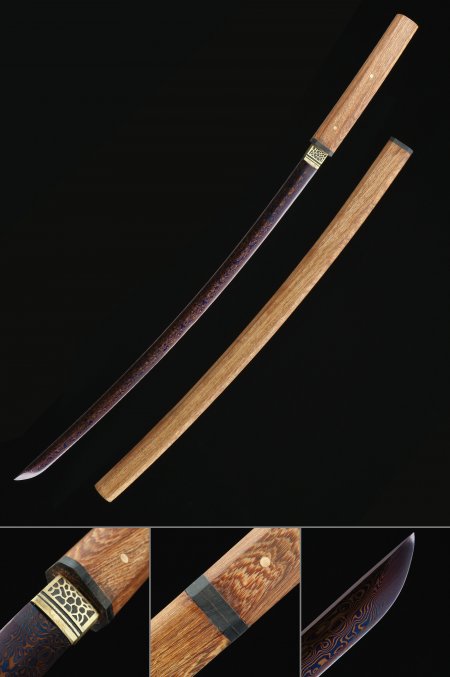
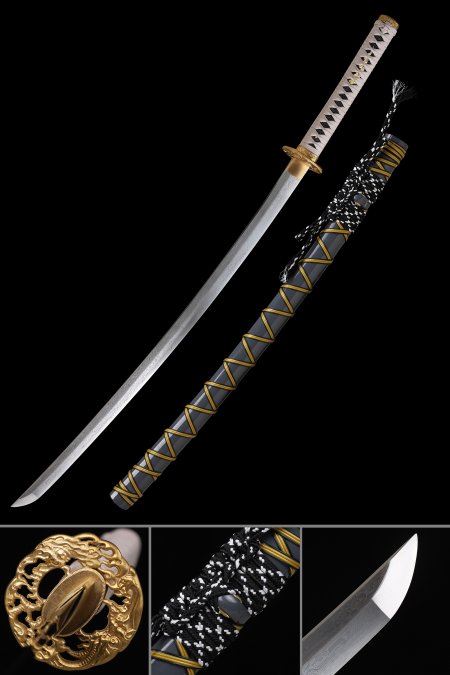
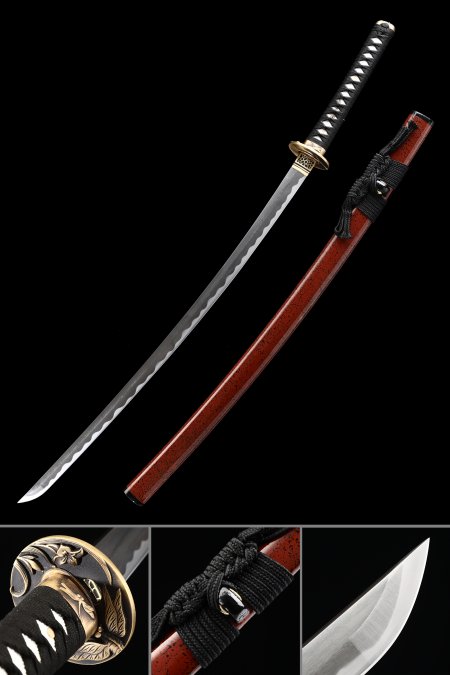
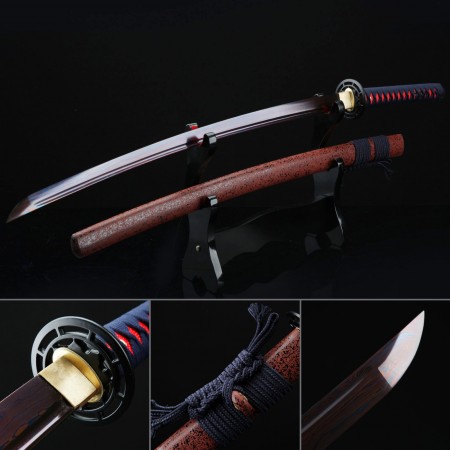
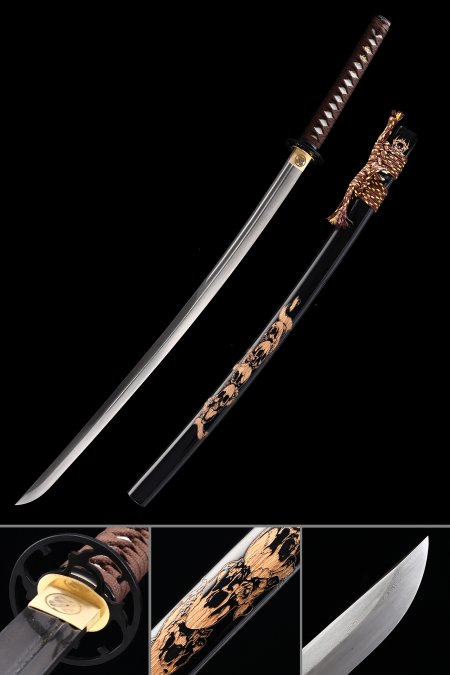
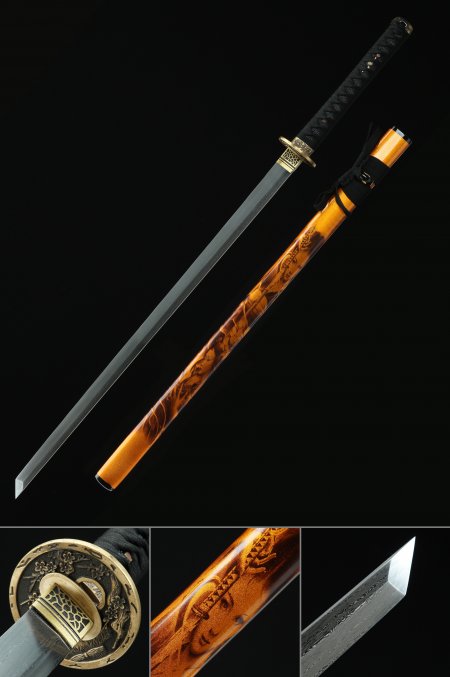
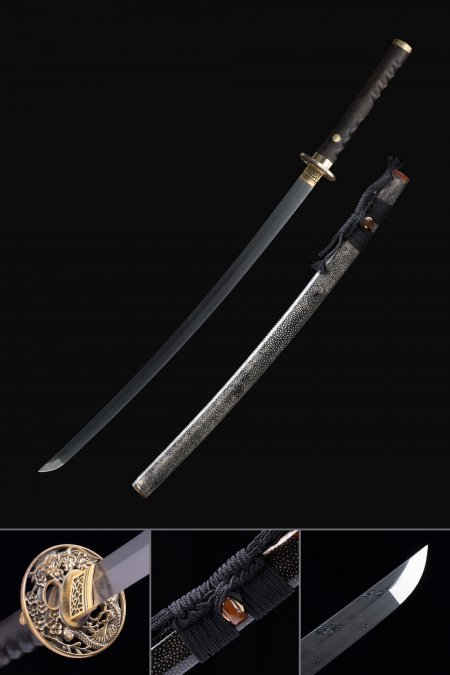
The hamon on Bronze Melaleuca Steel Katanas is genuine — produced by differential clay-coating the blade before the hardening quench, not by acid etching. During heat treatment, clay applied along the spine insulates that zone from rapid cooling, while the edge cools quickly and hardens into a finer crystalline structure called martensite. The boundary between these two zones is what appears as the hamon line. Because it reflects actual metallurgical variation rather than a surface treatment, the hamon changes character under different lighting angles, appearing bright and active under direct light and subtle under diffuse light. This optical behavior is what experienced collectors use to distinguish a genuine hamon from an etched imitation.