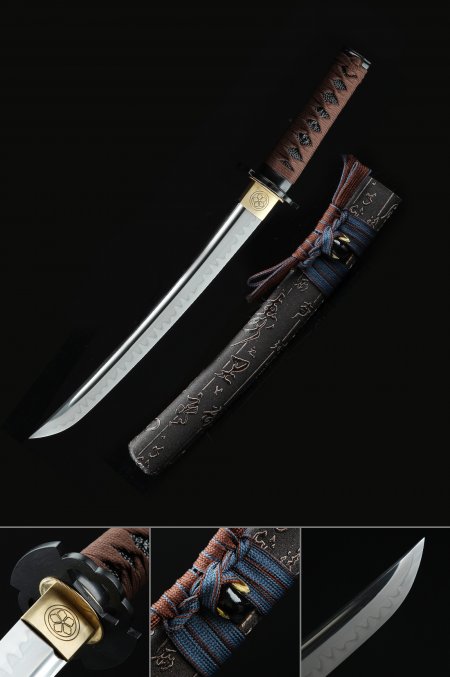
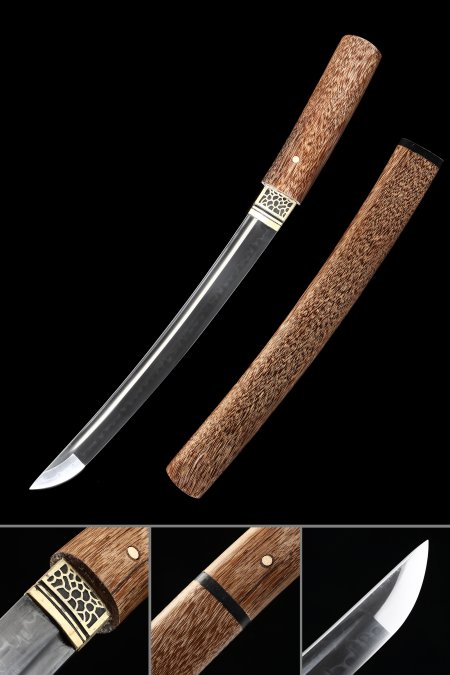
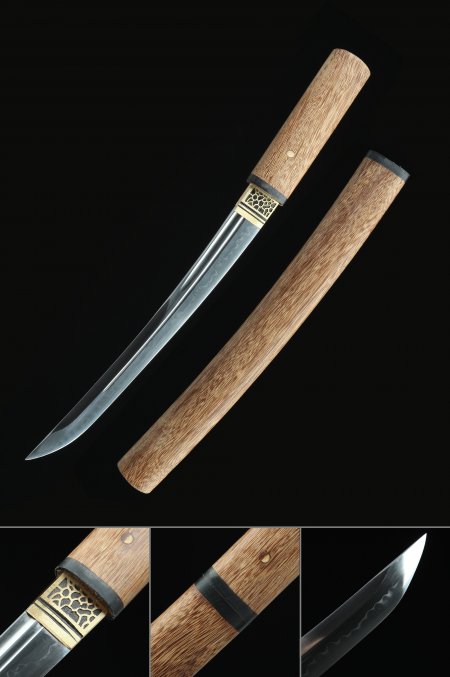
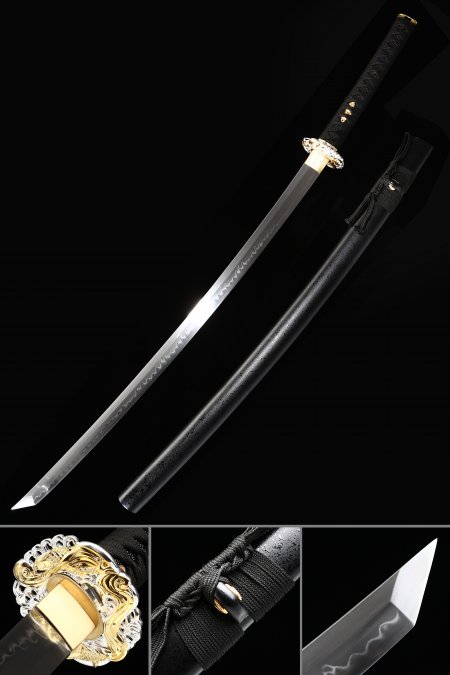
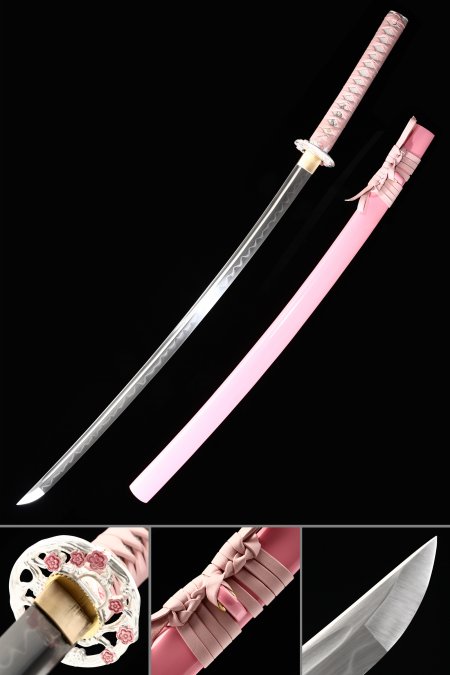
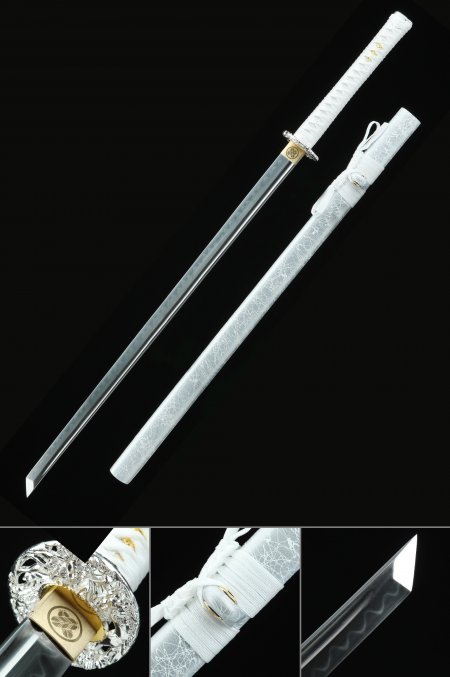
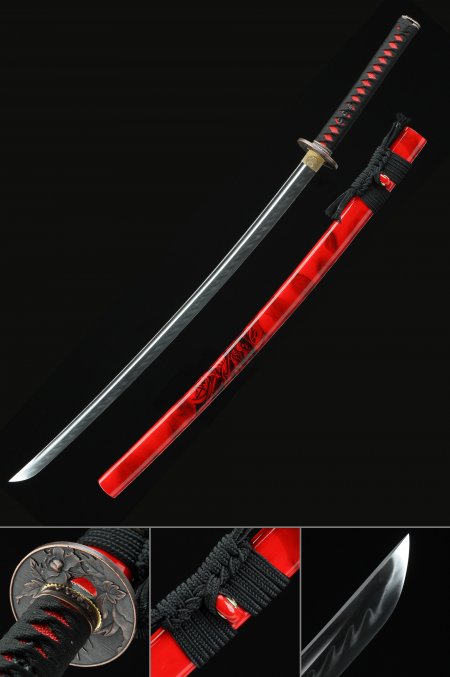
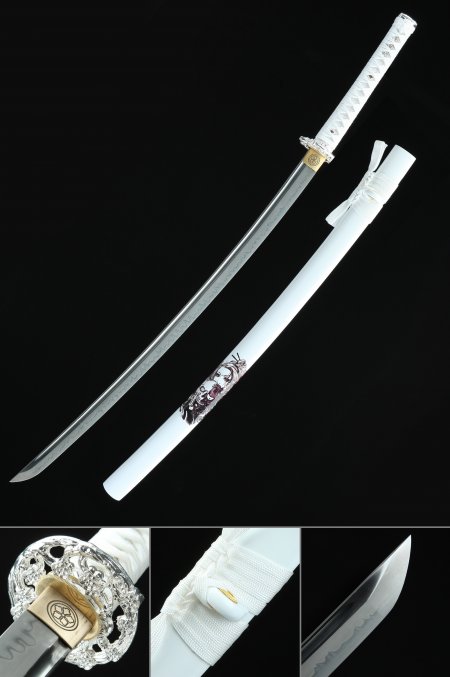
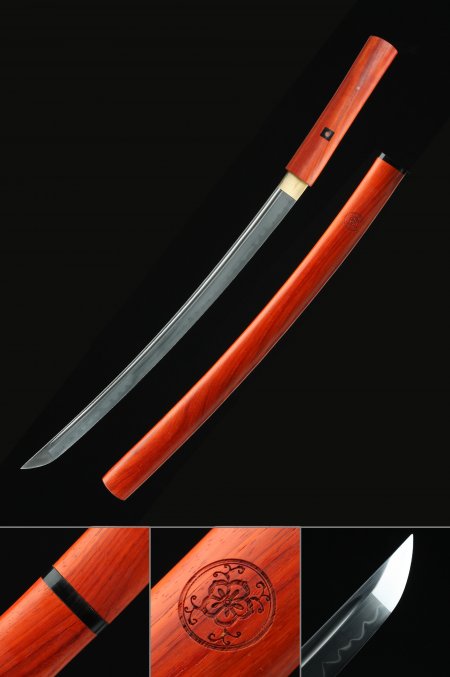
Yes. The T10 tanto in this collection features a genuine hamon produced through differential clay tempering - the same core technique used in traditional Japanese blade craft. Clay is applied along the spine before quenching, causing the edge to cool faster and form a harder martensitic structure, while the spine remains comparatively softer. The boundary between these two zones becomes visible after polishing as the hamon line. This is distinct from acid-etched or wire-brushed "false" hamon, which mimics the appearance without any change in actual steel hardness. A real hamon on a display tanto is a meaningful craft detail that experienced collectors specifically look for when evaluating a piece.