What makes a hamidashi different from a standard tanto?
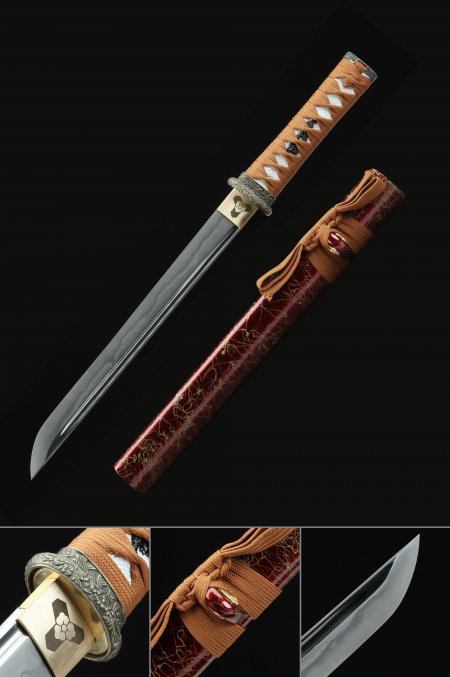
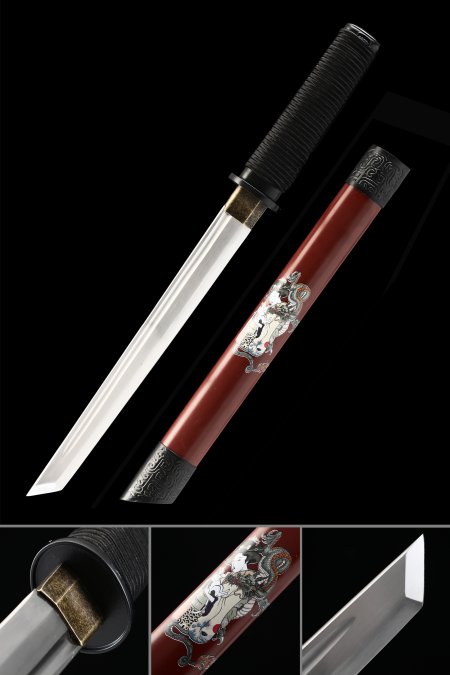
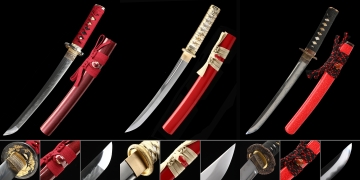
The defining difference is the guard. A standard tanto koshirae typically features a full-sized tsuba - a circular or shaped guard plate that extends clearly beyond the handle on all sides. A hamidashi uses a ko-tsuba, a miniature guard that barely clears the handle width. Historically, this design was preferred when the blade needed to sit flush and discreet within the obi without the guard catching fabric. For collectors, the hamidashi style shifts visual emphasis toward the handle wrap quality and blade profile rather than the guard as a decorative centerpiece. It is a subtler, more integrated aesthetic that rewards close inspection rather than immediate visual impact.
Is there a real hamon on the T10 tanto blades?
Yes. The T10 tanto in this collection features a genuine hamon produced through differential clay tempering - the same core technique used in traditional Japanese blade craft. Clay is applied along the spine before quenching, causing the edge to cool faster and form a harder martensitic structure, while the spine remains comparatively softer. The boundary between these two zones becomes visible after polishing as the hamon line. This is distinct from acid-etched or wire-brushed "false" hamon, which mimics the appearance without any change in actual steel hardness. A real hamon on a display tanto is a meaningful craft detail that experienced collectors specifically look for when evaluating a piece.
How should I care for a lacquered saya over time?
Lacquered saya are durable but benefit from a few straightforward habits. Avoid leaving the blade seated inside the saya for months without occasional removal - trapped humidity can cause minor surface reactions between the lacquer interior and the carbon steel blade. Store pieces away from direct sunlight, as prolonged UV exposure can shift red lacquer tones toward orange or pink over years. Wipe the saya exterior occasionally with a dry, lint-free cloth rather than any solvent-based cleaner, which can dull the lacquer sheen. If the saya develops a minor scuff, a small amount of Renaissance Wax applied sparingly can restore surface gloss without affecting the underlying lacquer layers.
How does High Manganese Steel compare to T10 for display pieces?
High Manganese Steel and T10 Carbon Steel each suit different collector priorities. Manganese steel is alloyed specifically for toughness - it resists chipping and surface damage under incidental contact, which makes it low-maintenance as a display piece that may be handled regularly during photography or arrangement. Its finish tends toward a bright, even polish. T10 is a higher-carbon tool steel with a finer grain, which allows for a sharper edge geometry and, critically, the development of a visible hamon through clay tempering. T10 requires slightly more attentive humidity management due to its carbon content, but it offers a level of visual craftsmanship - particularly the hamon activity - that manganese steel cannot replicate. For static display with aesthetic priority, T10 is the more rewarding choice.
Is a darkred hamidashi tanto a good collector gift?
It is one of the more thoughtful options in the tanto category, particularly for someone who already owns more conventional black or natural-finish pieces. The crimson lacquer saya is visually distinctive without being excessive, and the hamidashi mounting style signals familiarity with historical Japanese blade traditions - making it a piece that reads as curated rather than generic. The compact tanto format also makes it practical for display in spaces where a longer blade would feel oversized. For presentation, a horizontal wooden stand paired with the tanto creates an immediate display arrangement that requires no additional setup. It suits collectors at any experience level who appreciate historically grounded design with strong visual presence.