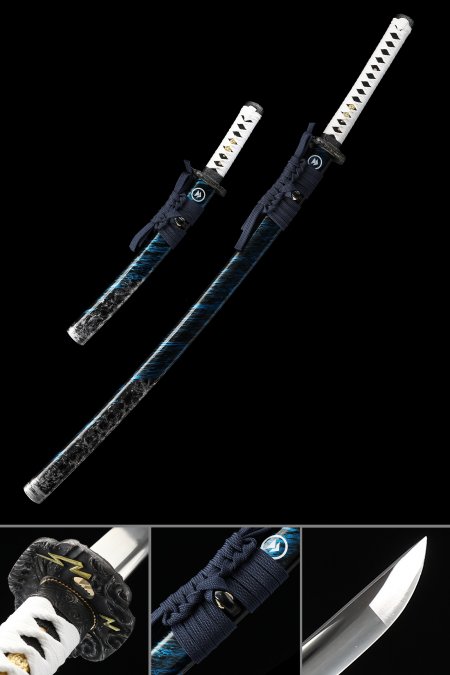
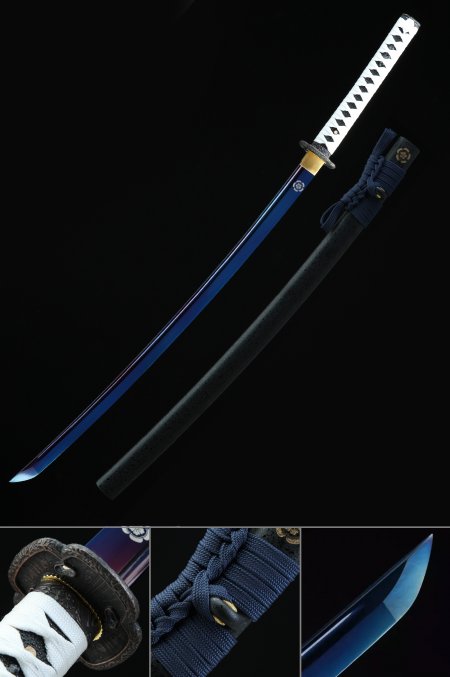
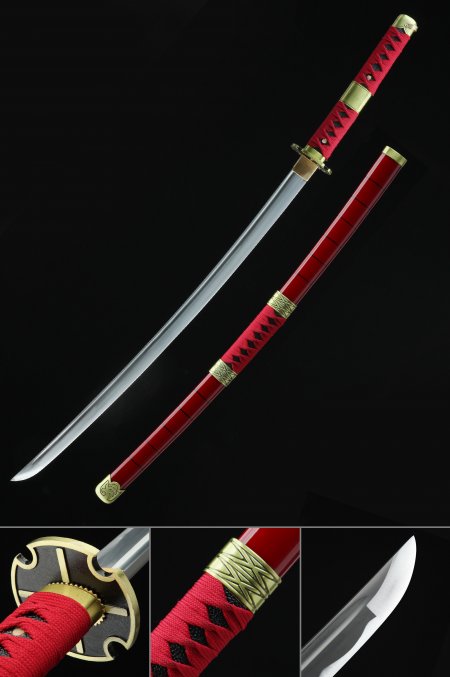
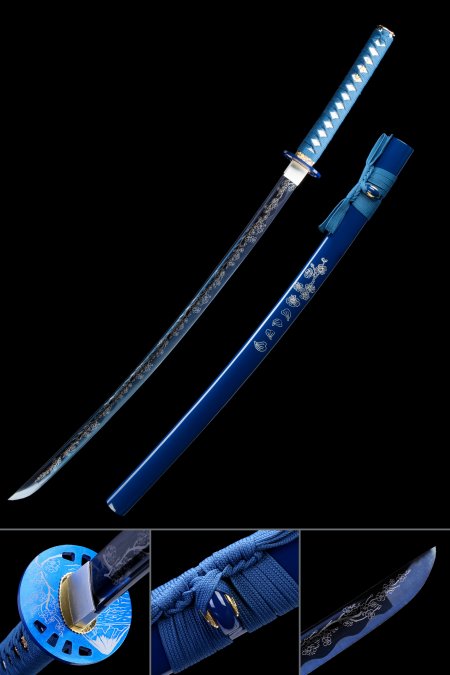
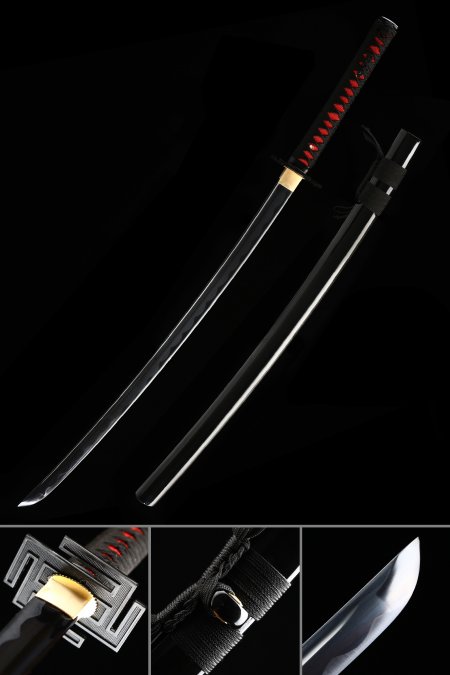
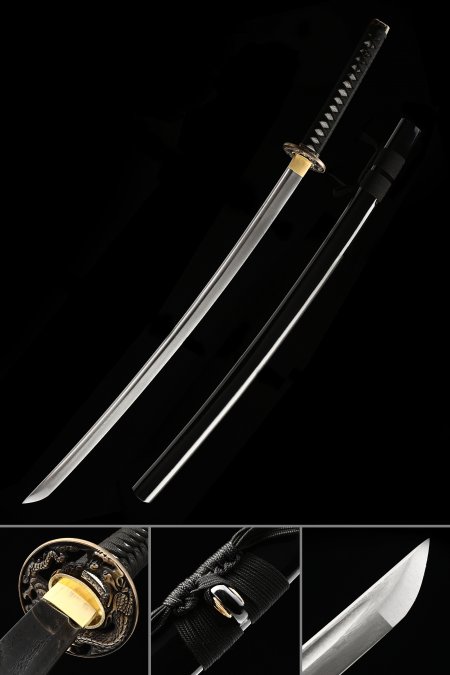
Are chrysanthemum and scroll tsuba historically accurate motifs?
Updated Mar 2026
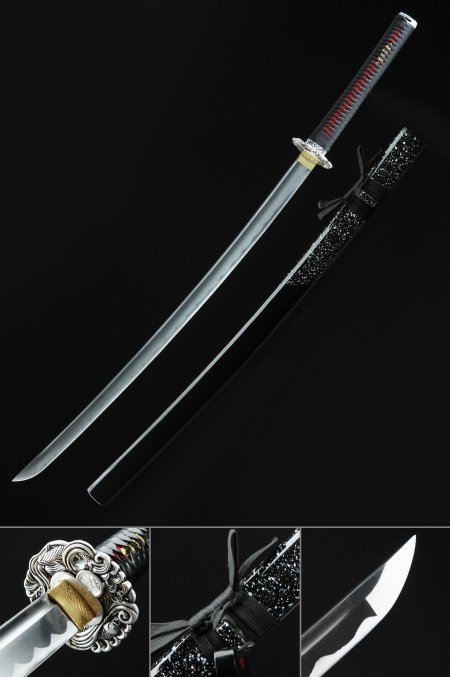
Both motifs have deep roots in Japanese decorative metalwork. The chrysanthemum (kiku) is one of the most revered symbols in Japanese culture, associated with the imperial family and used extensively in sword furniture from the Heian period onward. Tsuba featuring kiku mon (chrysanthemum crest) were considered marks of prestige and appeared on swords presented as formal gifts or awarded by nobility. Scroll and vine motifs — often rendered in bronze or shakudo — reflect the karakusa arabesque patterns that entered Japanese decorative arts via continental influence during the Tang period and were fully naturalized into Japanese metalwork by the Muromachi era. On a display piece, these motifs are not merely decorative choices; they situate the sword within a recognizable historical visual vocabulary.