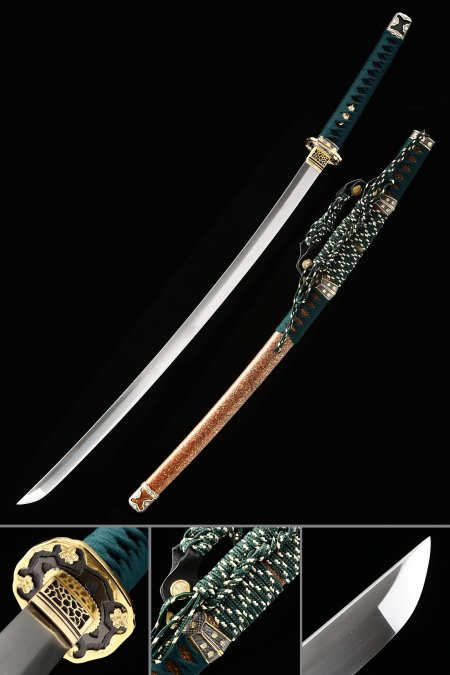
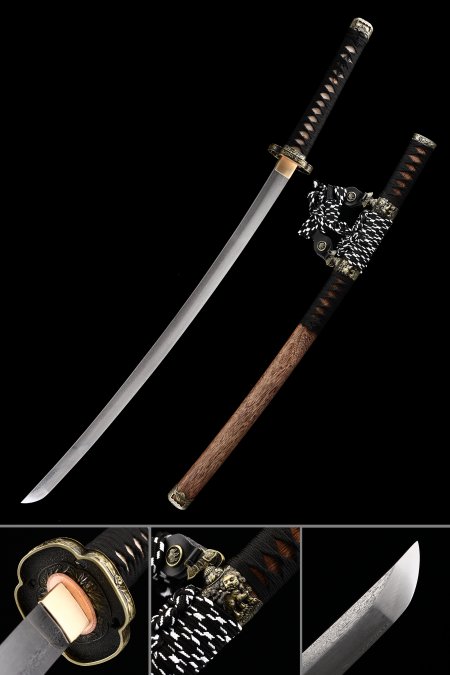
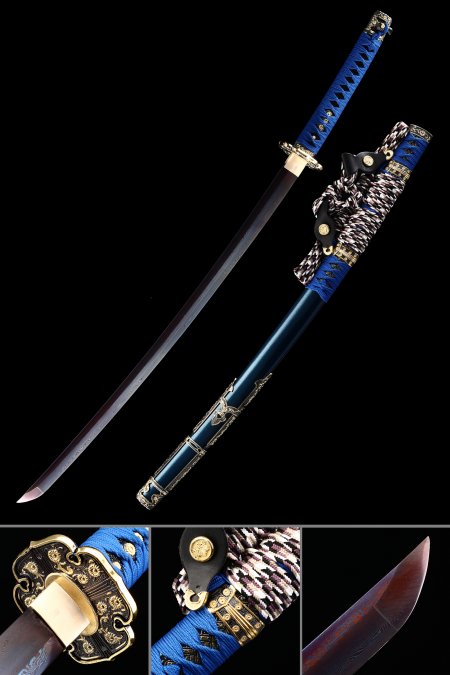
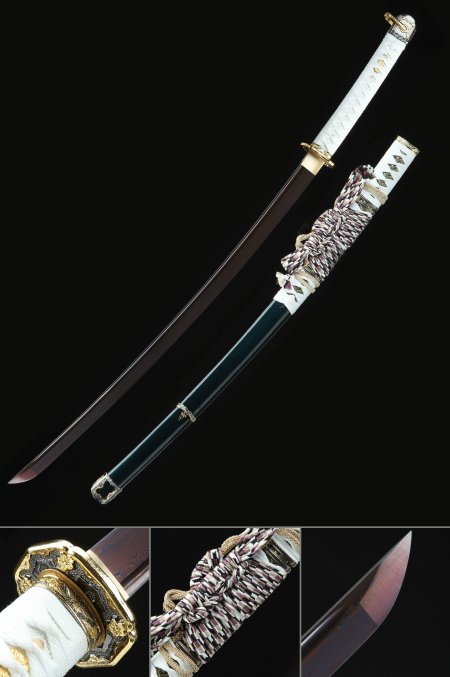
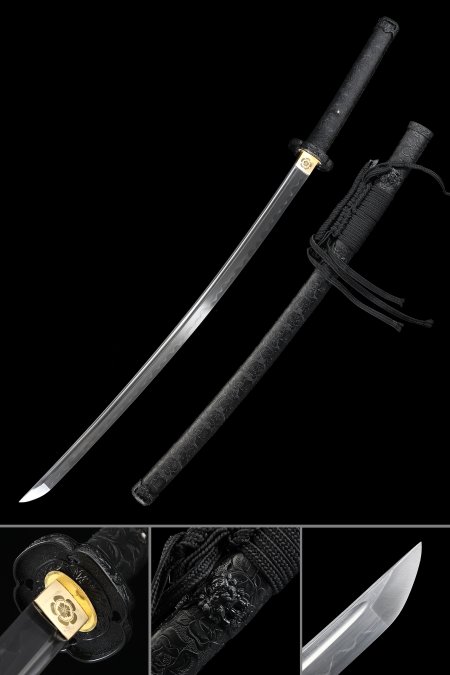
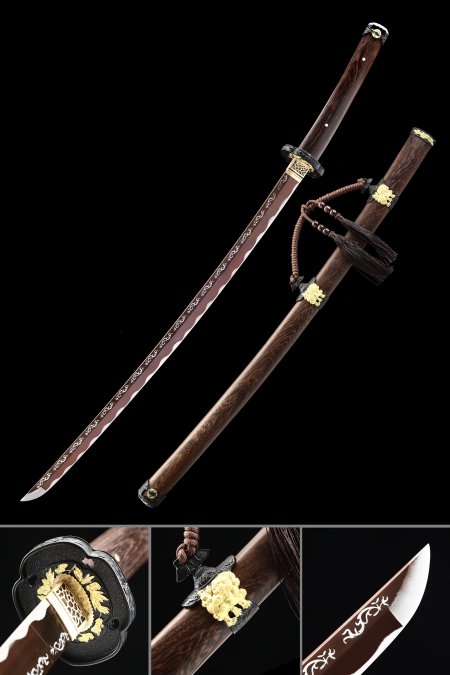
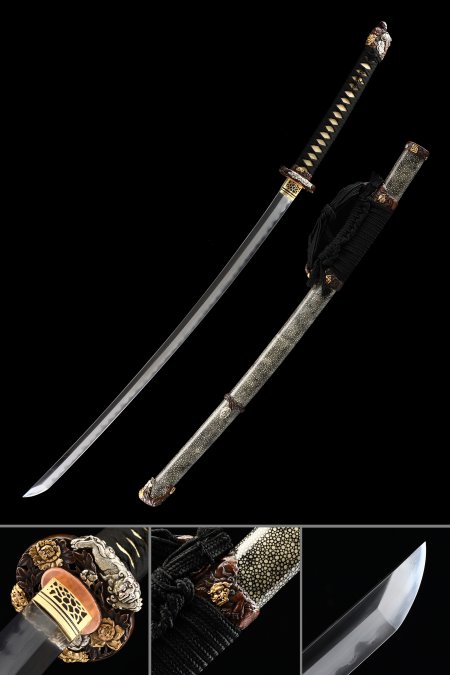
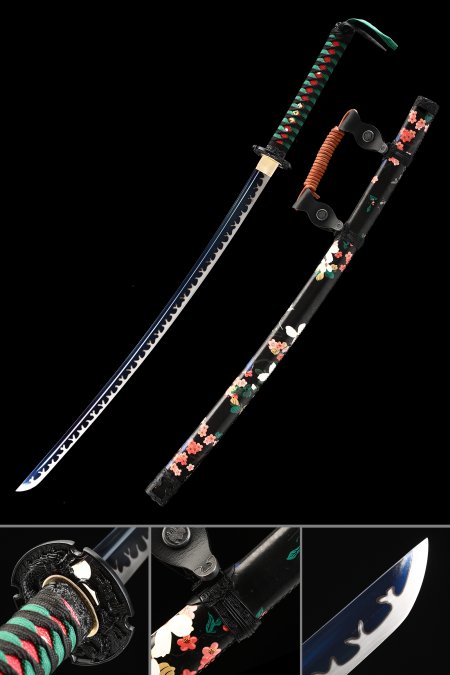
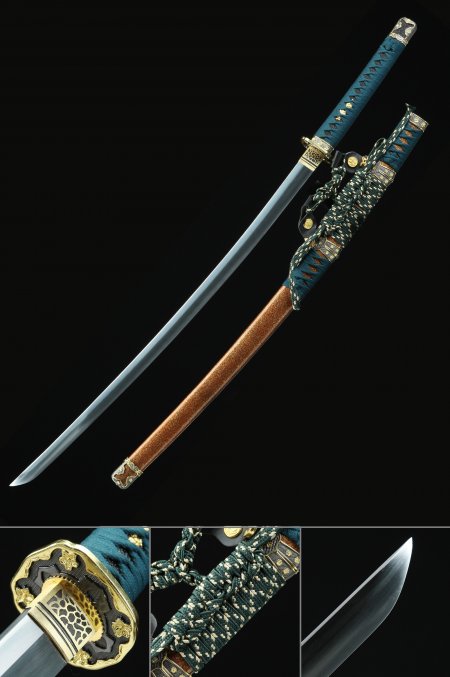
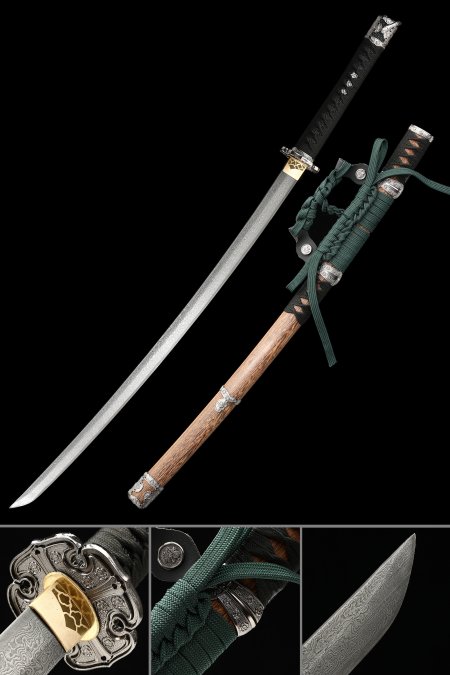
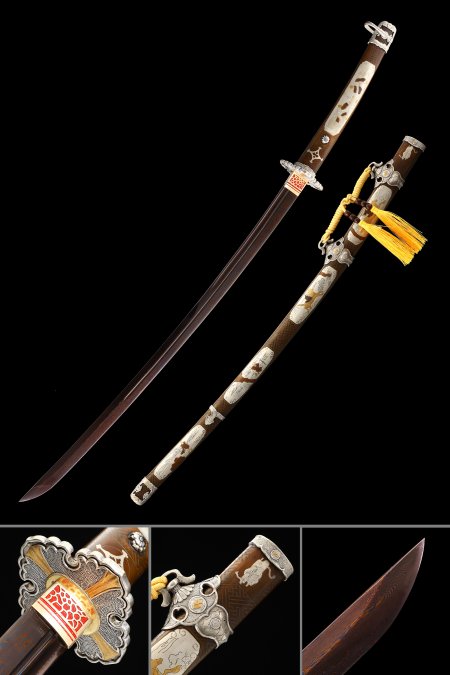
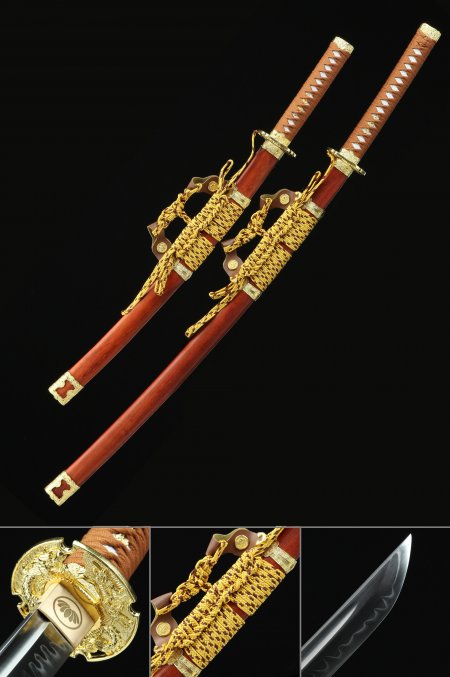
A hamon is the visible boundary line between the hardened edge and the softer body of a blade, produced through differential heat treatment - a process where clay is applied to the spine before quenching, causing the edge to cool rapidly and harden while the spine remains more flexible. A real hamon has an organic, three-dimensional quality: it is not a sharp painted line but rather a misty, textured transition zone with subtle activity such as nie (crystalline grain) or nioi (a soft, clouded glow). Etched or simulated hamon, by contrast, appear flat, uniform, and lack this inner texture. When evaluating a collectible blade, examining the hamon under directional light - held at an angle to a lamp or window - reveals whether the transition has depth. The pieces in the Gold Saya Tachi collection feature naturally formed hamon, one of the details most valued by knowledgeable collectors.