What makes a shirasaya wakizashi different from a standard one?
Updated Mar 2026
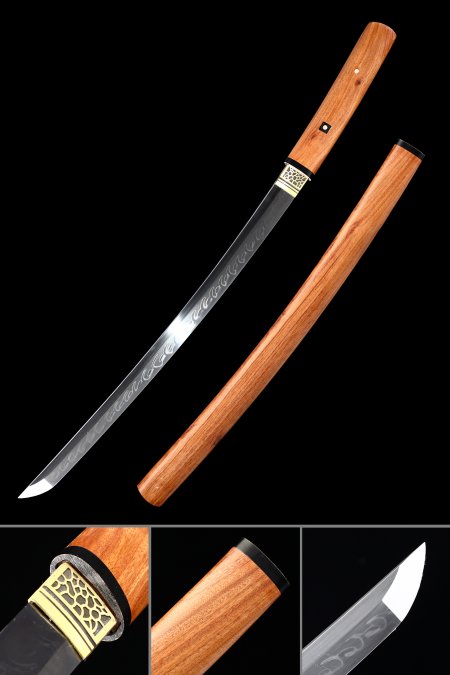
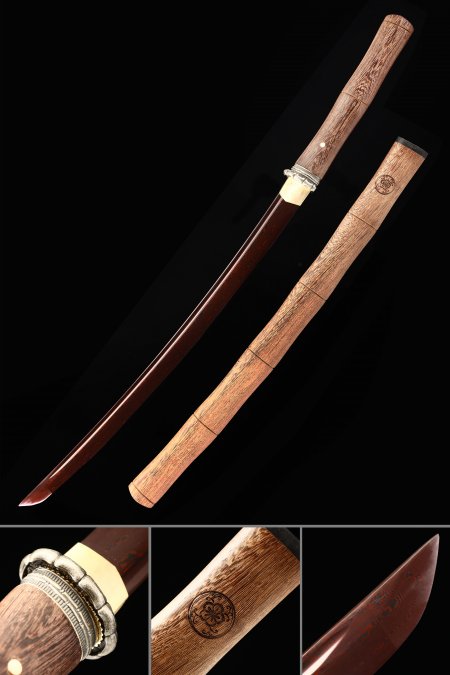
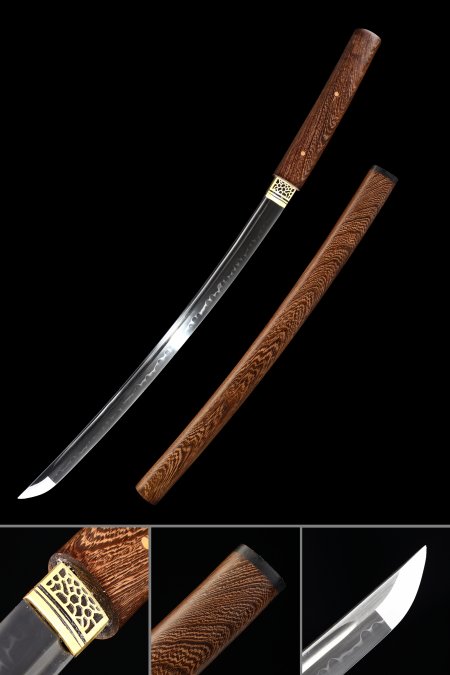
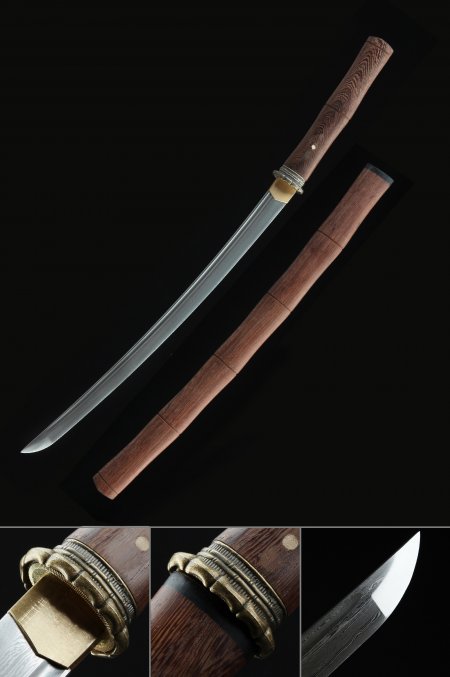
A shirasaya configuration replaces the traditional wrapped tsuka and fitted tsuba with a single piece of plain, unadorned hardwood for both the handle and scabbard. The two halves peg together precisely and are designed to cradle the blade snugly without ornamentation. In Japanese sword tradition, shirasaya served as a storage mount — a way to house a blade safely between uses while allowing the steel to be inspected and maintained without the complexity of a full koshirae mounting. For collectors today, this style is appealing precisely because it strips the presentation down to its essentials: the grain of the wood, the geometry of the blade, and the hamon line along the edge. It is a format that rewards close inspection rather than distance display, and it pairs naturally with minimalist wall mounts or horizontal stands.