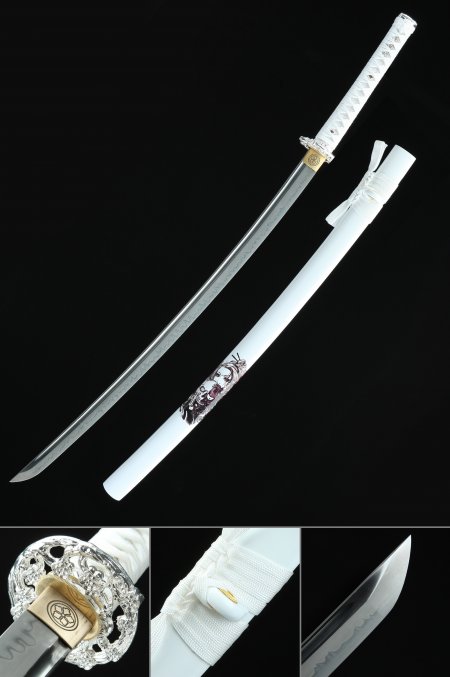
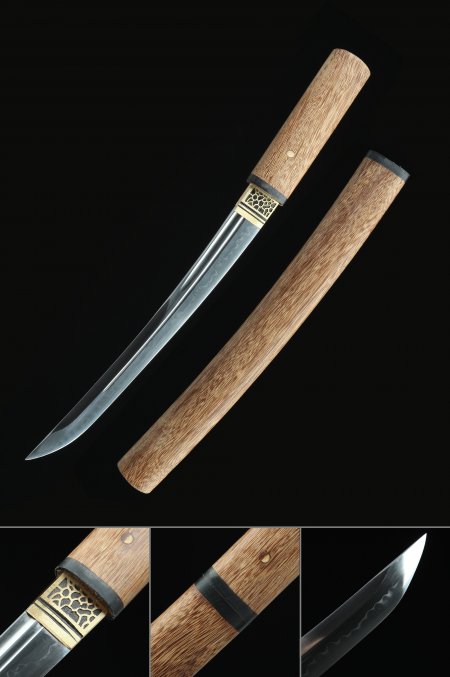
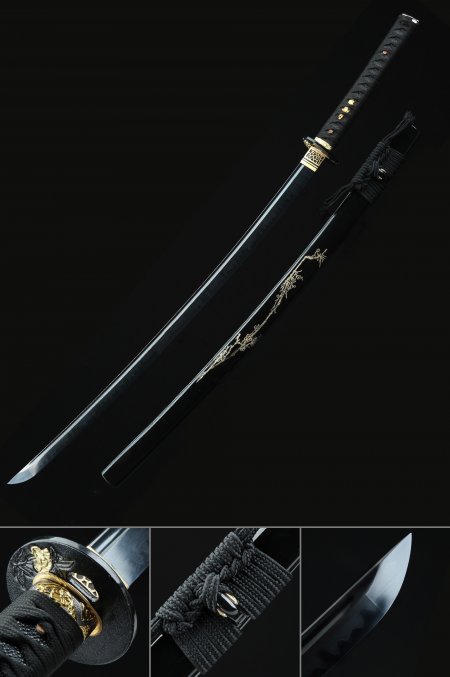
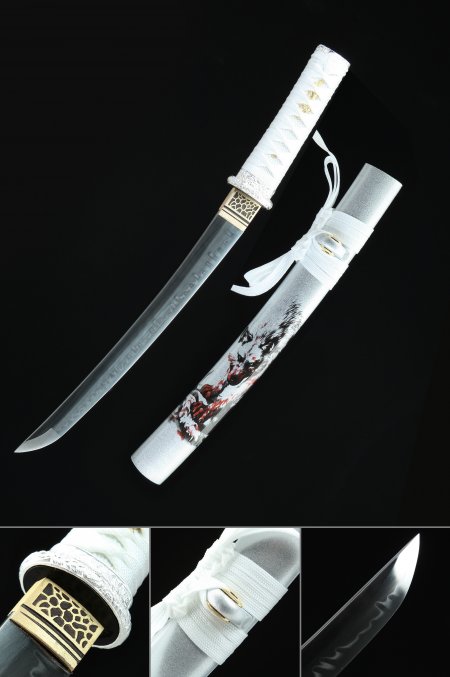
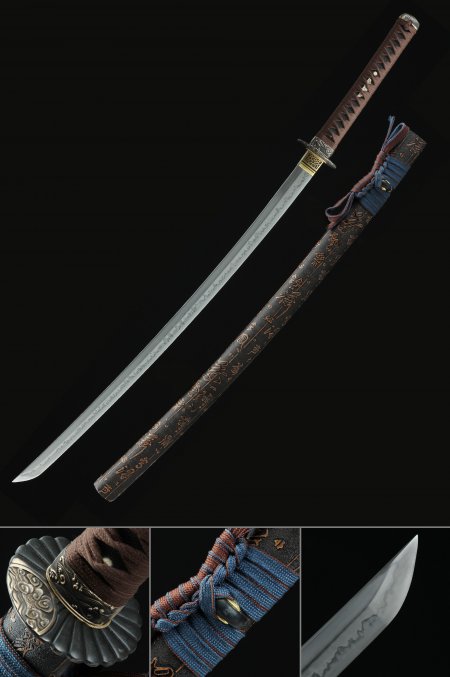
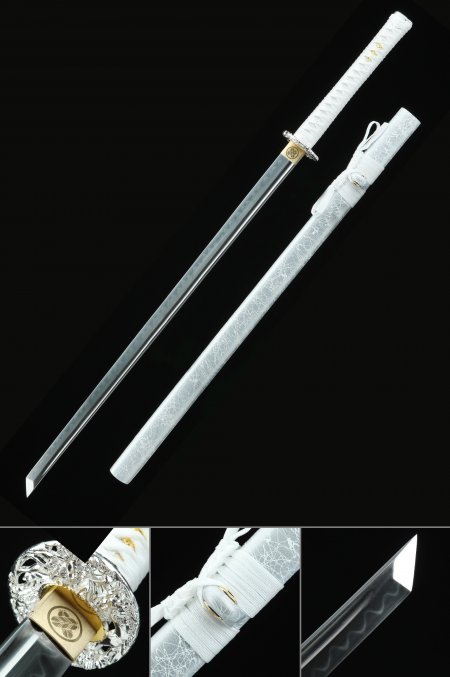
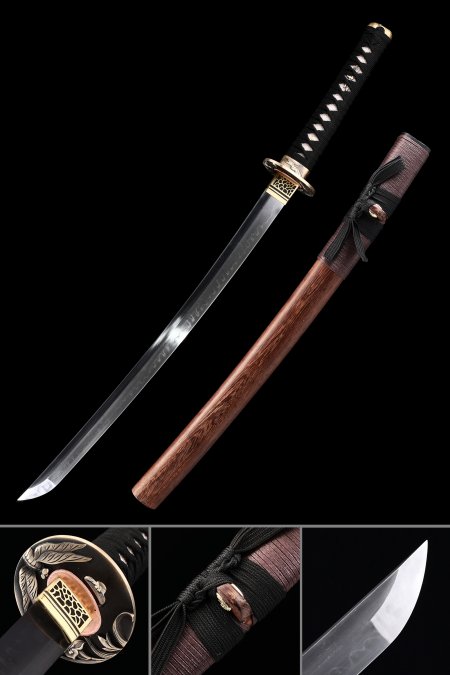
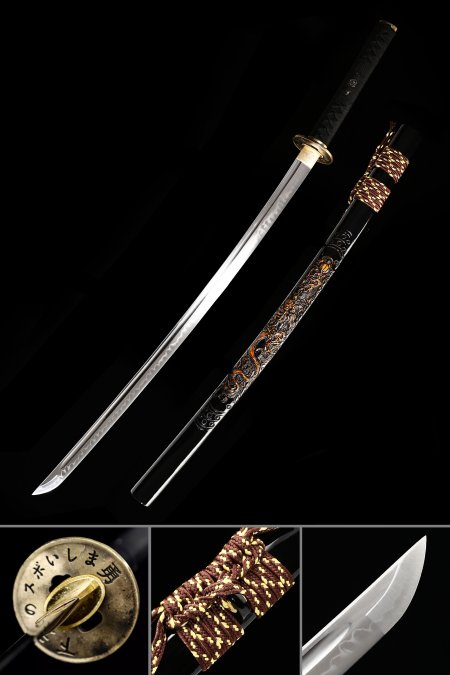
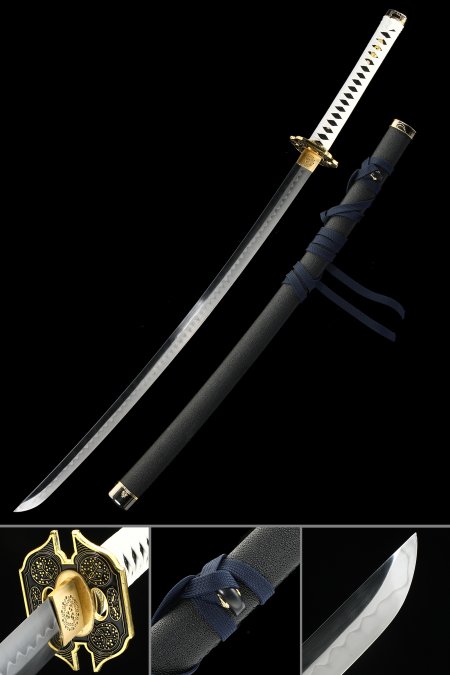
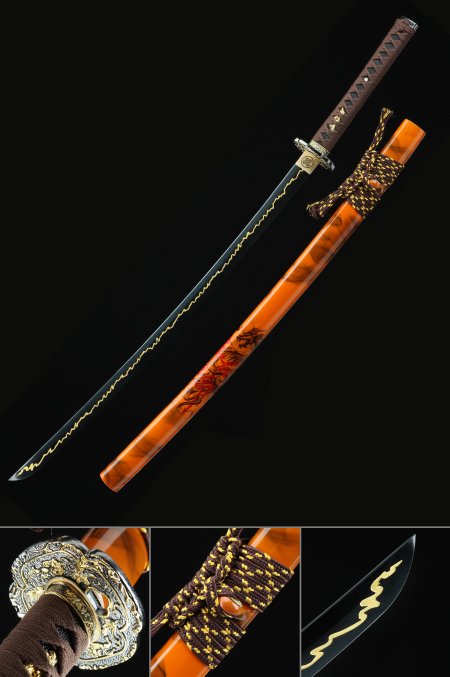
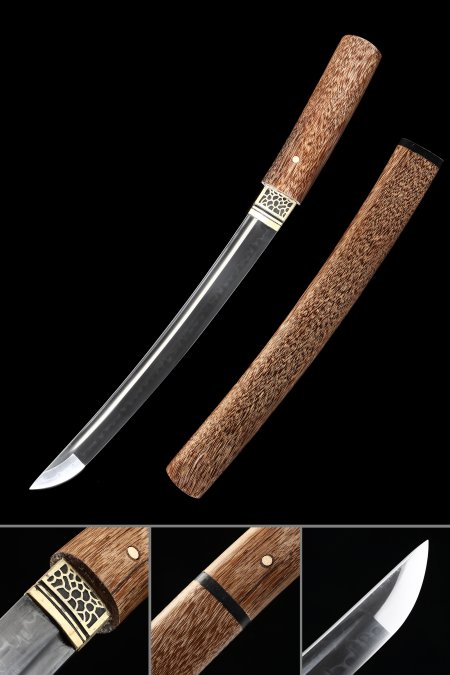
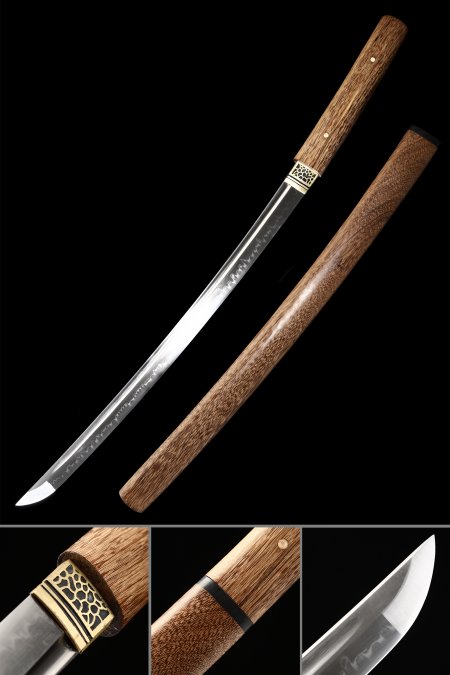
Is the hamon on these T10 steel tantos real or etched?
Updated Mar 2026
The hamon on these pieces is genuine, formed through differential hardening - the traditional process of applying clay to the spine before quenching, which causes the edge and spine to cool at different rates. The result is a real crystalline boundary between the hardened ha and the softer mune (spine), visible as the characteristic wavy or irregular temper line. T10 steel's tungsten content and fine grain structure make it particularly well-suited to producing a clear, detailed hamon. By contrast, many lower-cost blades simulate this line through acid etching, which creates a uniform pattern without any actual change in the steel's hardness profile. On a T10 blade, the hamon is not cosmetic - it is a direct record of the heat treatment the steel actually received.