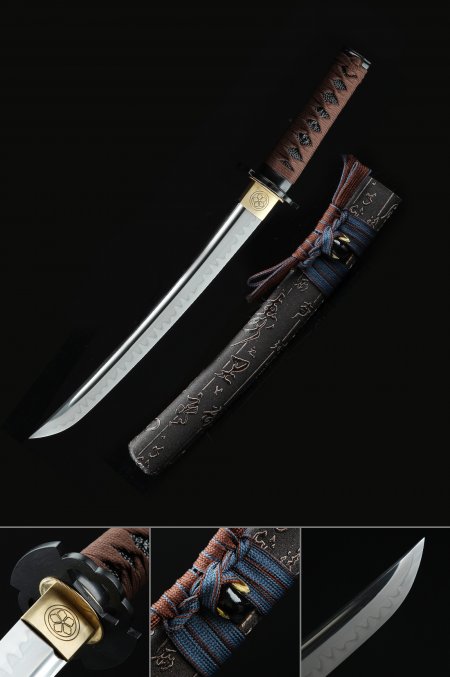
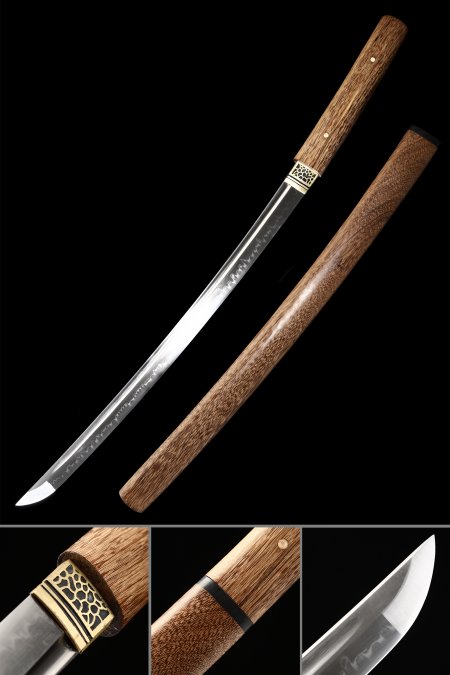
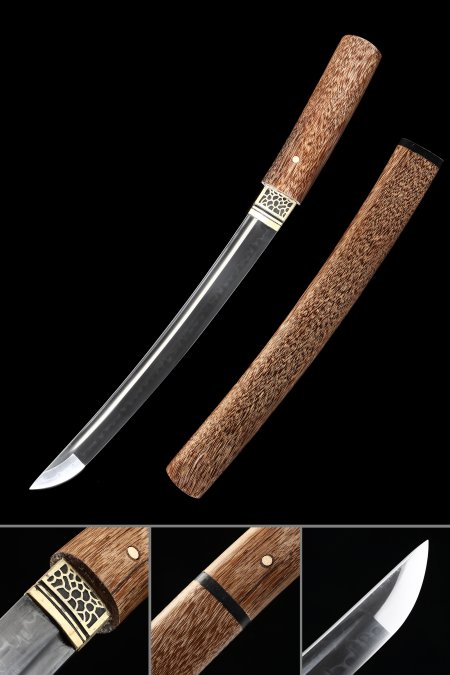
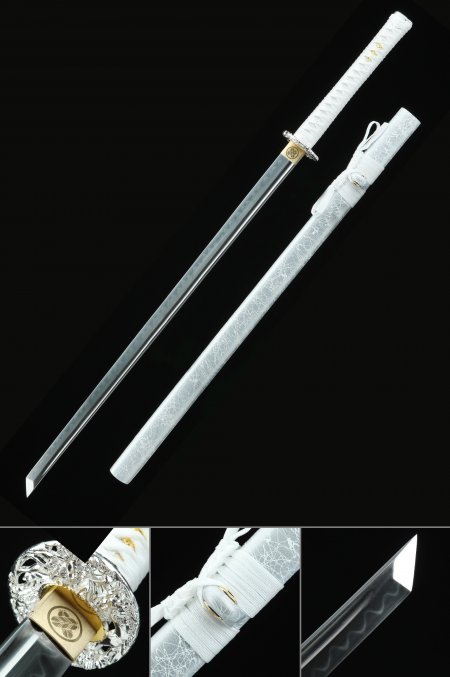
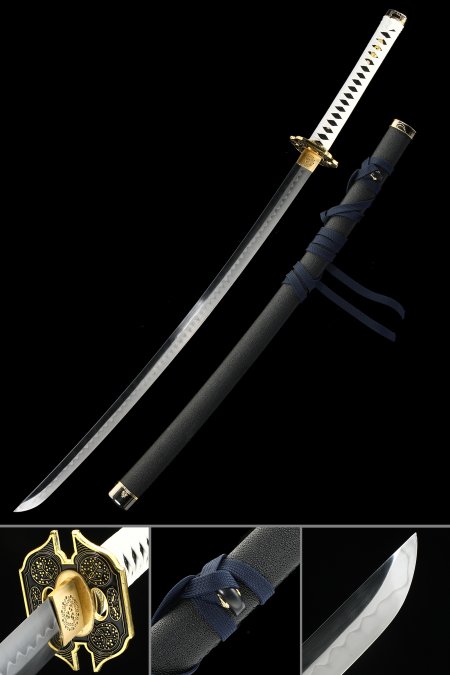
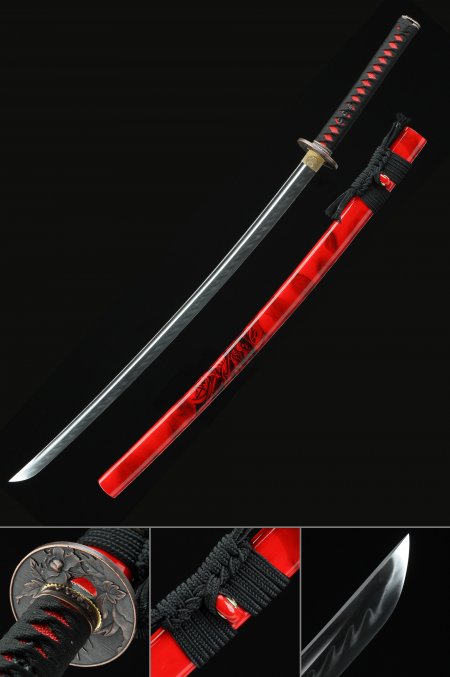
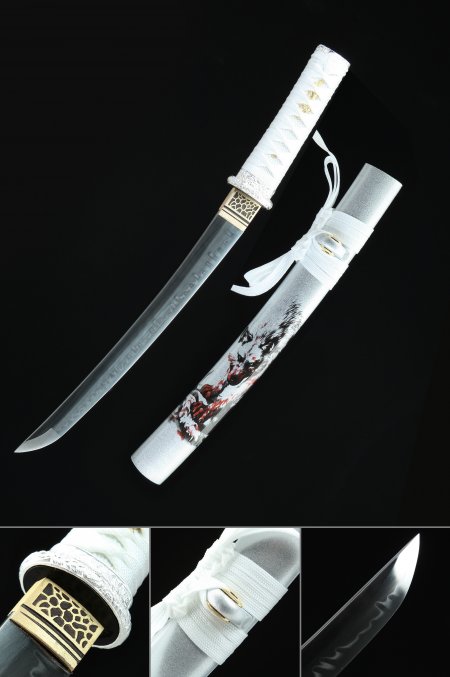
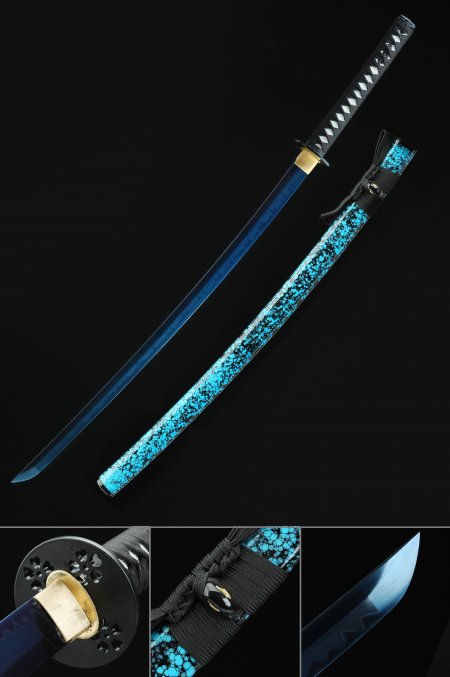
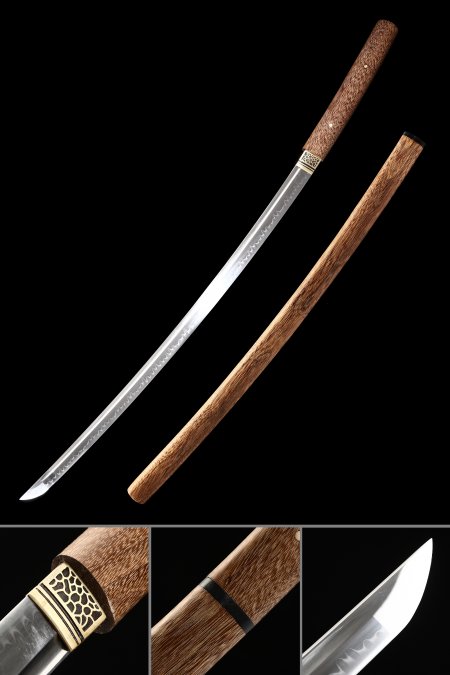
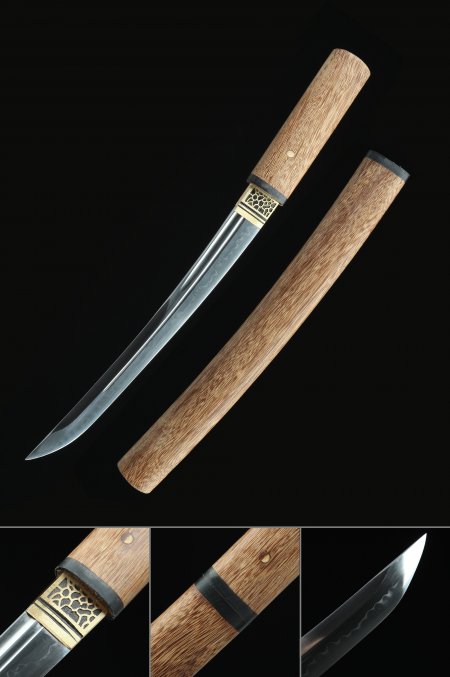
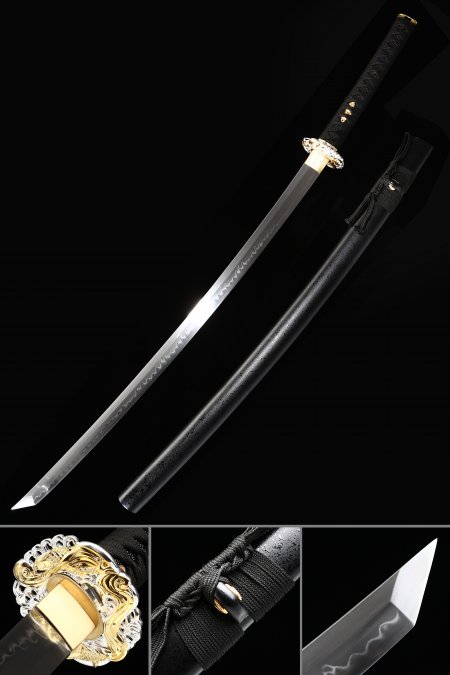
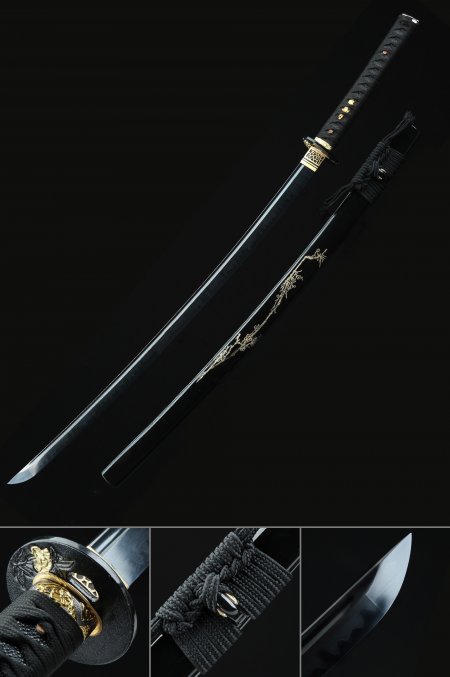
The hamon on these katana is produced through traditional clay tempering - not etching or acid treatment, which are common shortcuts in lower-grade production. During forging, a layer of clay paste is applied along the blade's spine, leaving the edge exposed. When the blade is quenched in water or oil, the unprotected edge cools rapidly and hardens into a fine martensitic grain structure, while the clay-insulated spine cools more slowly and remains tougher and more flexible. The boundary between these two zones becomes the visible hamon. Because the clay application is done by hand, no two hamon lines are identical - each katana in this collection carries a naturally unique temper pattern, which is precisely what distinguishes hand-forged pieces from factory-produced alternatives.