What makes Damascus steel wakizashi blades visually unique?
Updated Mar 2026
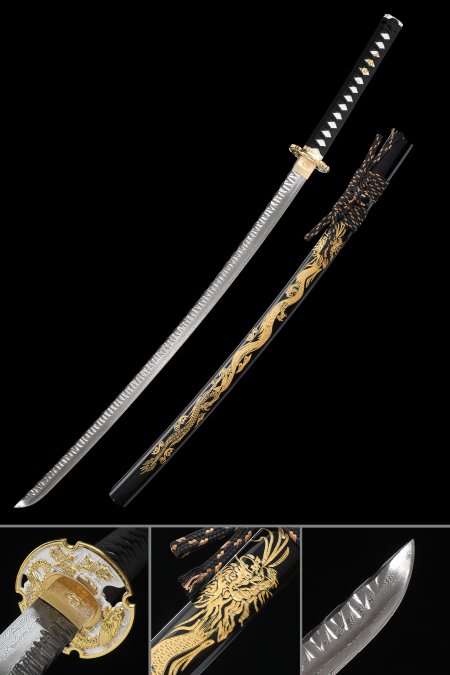
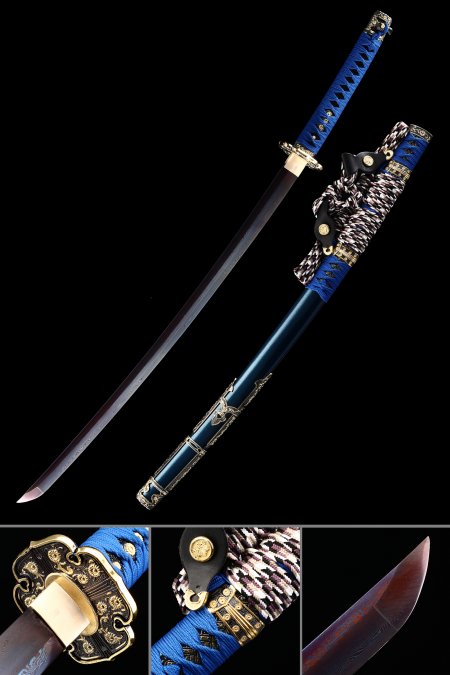
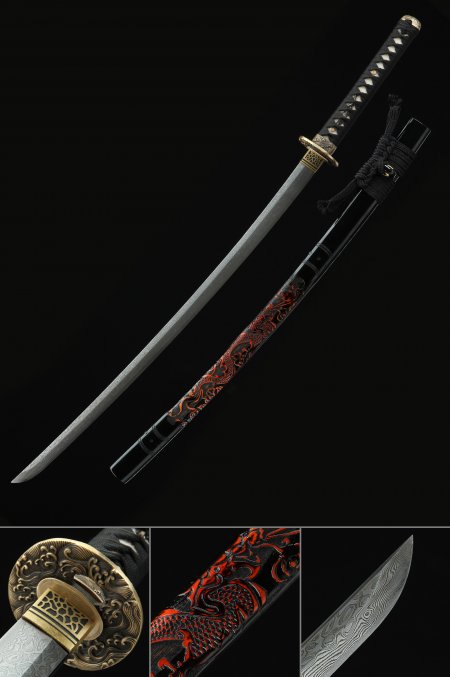
Damascus steel blades are produced by folding and forge-welding multiple layers of steel together, then etching the finished blade surface with an acid solution that reacts differently to the alternating steel compositions. The result is a flowing, wave-like grain pattern - sometimes called a "ladder" or "raindrop" pattern depending on how the billet was manipulated before grinding. Because the grain forms organically during forging, no two Damascus blades carry an identical pattern. On a wakizashi specifically, the shorter blade length compresses the pattern into a tighter visual field, often making the grain appear denser and more detailed than the same layer count would look on a longer katana blade. This inherent uniqueness is a primary reason collectors prize Damascus steel pieces as display centerpieces rather than simply as examples of a particular sword type.