What is Damascus steel and how is it made for Japanese katana?
Updated Feb 2026
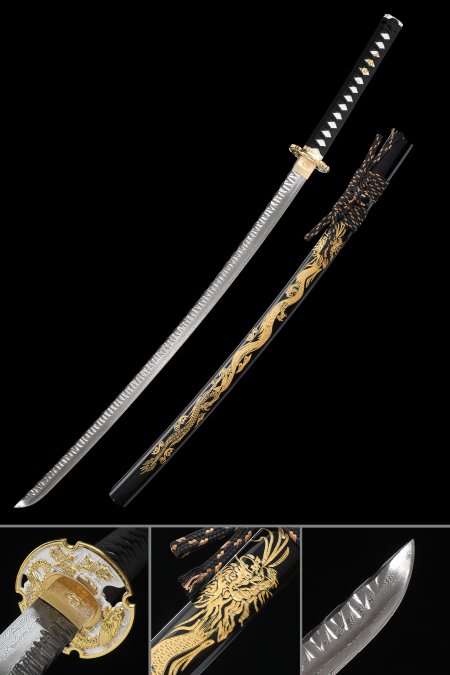
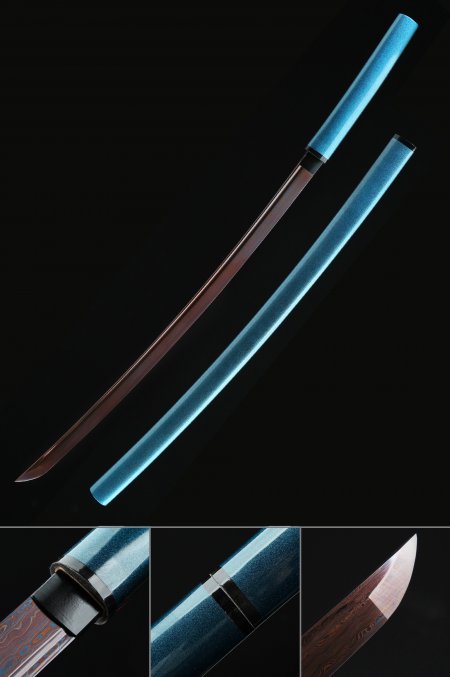
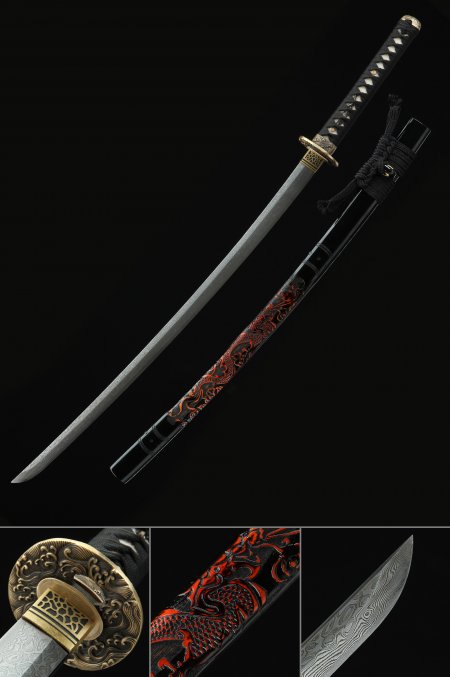
Damascus steel in modern Japanese sword collectibles is a forge-welded layered construction created by welding multiple steel types together, folding and re-welding the billet multiple times, and acid-etching the final surface to reveal the layered pattern. The multiple steel types typically include high-carbon and lower-carbon grades - the carbon differential between adjacent layers creates visual contrast after acid-etching because the high and low carbon zones react differently to the etch. The folding process distributes the carbon content throughout the billet while multiplying the number of visible layers. A modest fold count of 8-10 iterations creates 256-1024 layers. The resulting pattern is a flowing, grain-like structure unique to each billet, which means no two Damascus katana have identical blade patterns.