How does 1065 carbon steel compare to 1060 in a katana?
Updated Mar 2026
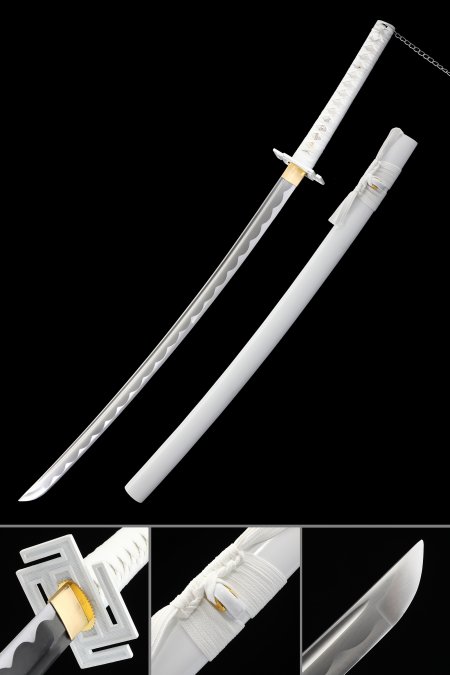
The difference between 1060 and 1065 carbon steel is modest but meaningful to collectors who pay attention to metallurgy. 1065 carries slightly more carbon, which translates to marginally greater hardness at the same heat-treatment temperature — the blade can be brought to a slightly finer polish and will hold that surface condition longer under handling. 1060, by contrast, is a touch softer and more forgiving, which some collectors prefer for larger, heavier blade profiles where flexibility matters more than edge retention. In practical display terms, both steels look similar, but a 1065 blade will typically exhibit a crisper hamon line after differential tempering and a slightly higher reflective quality across the ji (blade flat). Neither is superior in an absolute sense — the choice depends on the collector's priorities and the specific blade geometry in question.