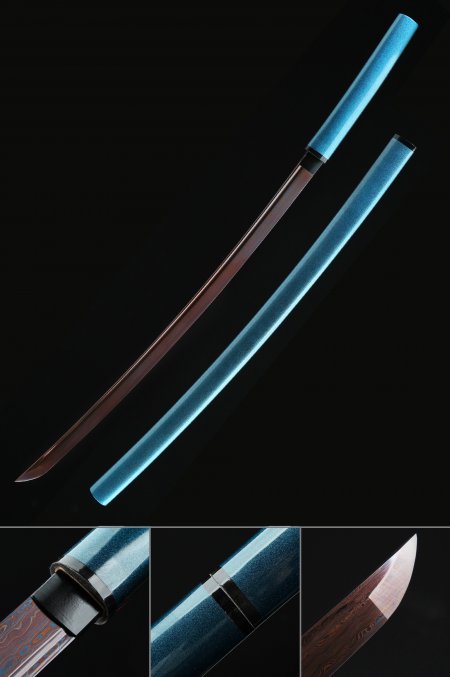
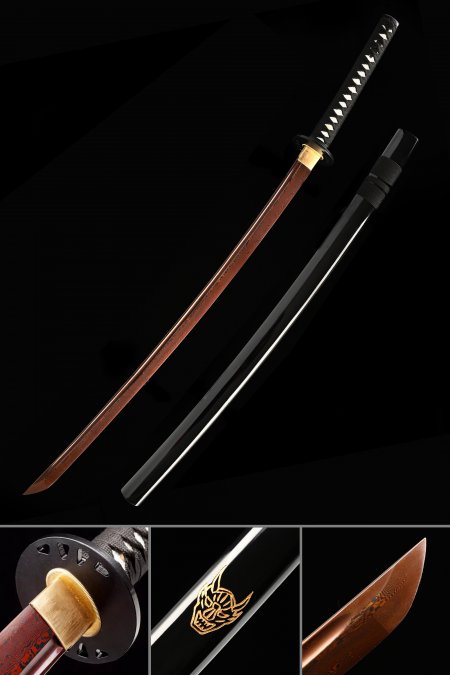
What makes Damascus steel visually distinct on a ninjato?

 Updated Mar 2026

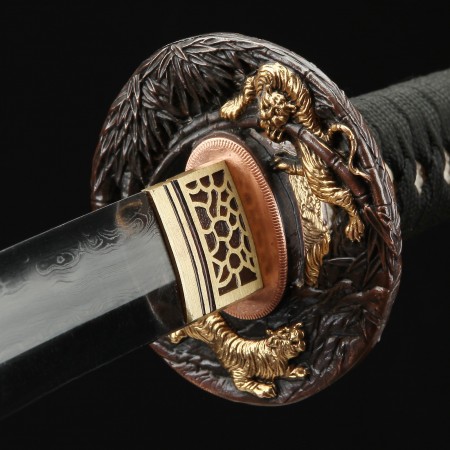
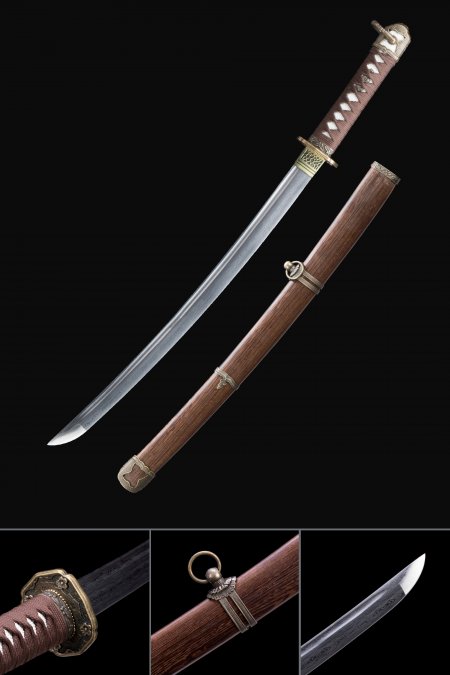
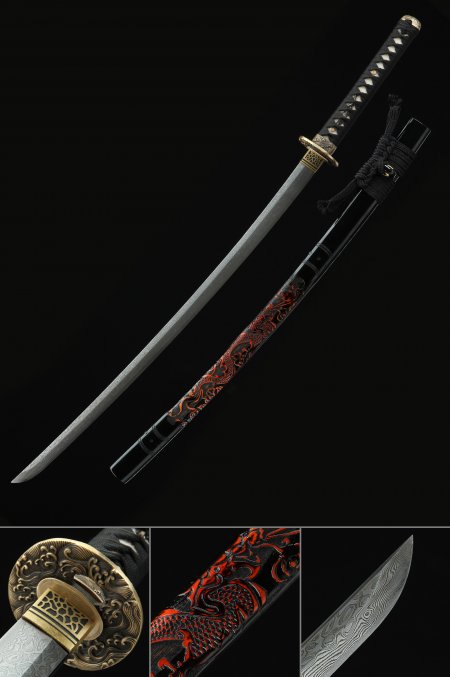
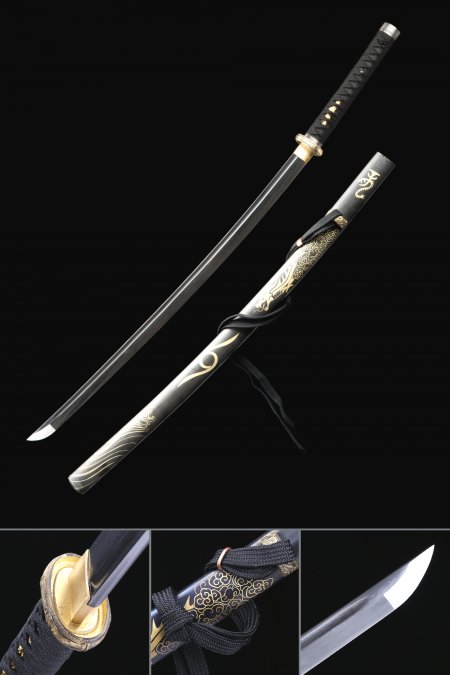
Damascus steel is produced by layering and folding two or more types of high-carbon steel repeatedly before forging the blade to shape. This process creates the characteristic flowing, wave-like grain pattern visible across the flat and along the edge of the finished blade. On a ninjato — with its straight, uninterrupted profile — that pattern has nowhere to hide, making it far more visible than on a curved blade where the geometry itself competes for attention. When a black patina or acid-etching treatment is applied over the Damascus surface, the contrast between the lighter and darker layers intensifies, turning the grain into a pronounced visual feature. Because the fold count and layering sequence vary by artisan and heat, no two Damascus blades share an identical pattern, which is a key part of their appeal as display collectibles.
Popular Products

15% OFFgolden katana
199.00 USD
229.00 USD
20% OFFdamascus katana
619.00 USD
769.00 USD
15% OFFreal katana
649.00 USD
769.00 USD
15% OFFww2 wakizashi
169.00 USD
199.00 USD
20% OFFmodern wakizashi
209.00 USD
259.00 USD
20% OFFdamascus katana
309.00 USD
389.00 USD
15% OFFkatana sword
199.00 USD
229.00 USD
20% OFFsamurai sword
289.00 USD
359.00 USD
20% OFFjapanese katana
229.00 USD
289.00 USD
15% OFFkatana sword
199.00 USD
239.00 USD
15% OFFshirasaya katana
209.00 USD
249.00 USD
15% OFFkill bill sword
199.00 USD
229.00 USD
15% OFFgolden katana
199.00 USD
229.00 USD
20% OFFdamascus katana
619.00 USD
769.00 USD
15% OFFreal katana
649.00 USD
769.00 USD
15% OFFww2 wakizashi
169.00 USD
199.00 USD
20% OFFmodern wakizashi
209.00 USD
259.00 USD
20% OFFdamascus katana
309.00 USD
389.00 USD
15% OFFkatana sword
199.00 USD
229.00 USD
20% OFFsamurai sword
289.00 USD
359.00 USD
20% OFFjapanese katana
229.00 USD
289.00 USD
15% OFFkatana sword
199.00 USD
239.00 USD
15% OFFshirasaya katana
209.00 USD
249.00 USD
15% OFFkill bill sword
199.00 USD
229.00 USD

Explore Our Collections