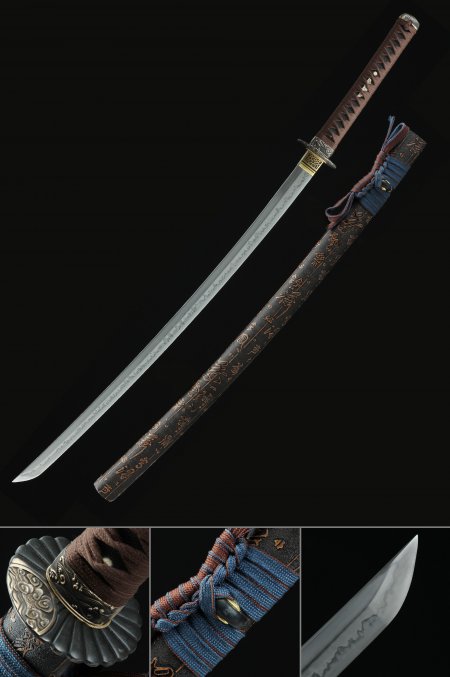
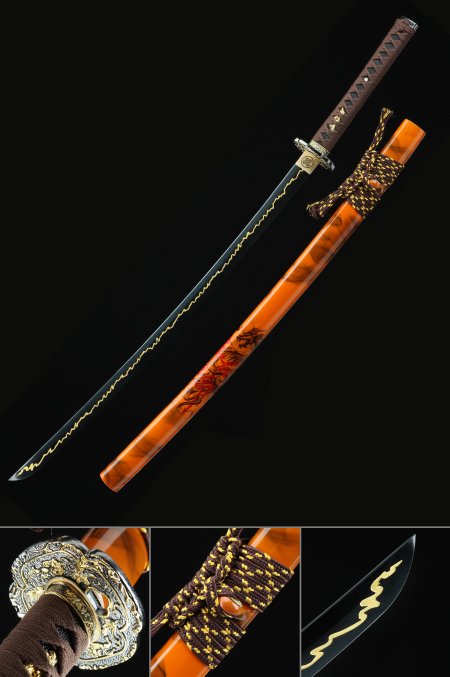
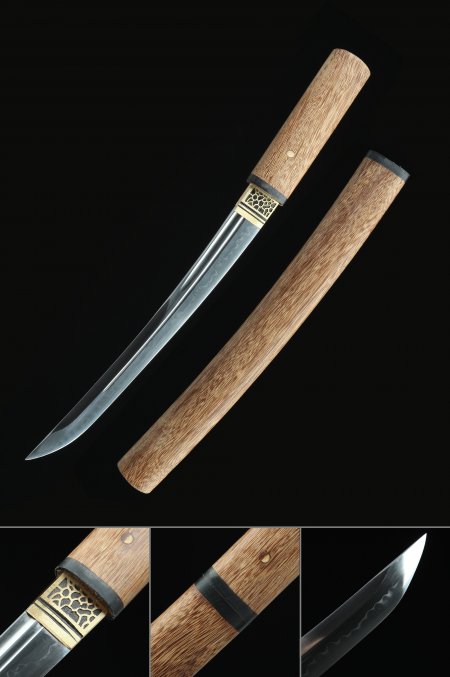
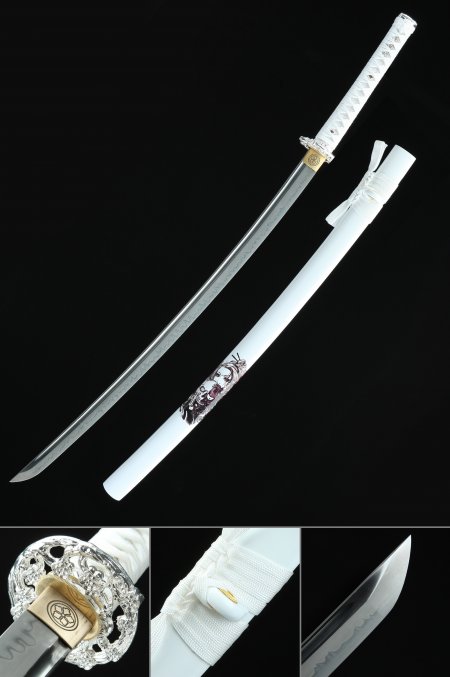
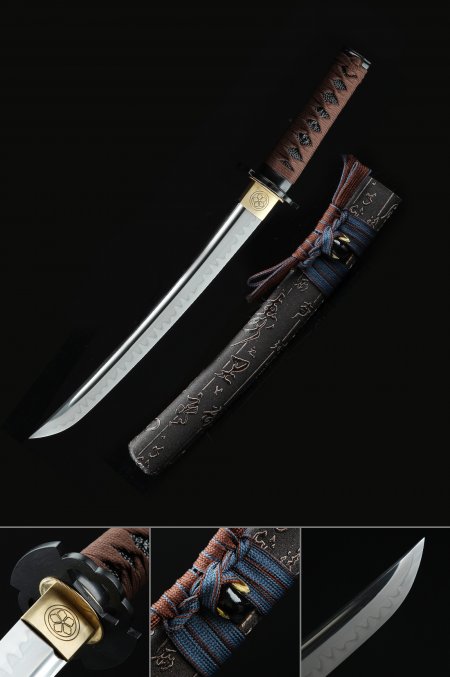
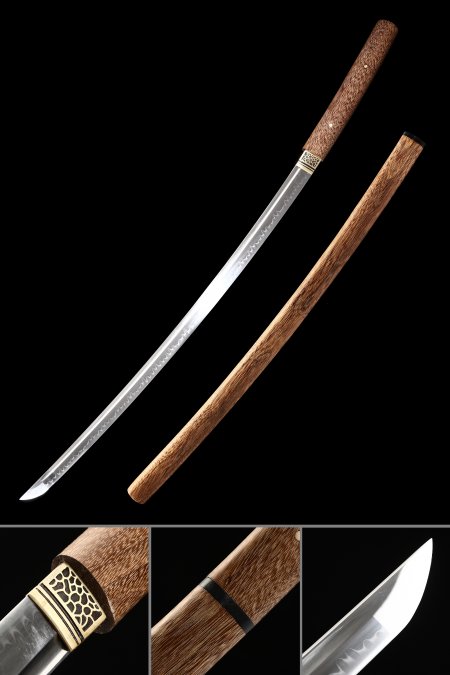
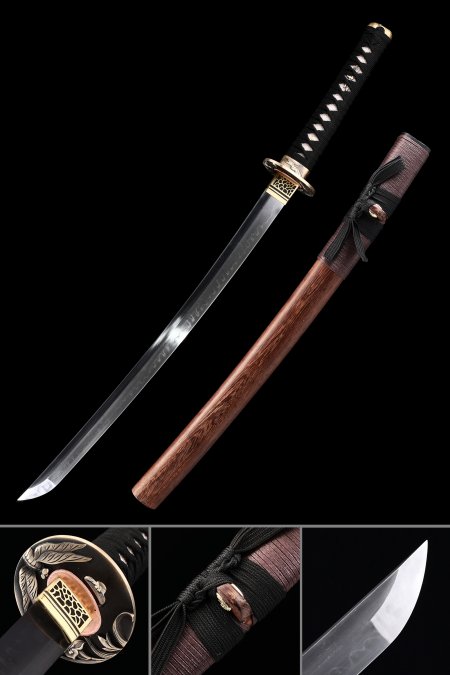
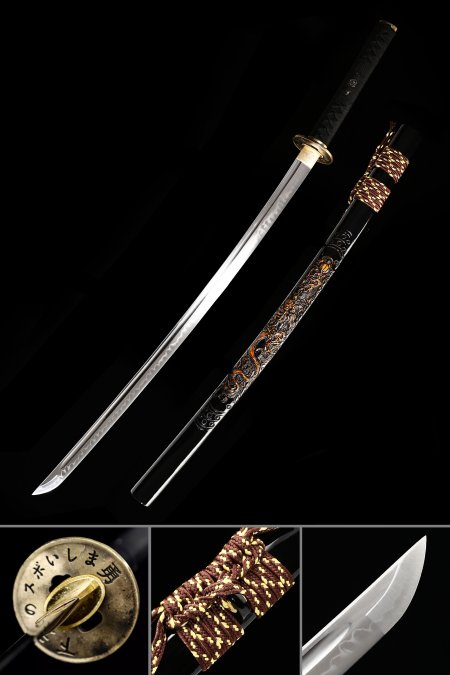
Is the hamon on these blue T10 wakizashi real or acid-etched?
Updated Mar 2026
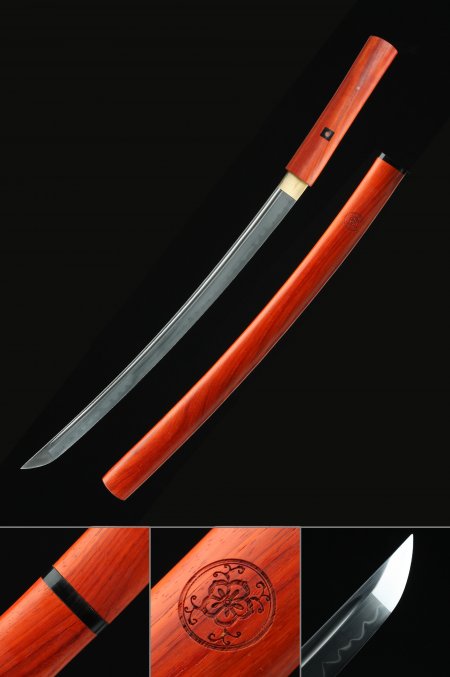
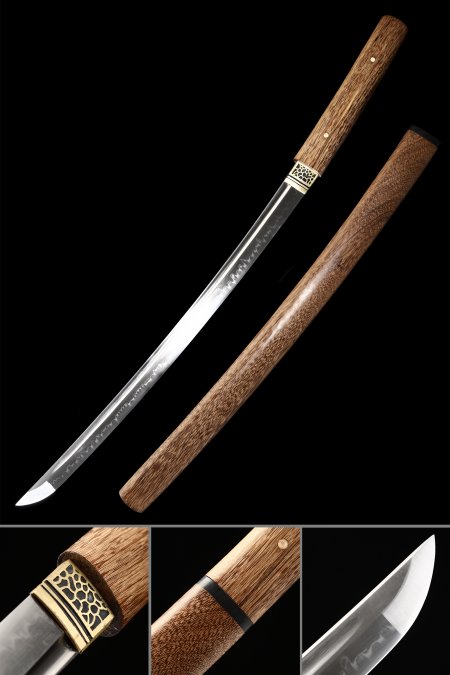
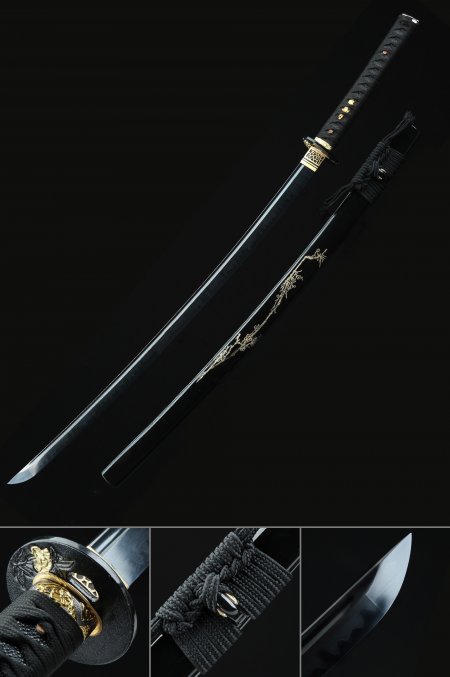
The hamon on clay-tempered T10 wakizashi in this collection is the result of genuine differential heat treatment, not acid etching. During the forging process, a mixture of clay and ash is applied to the blade's spine before quenching, insulating that area so it cools slowly and remains softer. The exposed edge cools rapidly in the water quench, transforming into hardened martensite. The hamon is the natural boundary between these two steel structures and becomes visible after polishing. An authentic hamon displays nie (fine crystalline particles) and nioi (a misty activity band) that shift in appearance under different lighting - characteristics an etched line cannot replicate. Collectors examining the blade under a raking light source can verify authenticity by observing this depth and movement within the hamon.