What makes Damascus steel naginata blades look different from regular steel?
Updated Mar 2026
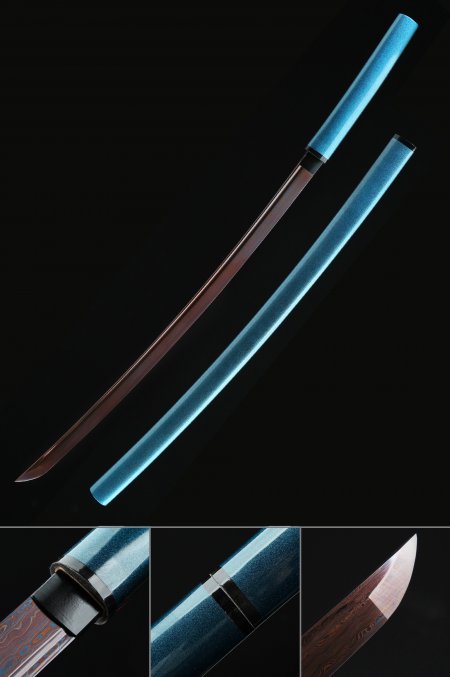
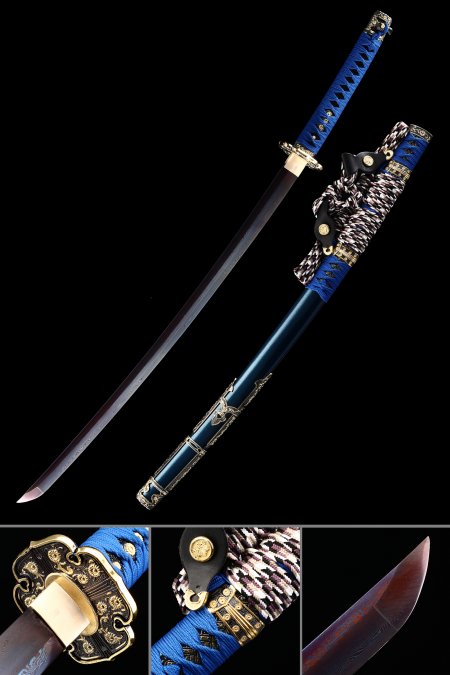
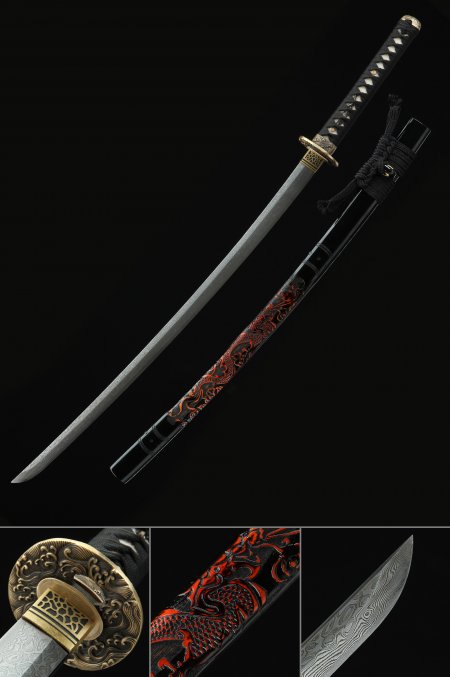
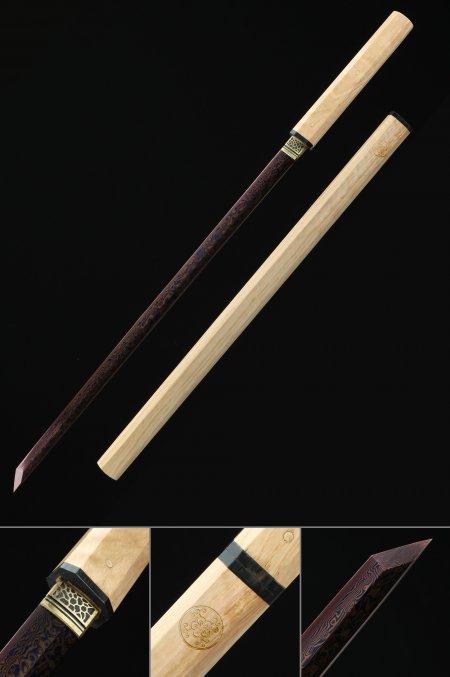
Damascus — or pattern-welded — steel is made by forge-welding alternating layers of high-carbon and low-carbon steel, then repeatedly folding, drawing, and twisting the billet. When the finished blade is ground and etched, the two alloys respond differently to acid, revealing a flowing, organic surface grain. Because the layering pattern shifts with every fold and twist, no two blades produce the same visual result. This is fundamentally different from monosteel blades, which have a uniform, featureless surface. For collectors, the uniqueness of the grain pattern is a core part of the piece's identity and display appeal.