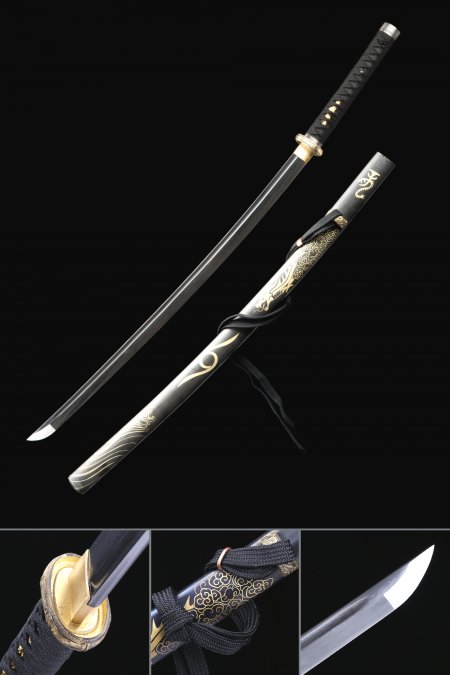
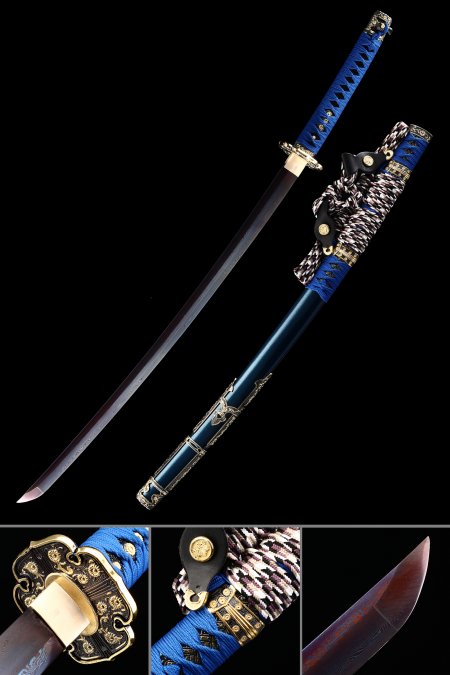
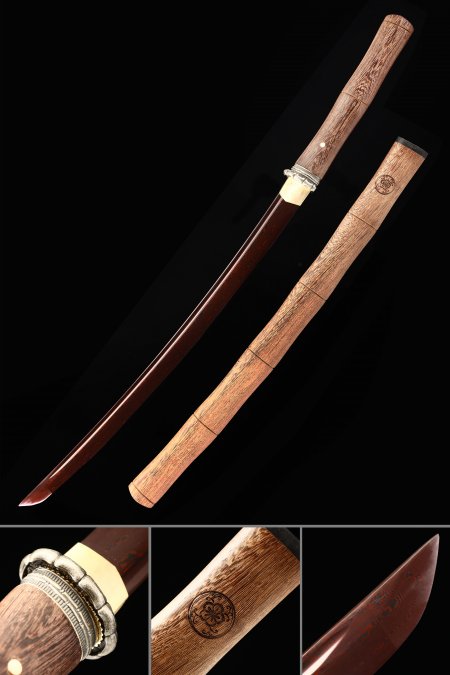
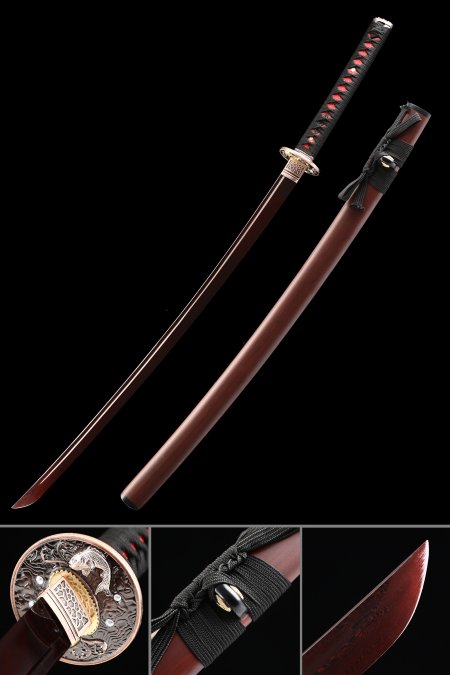
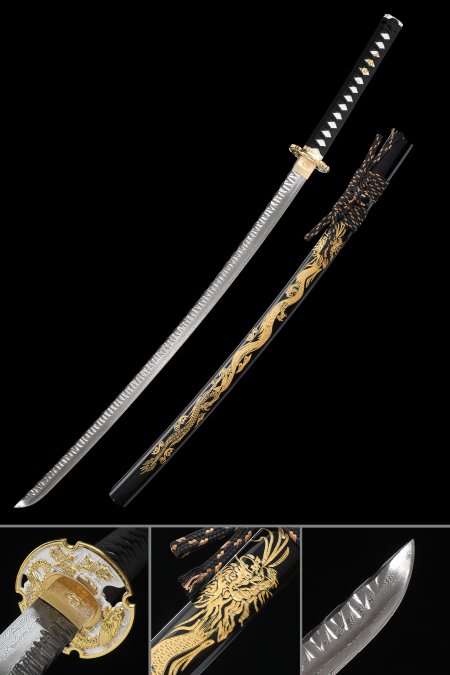
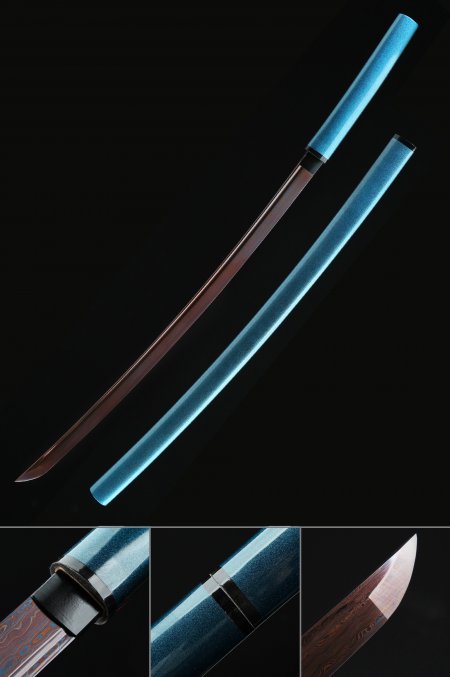
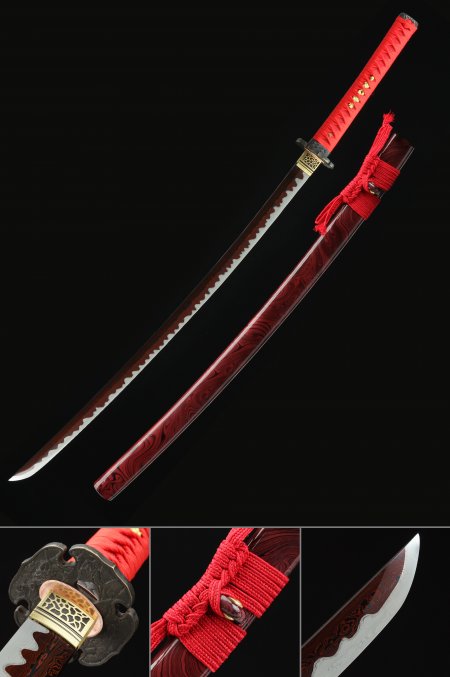
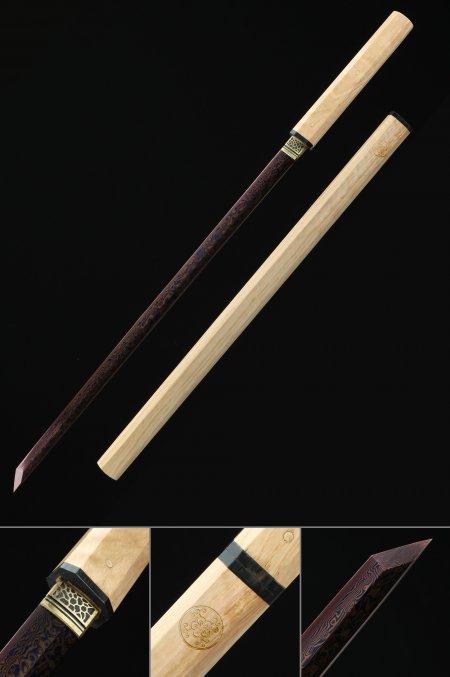
The red or dark-crimson tone on these katana is produced through a controlled surface treatment applied after the blade is ground and fitted. The most common method is acid etching the layered Damascus steel, which causes high-carbon and lower-carbon layers to react differently and reveal the folded grain pattern. A secondary heat-coloring or chemical oxidation step then introduces the red-to-dark-amber hue. Because the coloring develops from within the steel's own layer structure rather than being applied as a paint or coating, the result is visually integrated with the grain pattern itself. No two blades produce exactly the same depth or distribution of color, which is a key reason collectors value these pieces as individual objects rather than interchangeable production items.