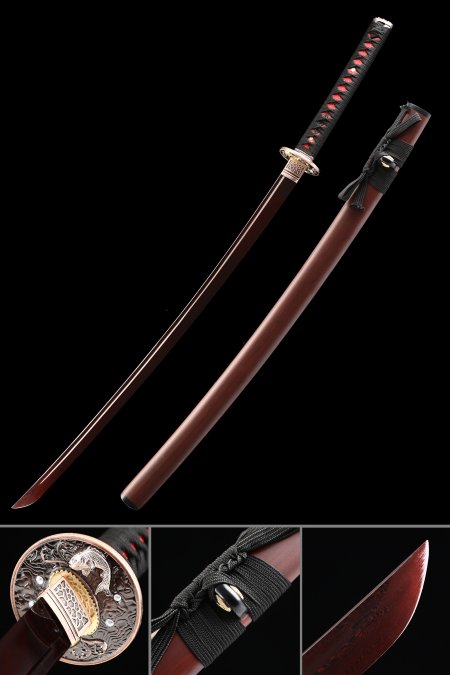
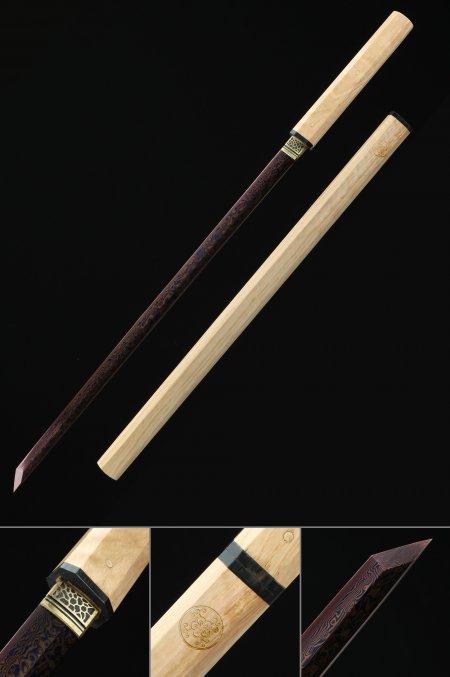
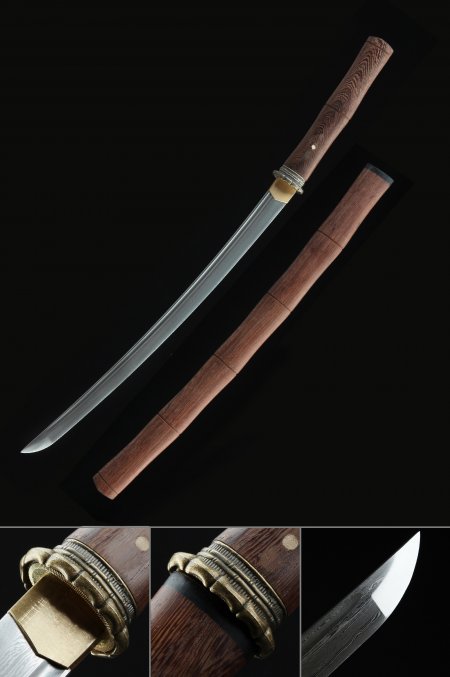
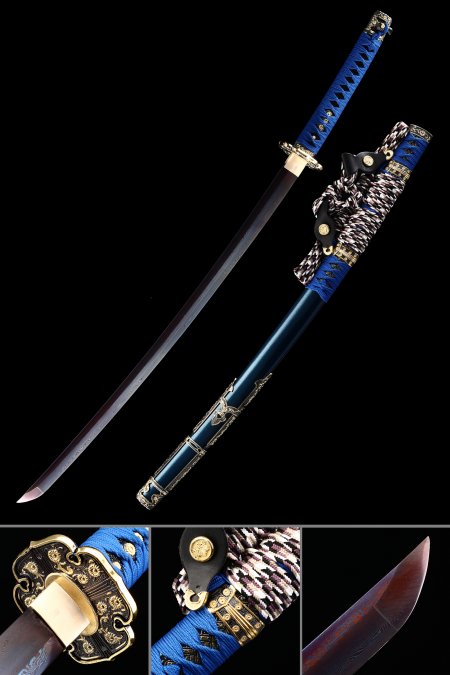
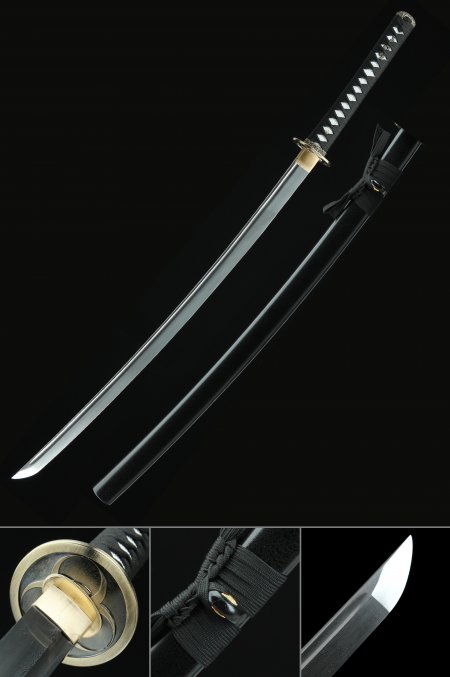
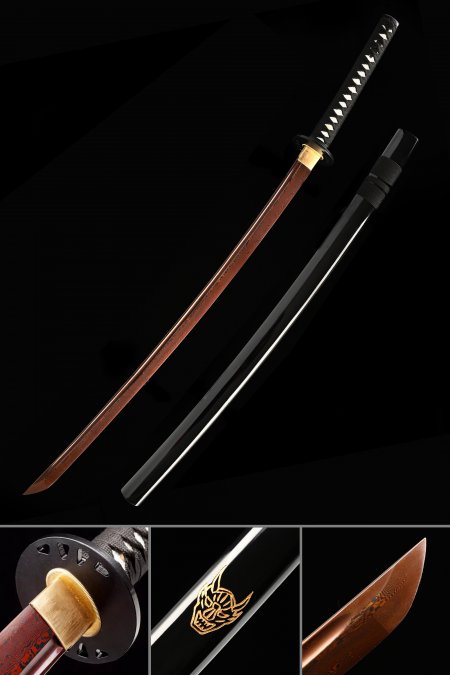
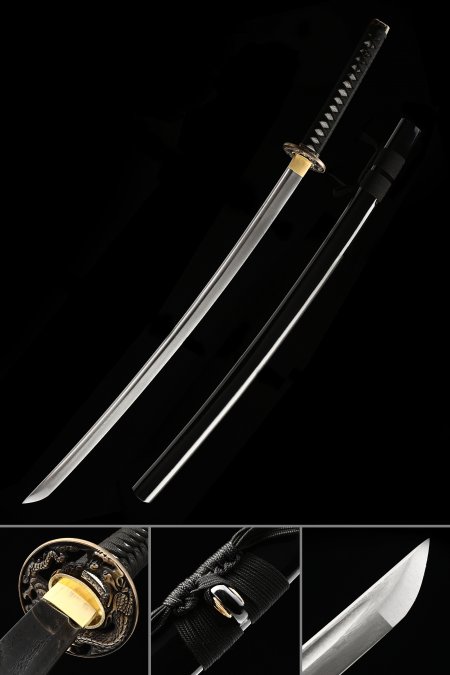
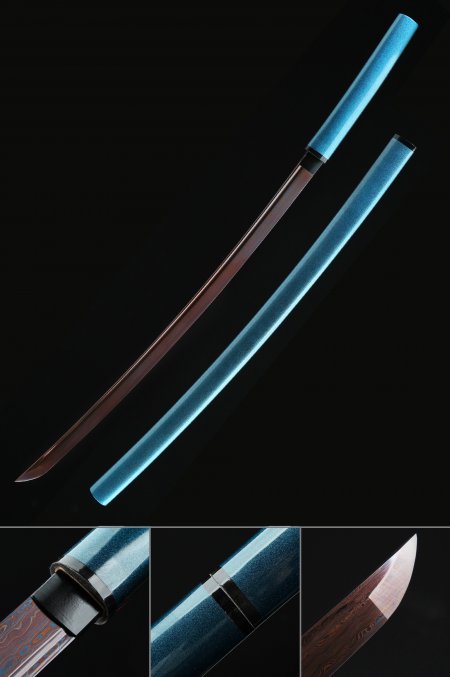
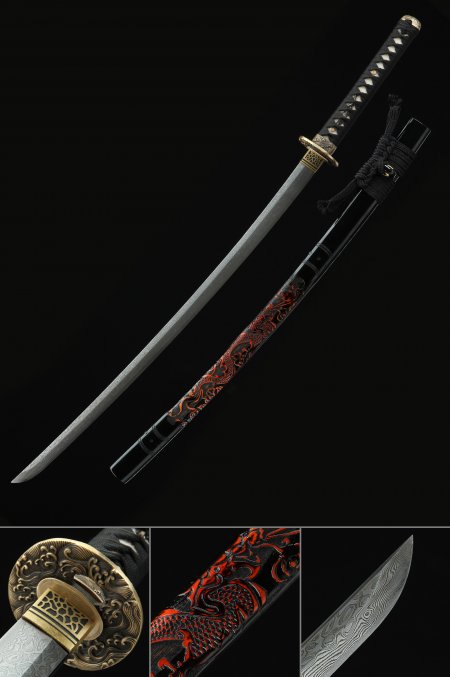
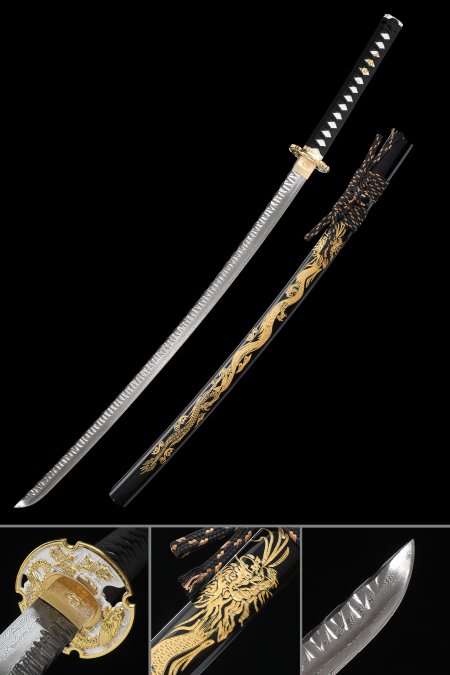
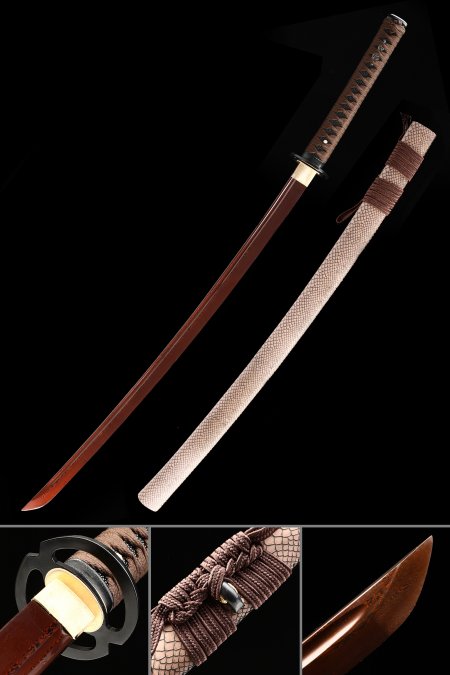
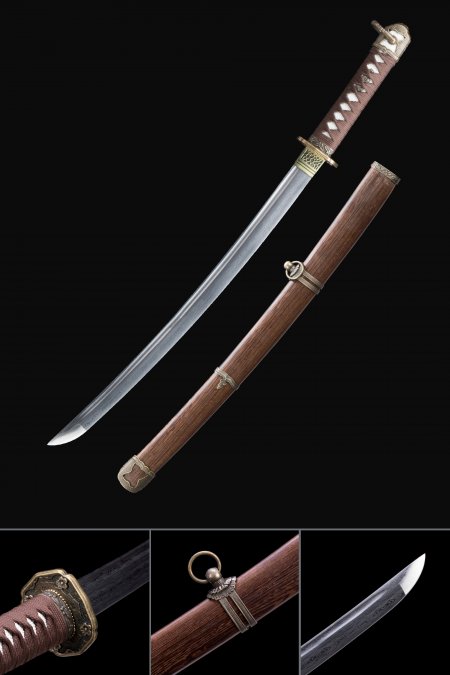
Damascus steel on a tachi serves both aesthetic and structural purposes, though collectors value it primarily for the visual result. The blade is produced by forge-welding alternating layers of high-carbon and low-carbon steel, then repeatedly folding and drawing them out. This process creates the flowing grain pattern visible across the flat - often called "water patterns" or "ladder patterns" depending on the manipulation technique. Structurally, the layering distributes carbon unevenly through the cross-section, which can produce a blade with a harder surface over a tougher interior. As a display piece, a Damascus tachi rewards close inspection: the pattern shifts and reveals new detail depending on lighting angle, making it one of the more visually dynamic options in any collector's display.