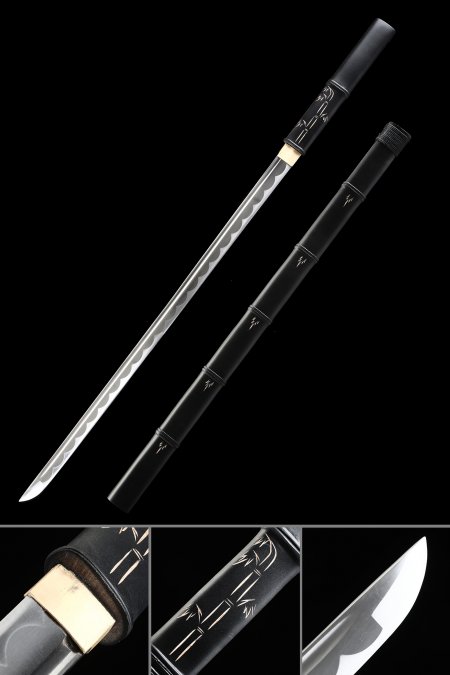
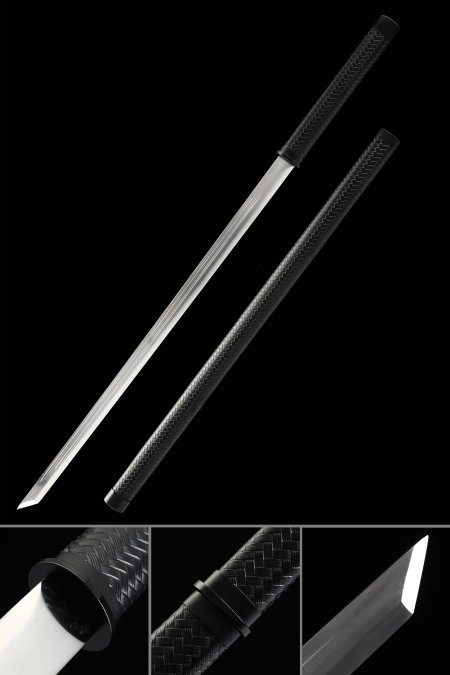
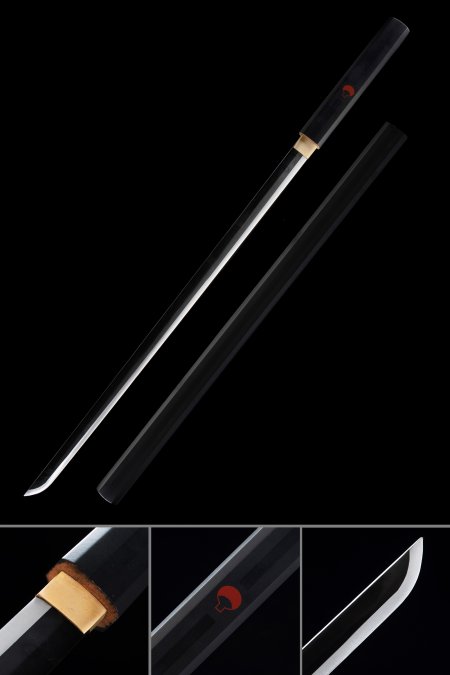
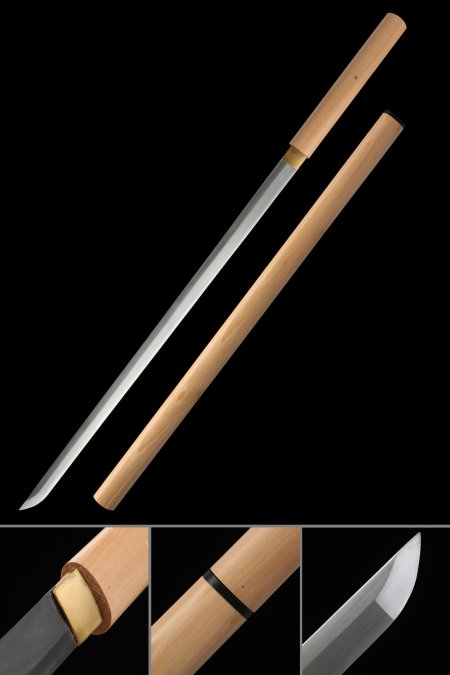
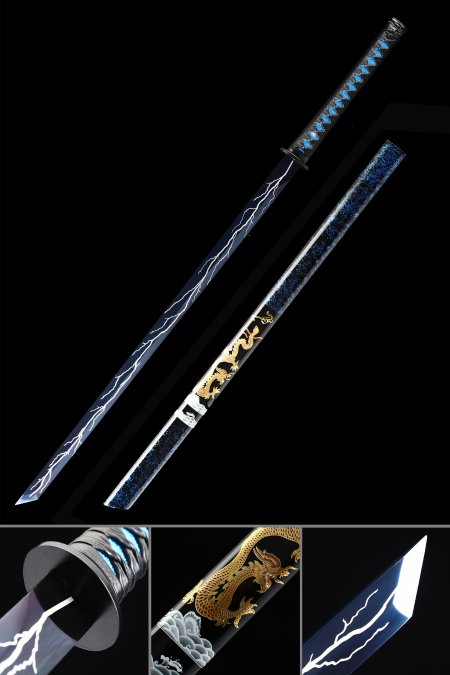
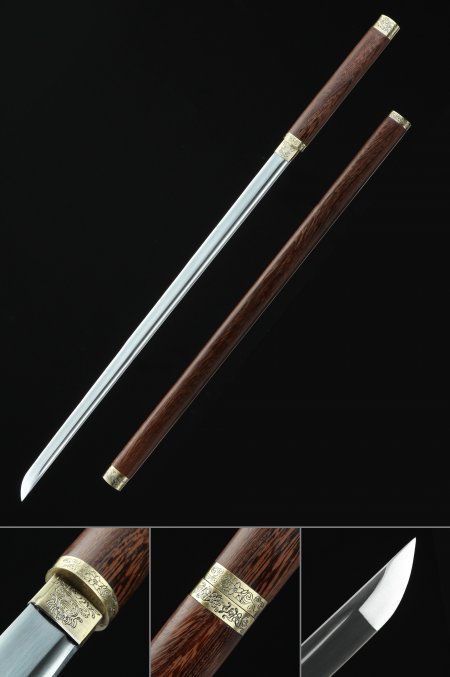
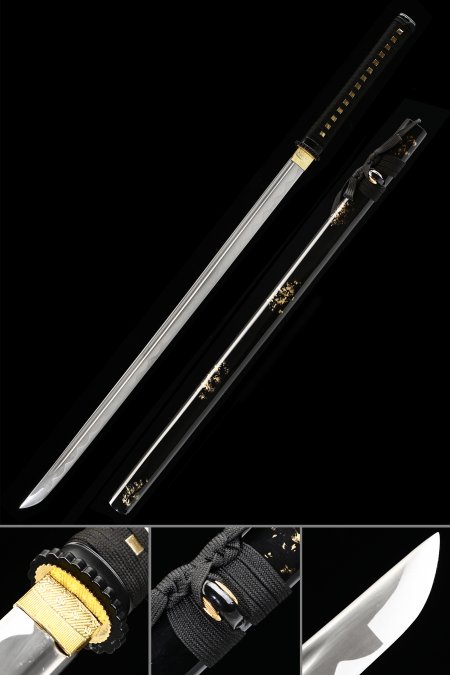
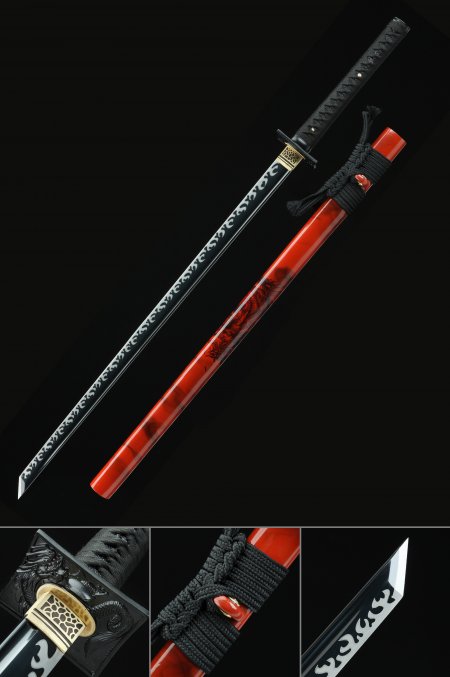
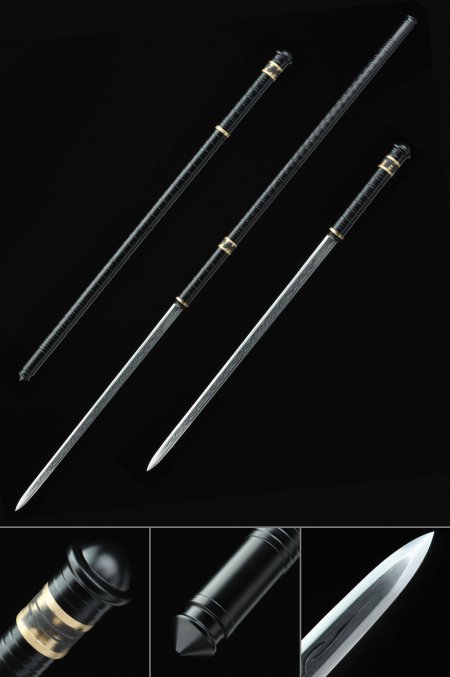
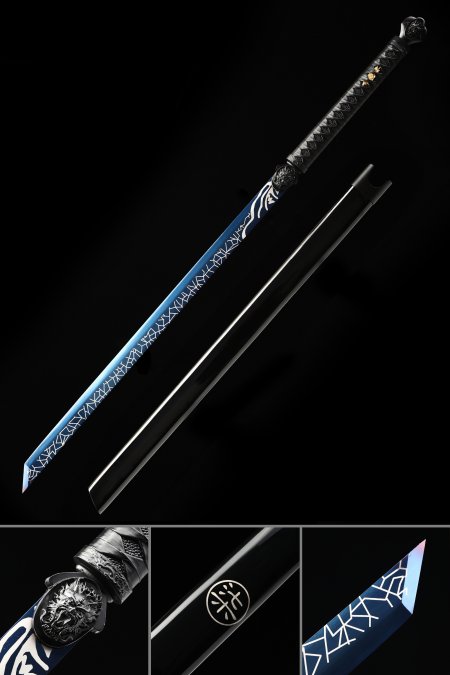
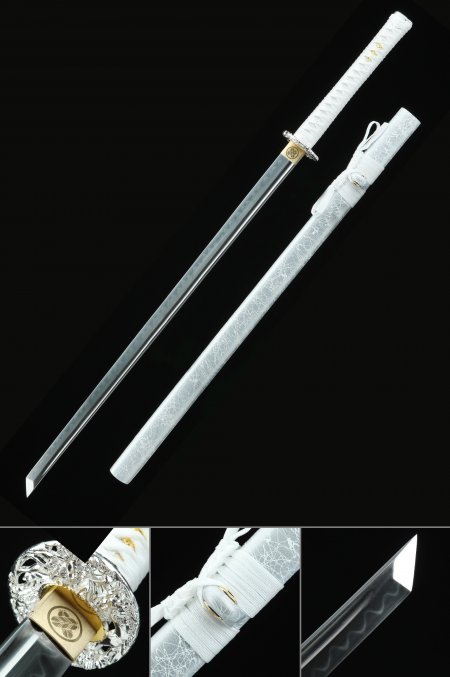
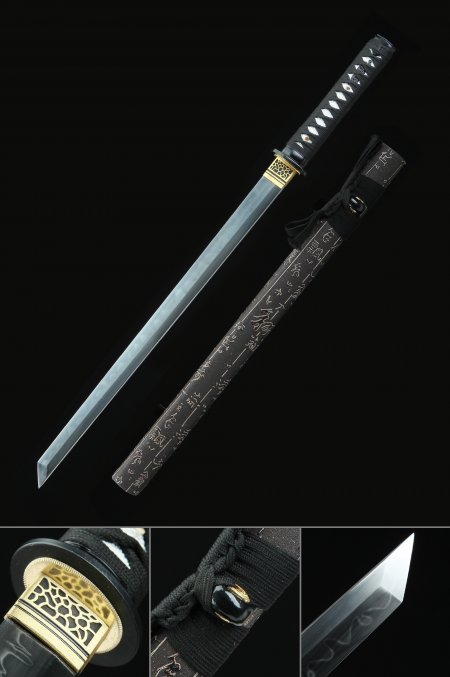
The most immediate distinction is blade geometry. A katana features a pronounced curve — the sori — that develops during the differential hardening process. A ninjato, by contrast, has a straight or minimally curved blade, typically with a squared or simple tsuba and a shorter overall profile. This straight silhouette creates a very different display presence: more geometric, more architectural, less fluid than the katana's familiar arc. The white saya amplifies this linear quality, making the piece read almost like a sculptural object when displayed horizontally on a stand. Collectors who already own curved-blade pieces often find a straight ninjato adds meaningful visual variety to a display wall without duplicating what they already have.