How does clay-tempered T10 steel compare to Damascus in this collection?
Updated Mar 2026
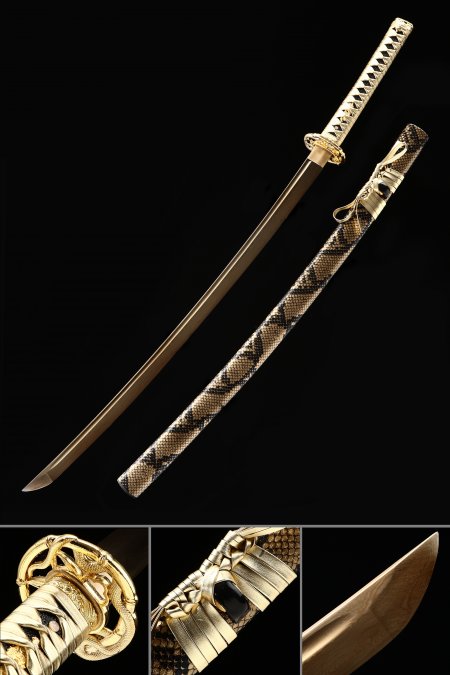
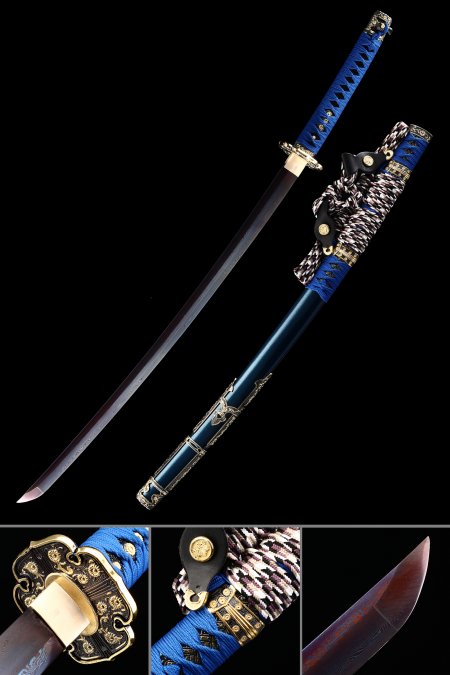
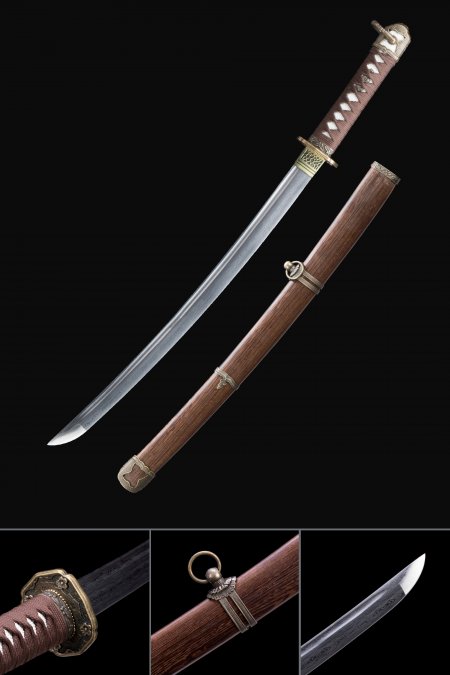
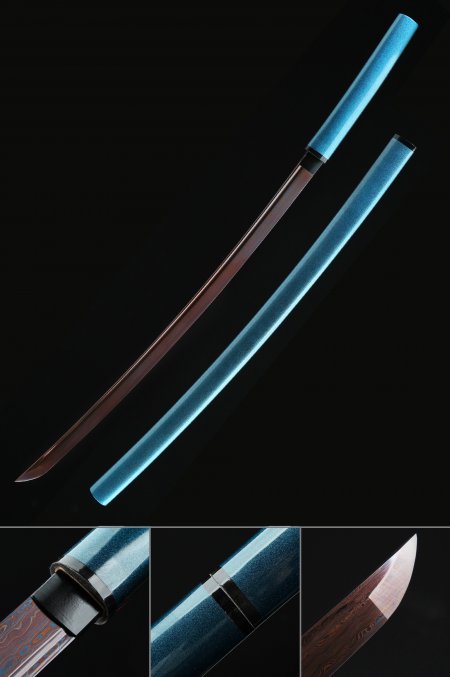
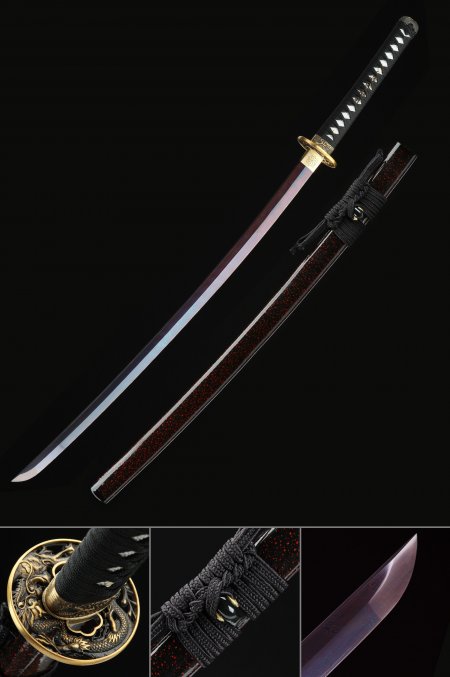
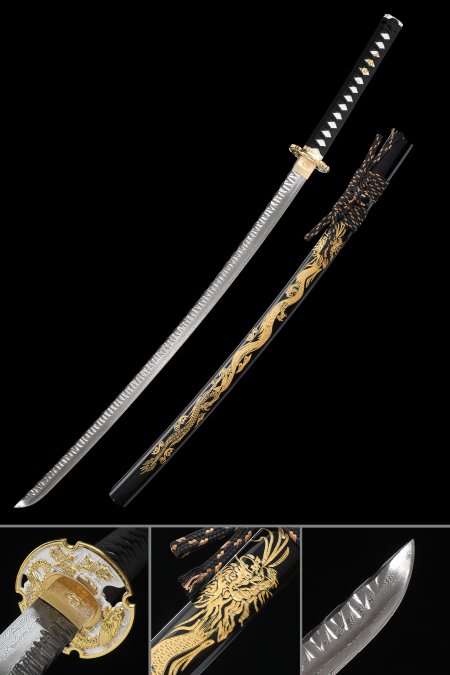
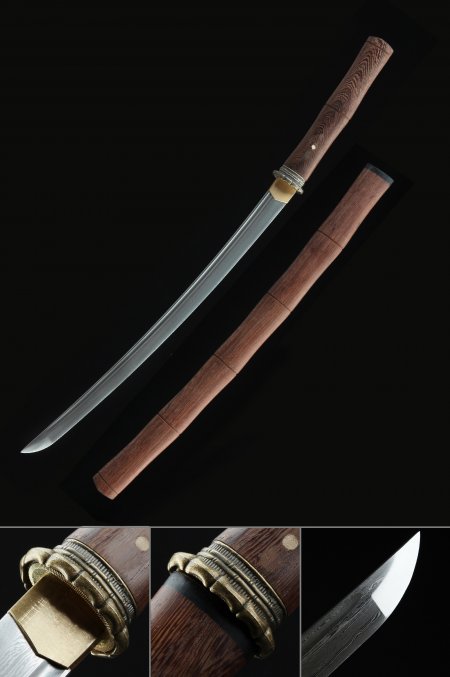
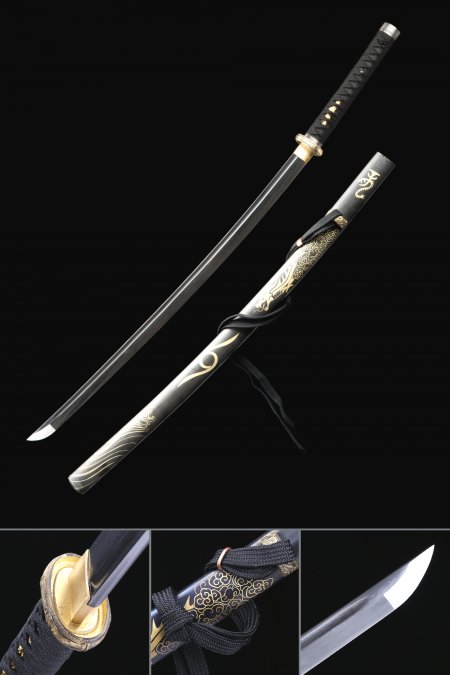
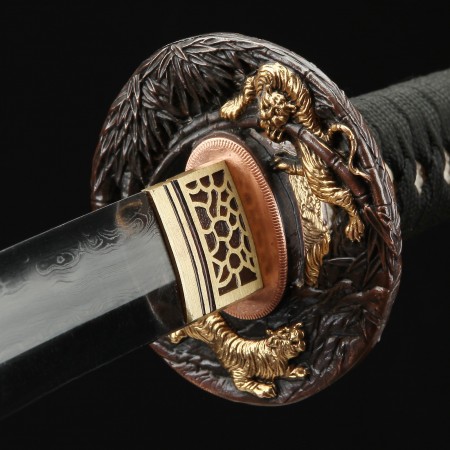
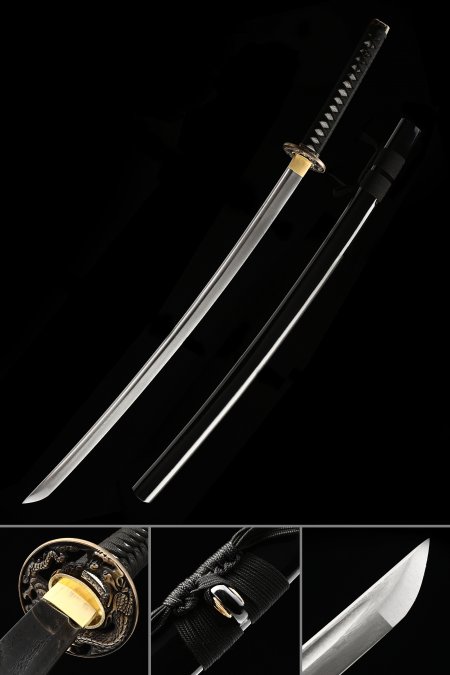
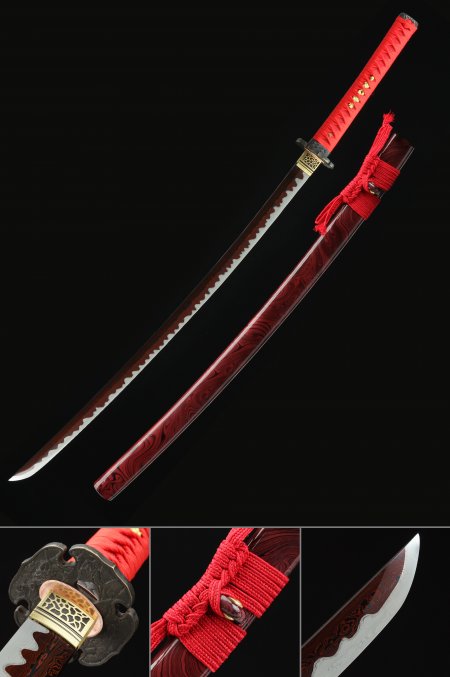
T10 tool steel is a high-carbon alloy prized for its edge retention and responsiveness to clay tempering. During the clay tempering process, a thick clay slurry is applied to the spine and removed from the edge before quenching, creating differential hardness across the blade. The edge hardens to a high Rockwell rating while the spine remains relatively flexible. The visible result is a genuine hamon - the undulating temper line that runs along the blade's length. Damascus steel, by contrast, is formed by forge-welding multiple layers of steel together, then drawing, folding, and acid-etching the billet to reveal its layered grain pattern. Damascus pieces in this collection are valued for their surface artistry rather than differential tempering. Both are legitimate collectible-grade constructions; the choice typically comes down to whether a collector prioritizes hamon visibility or surface grain aesthetics.