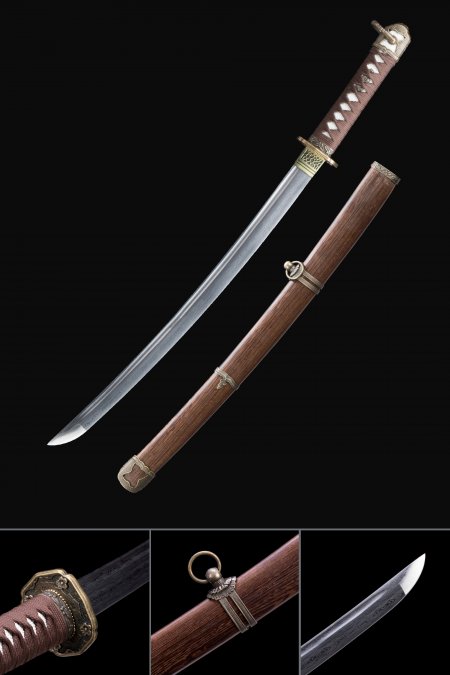
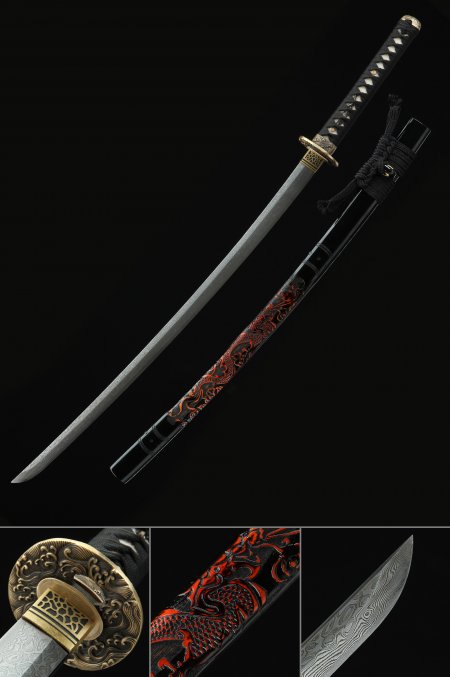
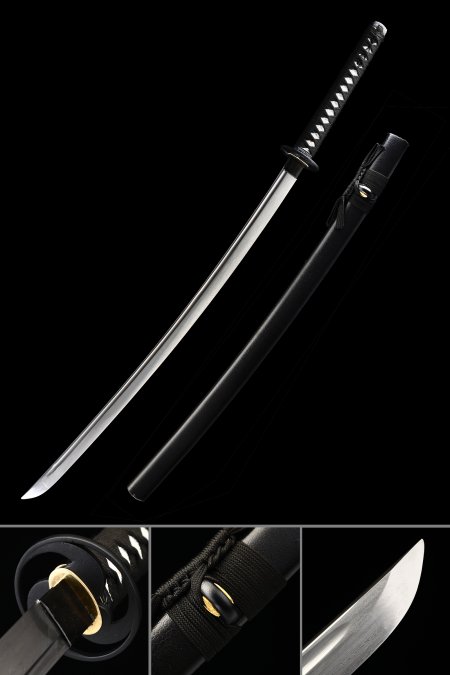
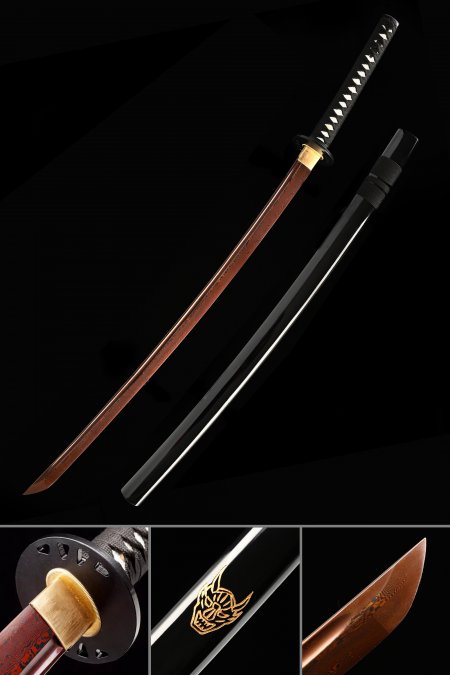
What gives flame blade katanas their fire-like appearance?
Updated Mar 2026
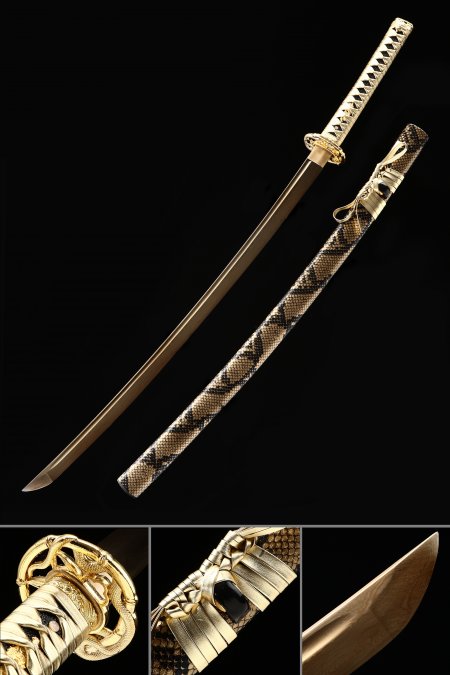
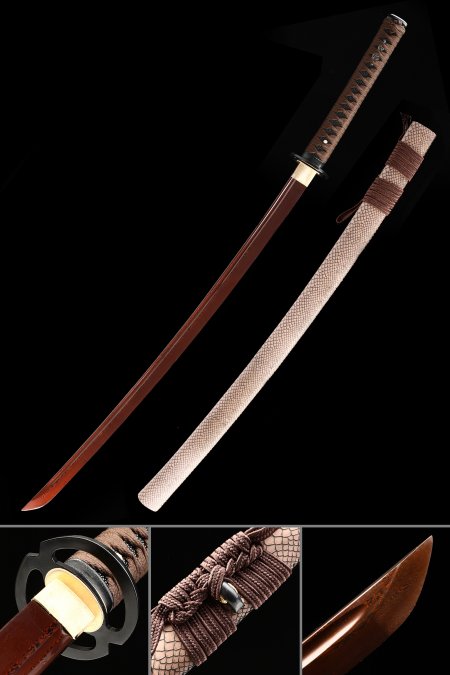
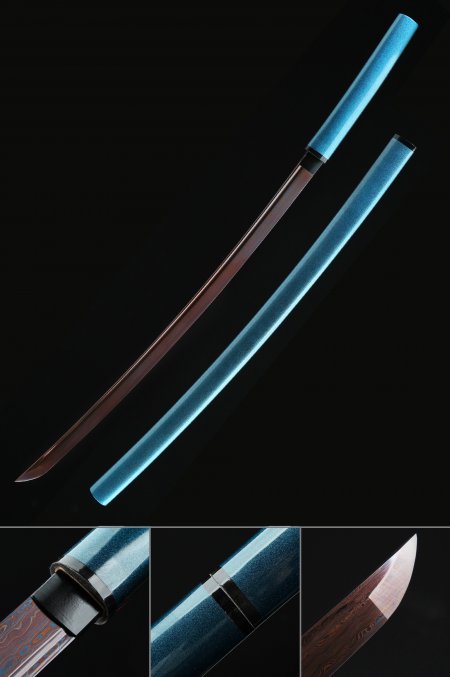
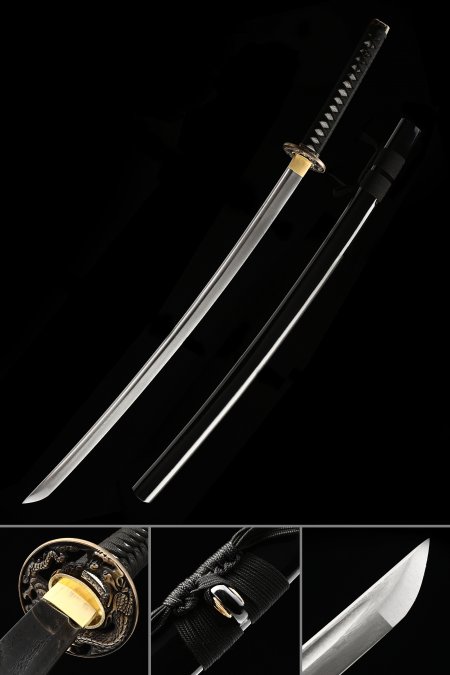
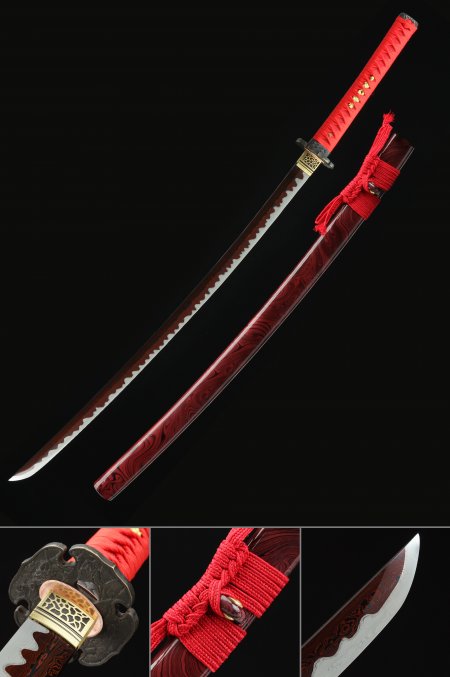
The flame aesthetic in this collection comes from two distinct sources depending on the steel used. On T10 clay-tempered blades, the hamon — the visible line created during differential heat treatment — naturally forms in undulating, wave-like patterns that closely resemble rising flames. This effect is a genuine byproduct of the tempering process, not a surface treatment, meaning it is permanent and unique to each blade. On manganese steel blades, the flame pattern is achieved through precision engraving directly into the blade surface, allowing craftsmen to render detailed fire motifs with clean, consistent lines. Some Damascus variants combine both approaches, layering folded steel patterns beneath engraved designs for a multi-dimensional visual effect. Understanding which technique was used on a specific piece helps collectors appreciate exactly what they are looking at.