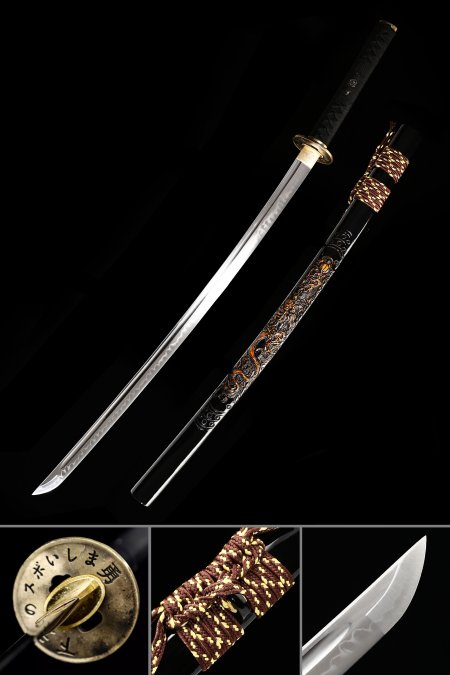
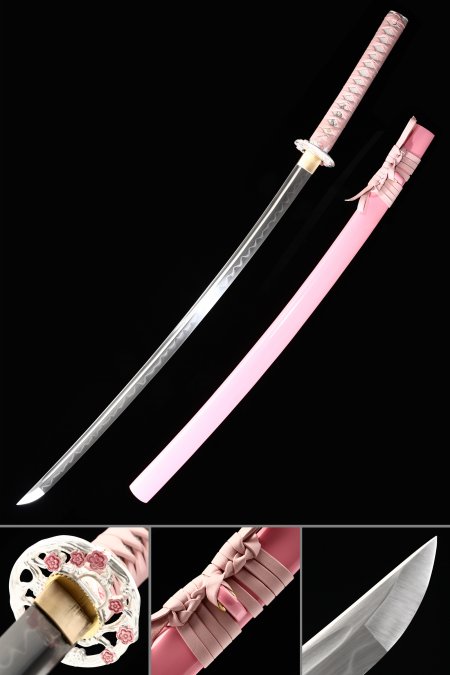
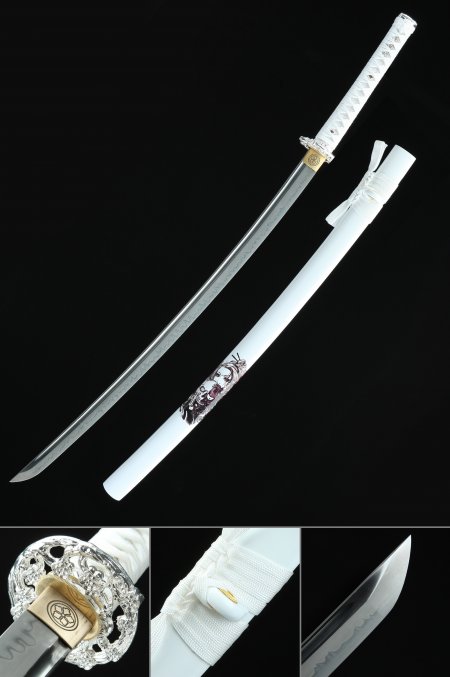
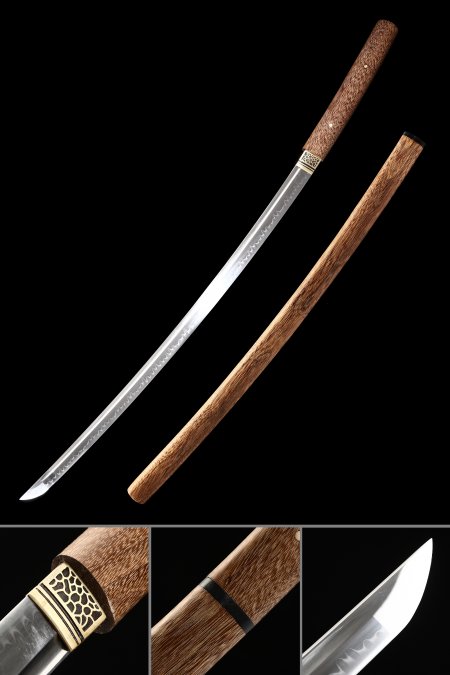
What makes T10 steel different from 1095 in a katana?
Updated Mar 2026
Both T10 and 1095 are high-carbon steels popular in Japanese sword reproductions, but the key distinction is tungsten content. T10 contains a small controlled addition of tungsten that refines carbide distribution throughout the grain structure, yielding a blade that holds a finer, more stable edge under repeated handling. In practice, a clay-tempered T10 katana typically displays a sharper hamon boundary and a slightly harder ha (edge zone) compared to a similarly processed 1095 blade. For collectors, this translates to more active hamon activity visible under raking light — nie particles and ashi lines tend to read more clearly in T10 blades. From a purely aesthetic standpoint, T10 polishes to a bright, clean surface that shows grain detail beautifully, which is exactly what you want when the blade is the focal point of a display.