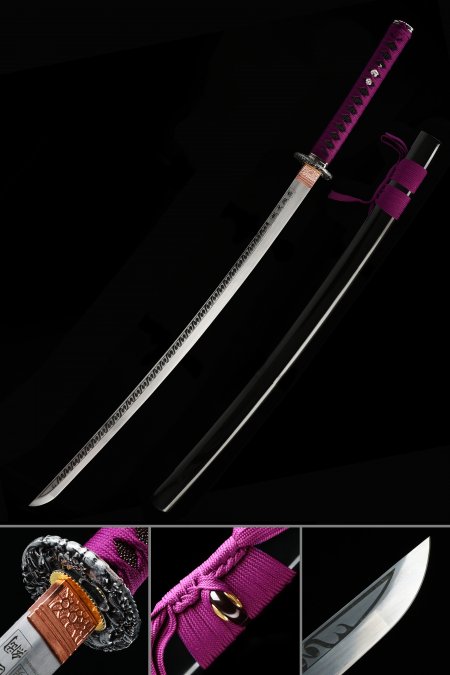
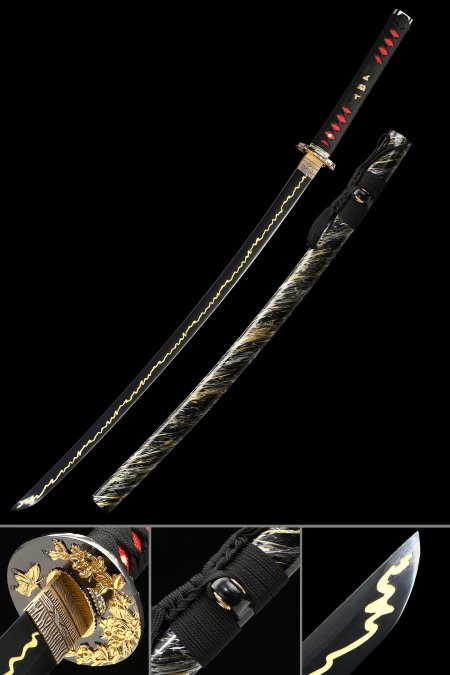
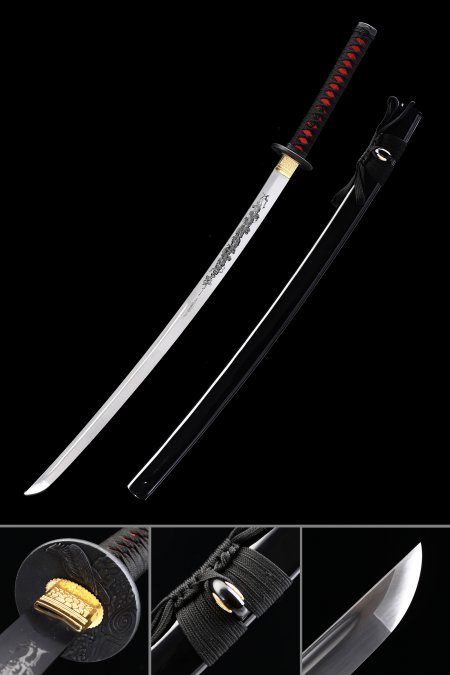
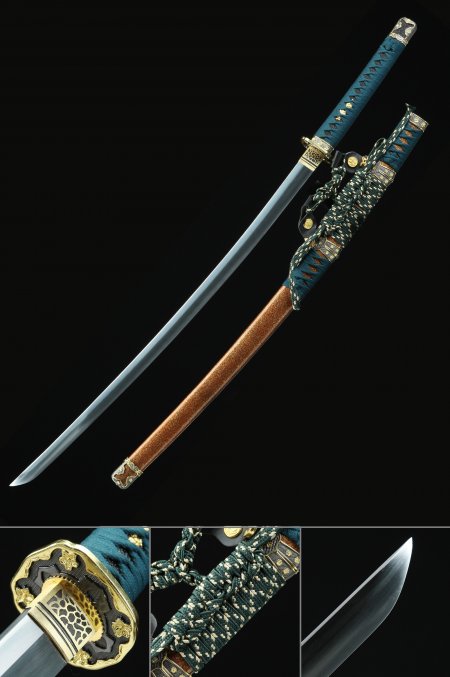
How is the hamon on a 1095 katana different from an etched hamon?
Updated Mar 2026
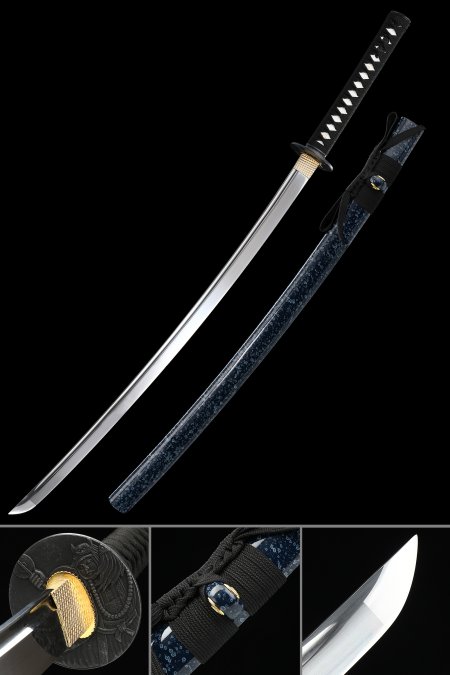
A real hamon forms during the clay tempering and quenching process, where differential cooling rates create two distinct steel microstructures in a single blade. The visible line between the hardened edge zone and the softer spine is a physical feature of the steel itself - not a surface treatment. An acid-etched or wire-brushed hamon, by contrast, is purely cosmetic: it sits on the surface and can be polished away, and the steel beneath is uniform throughout. On a properly made 1095 katana, the hamon can be observed shifting in appearance under different lighting angles, showing activities like nie (fine crystalline particles) and nioi (a misty transition zone) that are markers of authentic clay tempering. This is one of the primary quality indicators experienced collectors examine first.