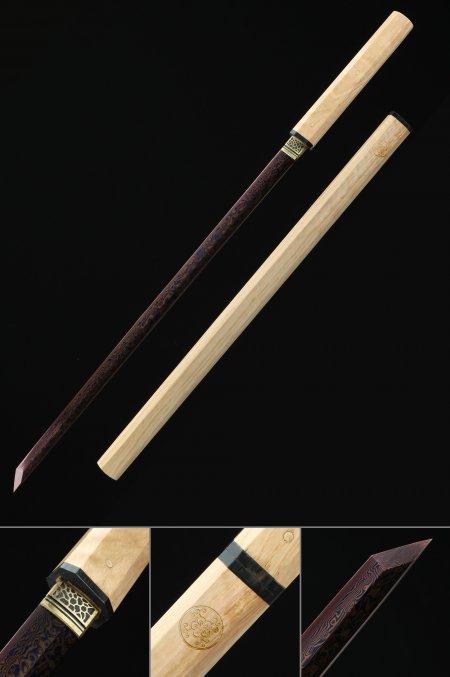
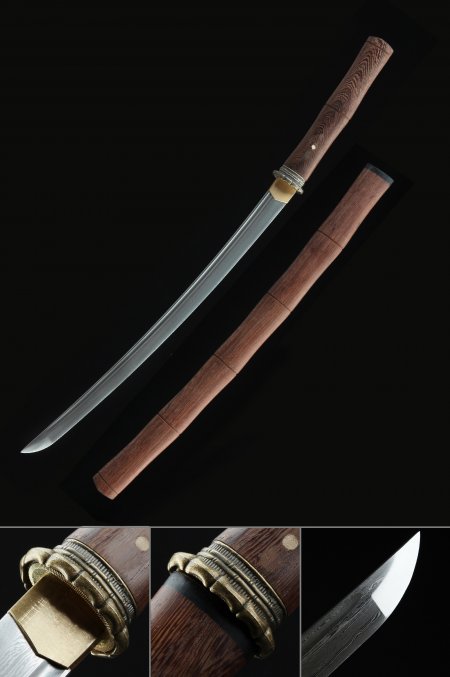
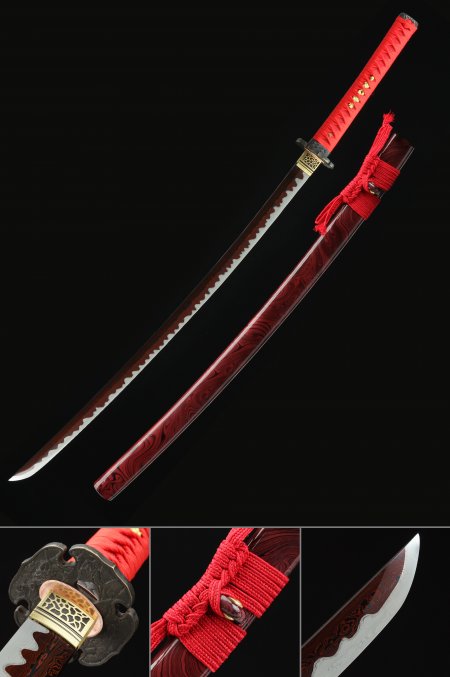
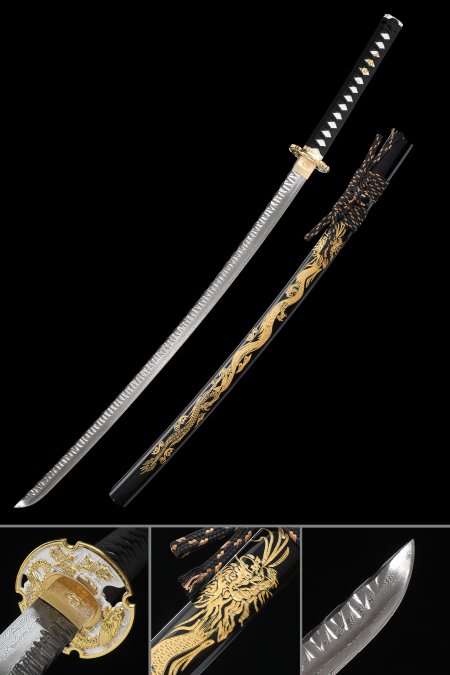
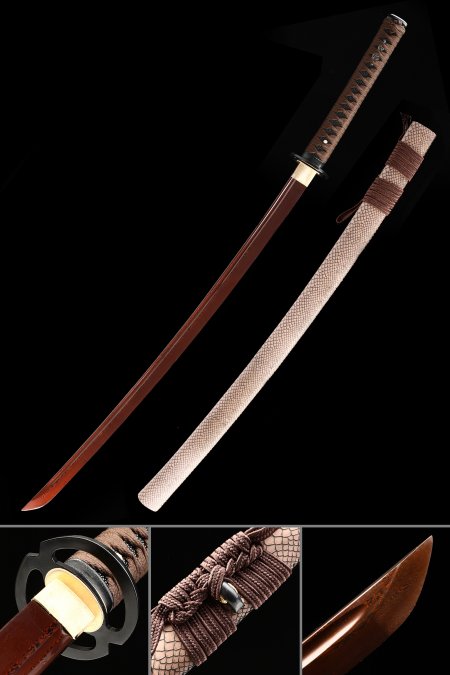
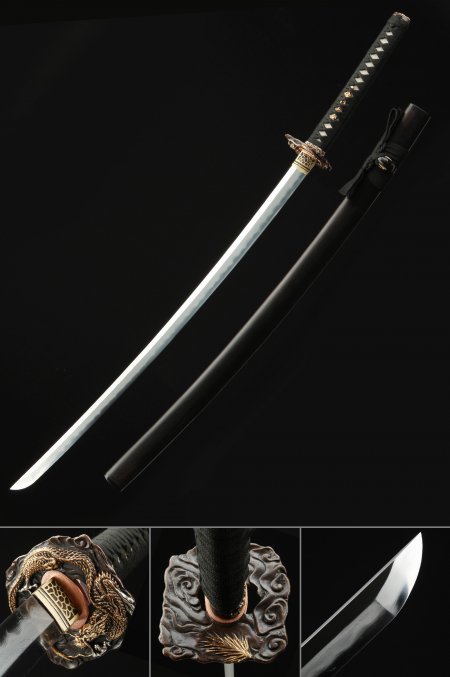
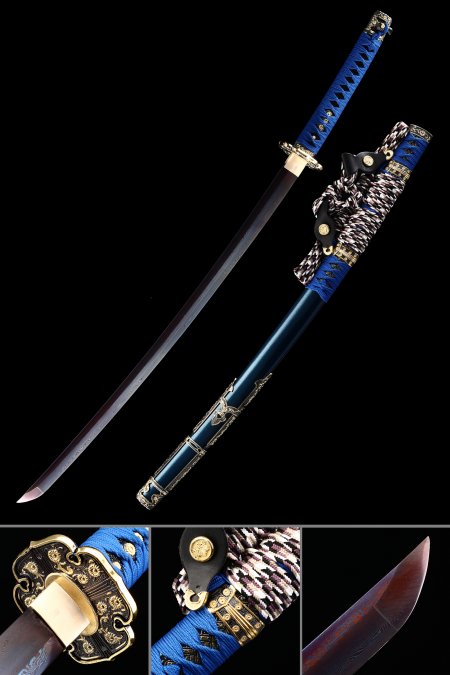
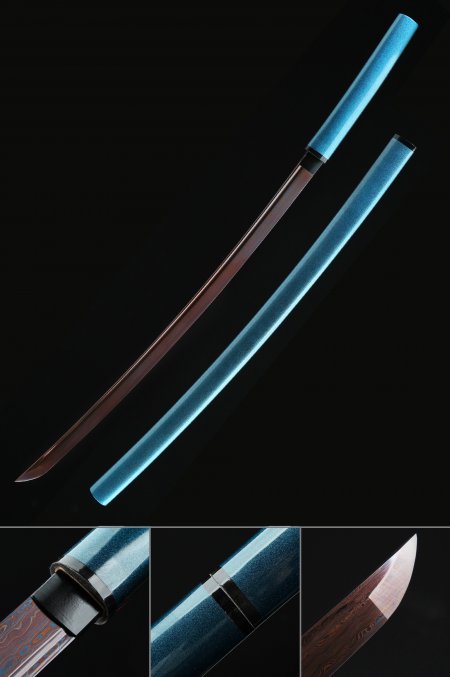
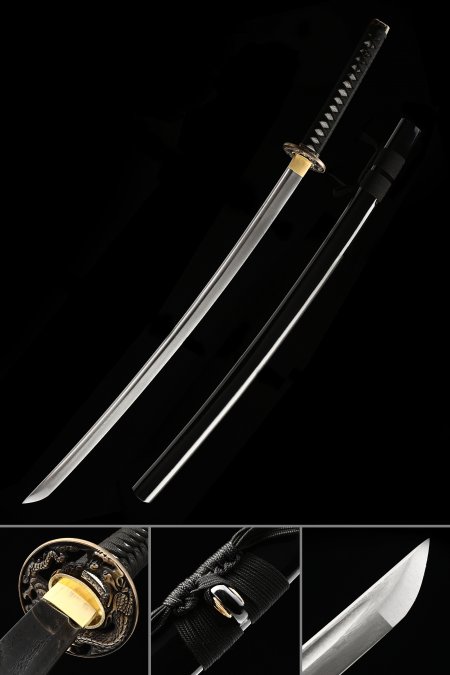
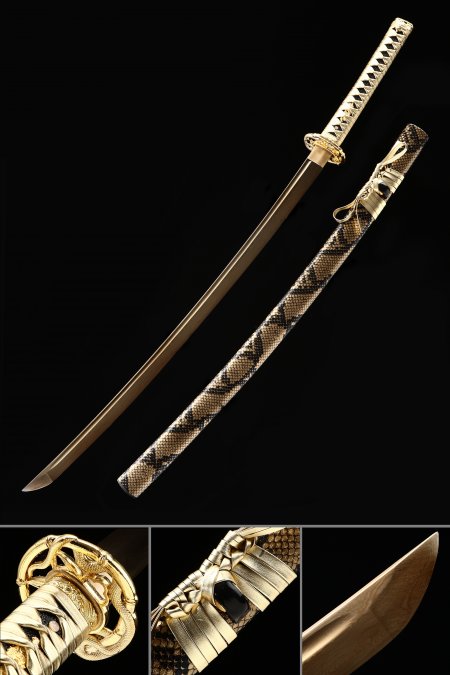
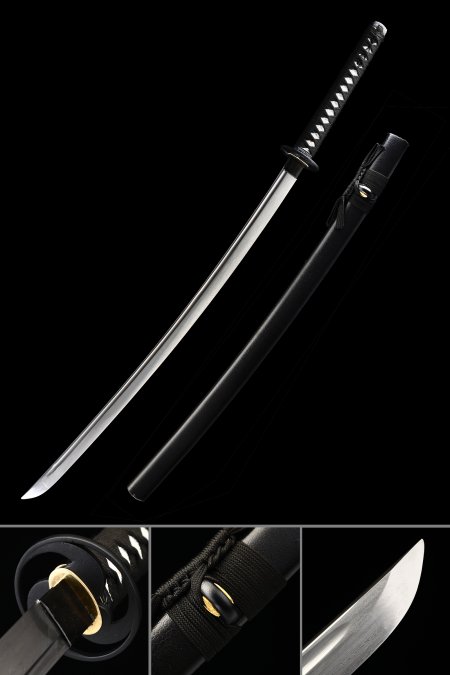
Damascus steel on a hand-forged tachi is not purely decorative, though the visual result - flowing grain patterns across the blade surface - is certainly a major part of its appeal. The material is produced by forge-welding layers of high and low carbon steel, folding the billet repeatedly to distribute carbon evenly and refine the grain structure. The result is a blade with good differential hardness characteristics and a surface that, once etched, reveals its distinctive patterning. For display collectibles, the combination of structural integrity and visual complexity makes Damascus one of the most sought-after materials. The layered billet also holds polish well and, when clay tempered, can produce a visible hamon that interacts beautifully with the surface grain.