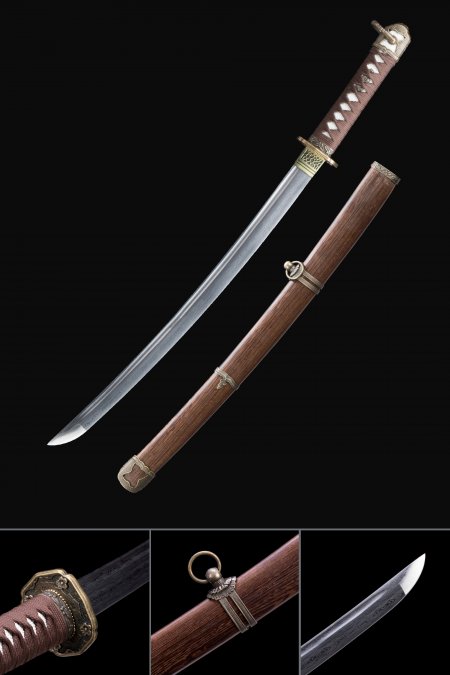
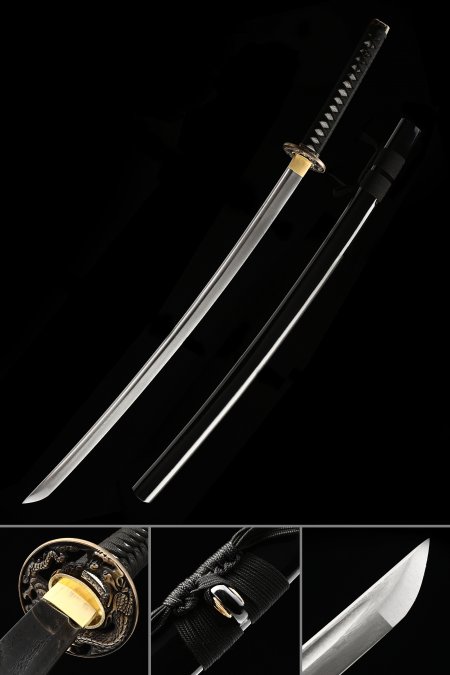
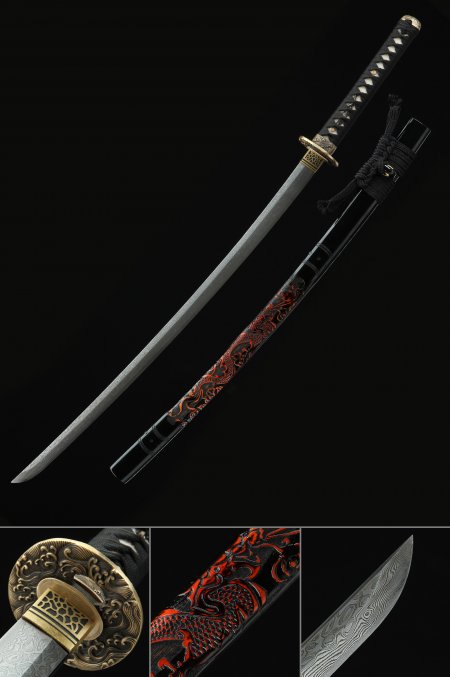
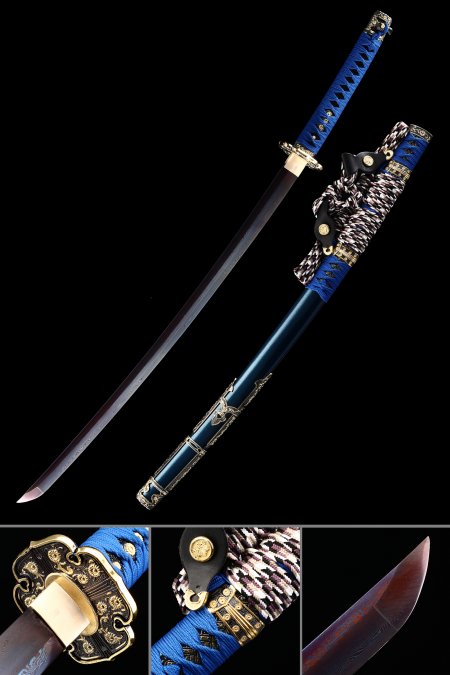
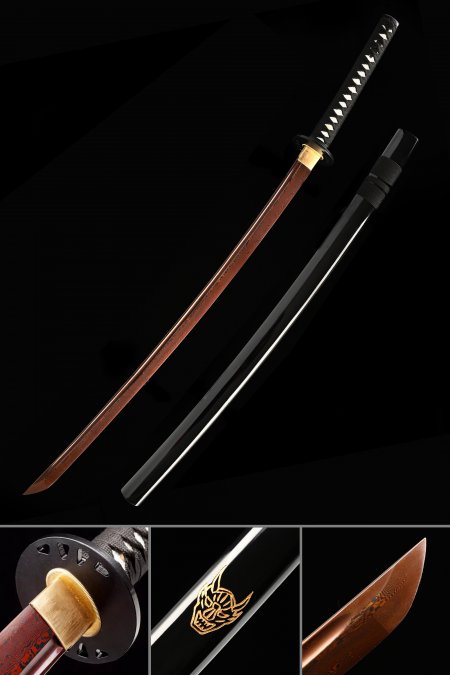
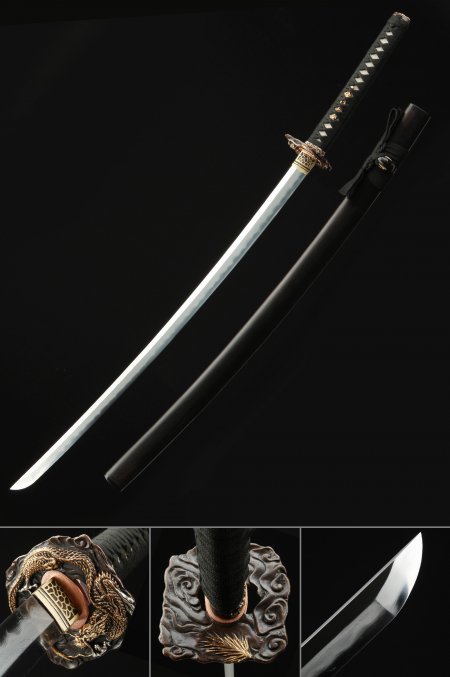
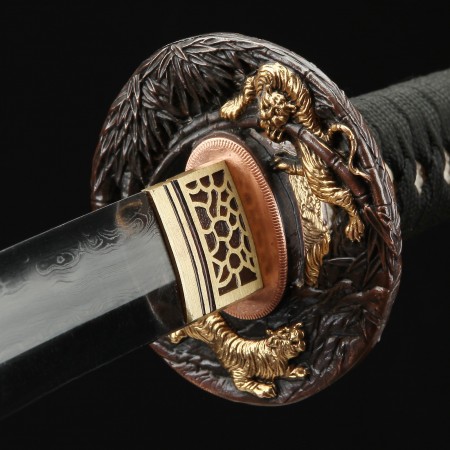
Clay tempering is the process of applying a thick layer of refractory clay to the spine of the blade before the quench, leaving the edge exposed or coated with a thinner layer. When the blade is heated and plunged into water, the exposed edge cools rapidly and hardens into martensite, while the clay-insulated spine cools more slowly and remains tough. The boundary between these two zones becomes the hamon - a visible line of activity running along the blade. On T10 and Damascus steel, this line often shows nie (bright, star-like crystalline particles) and nioi (a misty, glowing band), both highly valued characteristics in authentic hand-forged collectibles. No two hamon are identical, making each piece genuinely unique.