Is Damascus steel on a tachi purely decorative or does it affect quality?
Updated Mar 2026
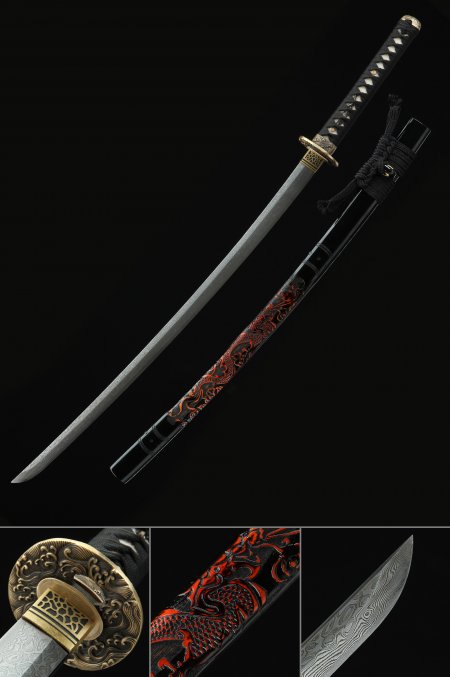
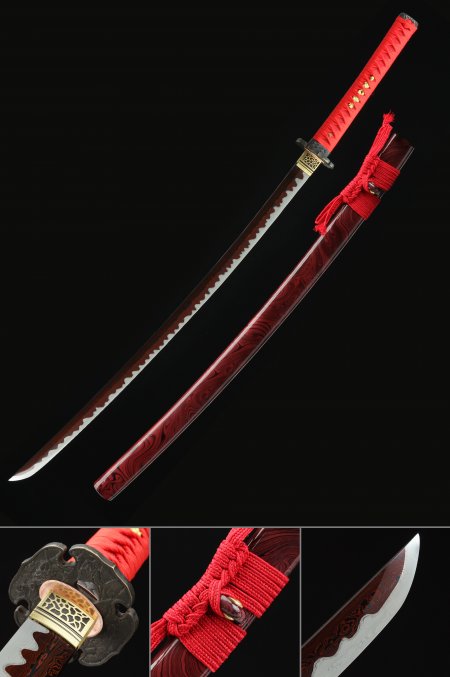
Damascus steel — produced by forge-welding alternating layers of high and low carbon steel, then folding and drawing them out — does have real metallurgical properties beyond its striking visual surface. The contrasting layers create a differential hardness across the cross-section, and the folding process refines the grain structure. That said, in the context of a collectible display tachi, the primary value of Damascus is its surface aesthetic: a flowing, wood-grain pattern unique to each billet that no two blades share. For collectors, this means every Damascus tachi in this collection is genuinely one-of-a-kind at the surface level. From a display standpoint, Damascus blades also interact with light differently than monosteel blades, the layered pattern catching and shifting as viewing angles change, which makes them particularly compelling as exhibition centerpieces.