How does T10 clay-tempered steel differ from 1045 in a ninjato?
Updated Mar 2026
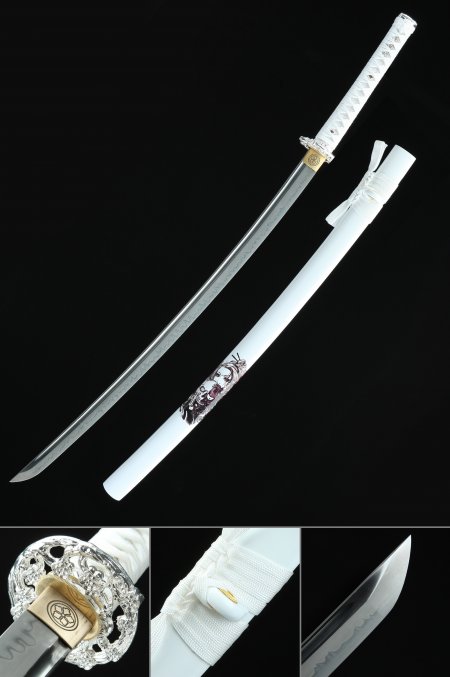
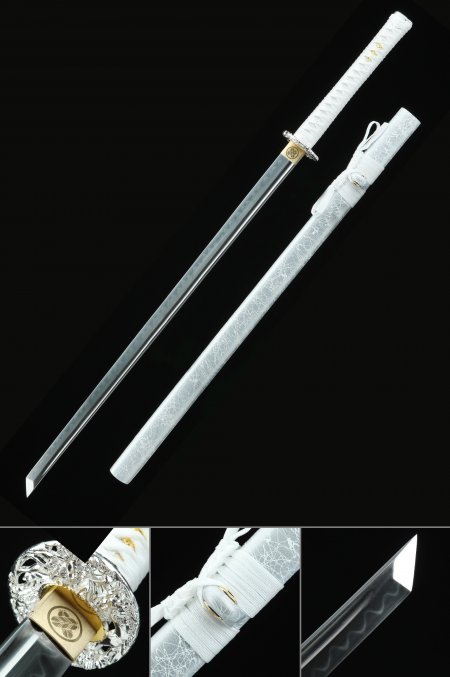
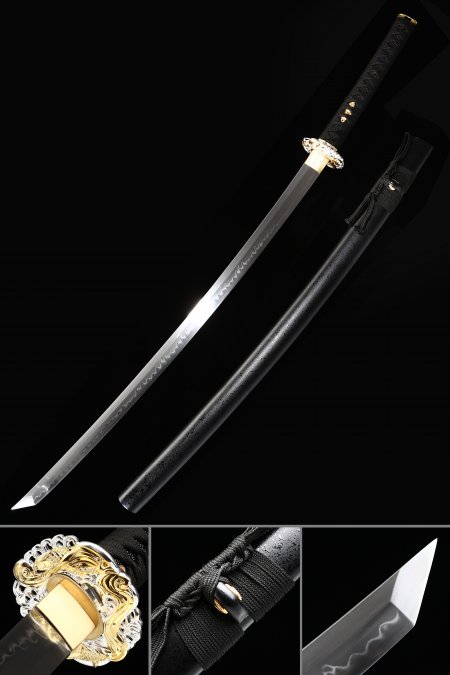
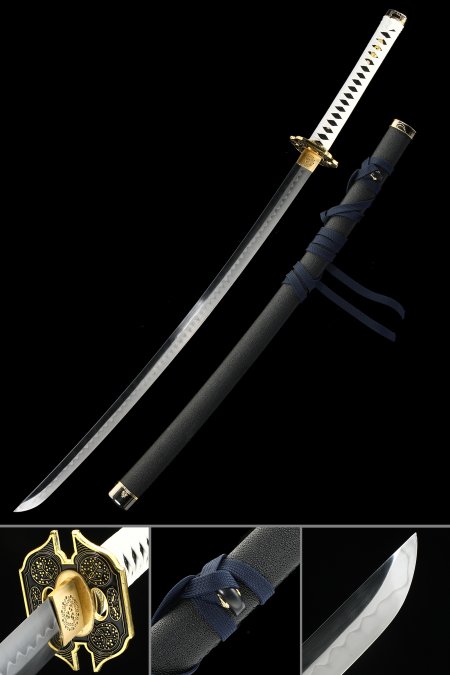
T10 is a high-carbon tool steel with trace tungsten content that increases wear resistance at the surface grain level. When clay is applied to the spine before the quench, the edge cools faster than the spine, producing a genuine hamon - a visible differential hardening line that runs along the blade. This is a traditional Japanese heat-treatment technique and is considered a mark of higher craftsmanship in collectible swords. By contrast, 1045 carbon steel has a lower carbon content (roughly 0.45% vs T10's ~1.0%), making it tougher and more forgiving but without the capacity to develop a true hamon through clay tempering. For display collectors, the practical difference is primarily visual: a T10 clay-tempered ninjato will show more surface activity and light variation along the blade, while a 1045 piece will have a cleaner, more uniform finish.