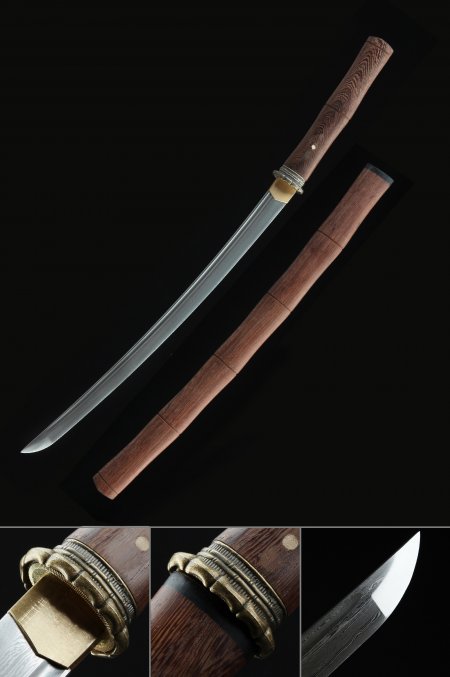
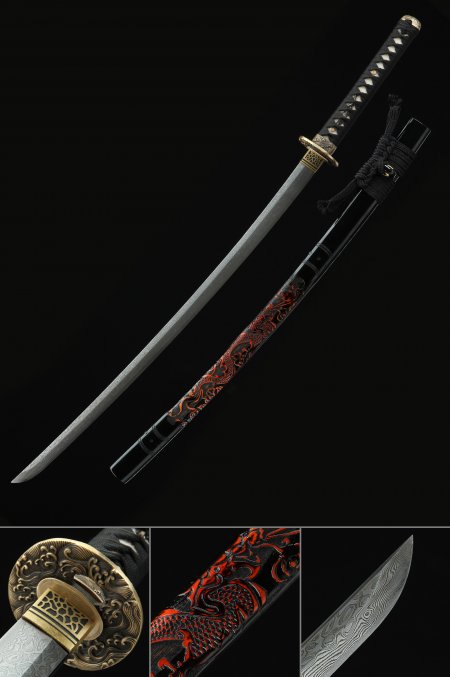
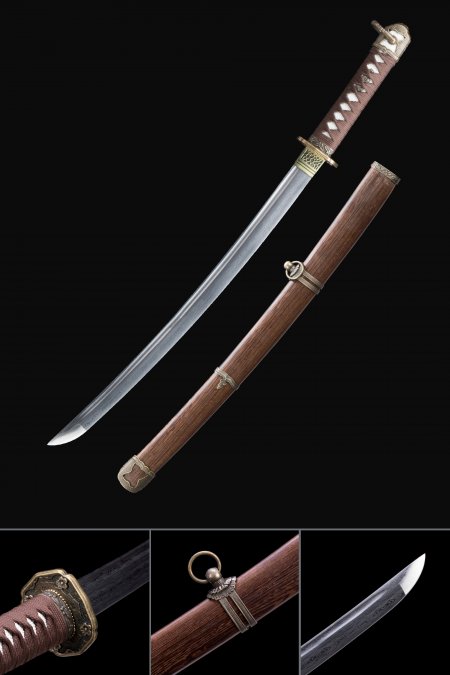
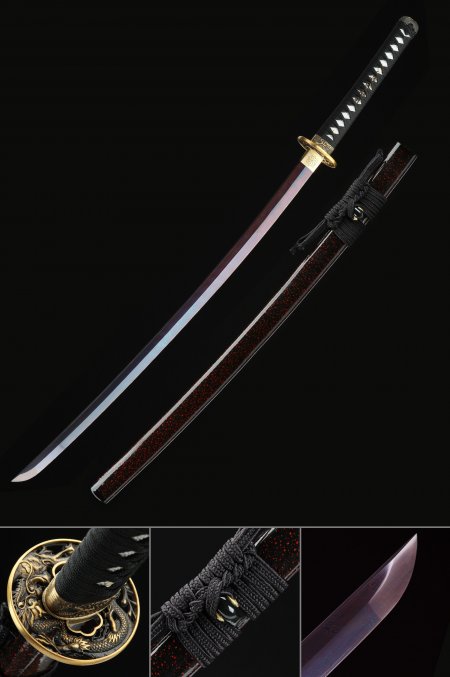
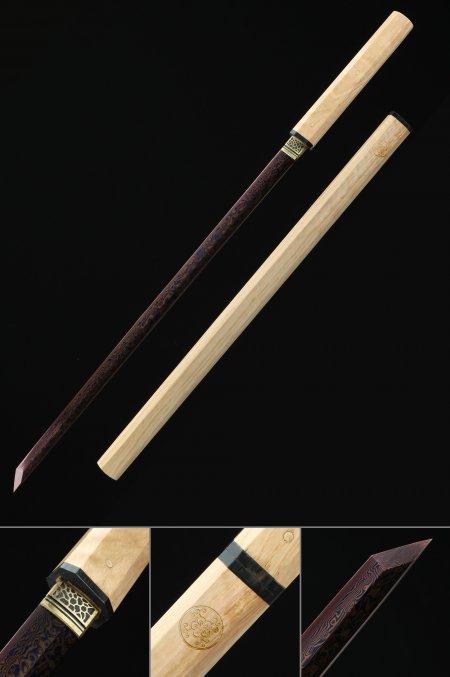
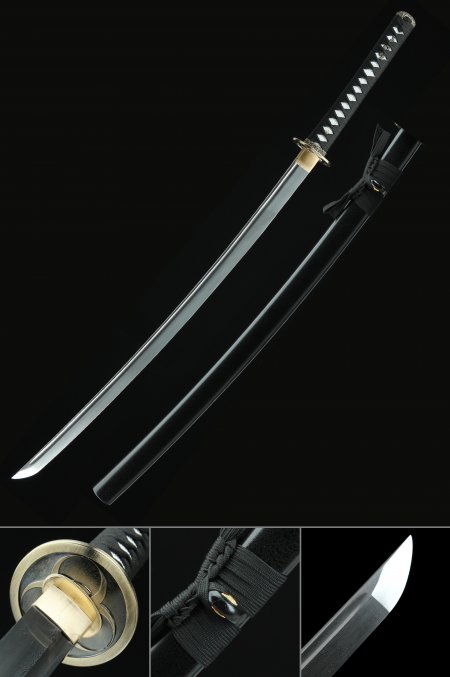
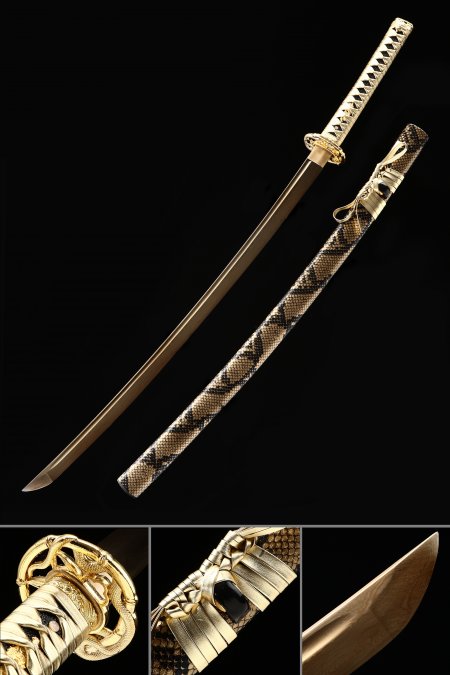
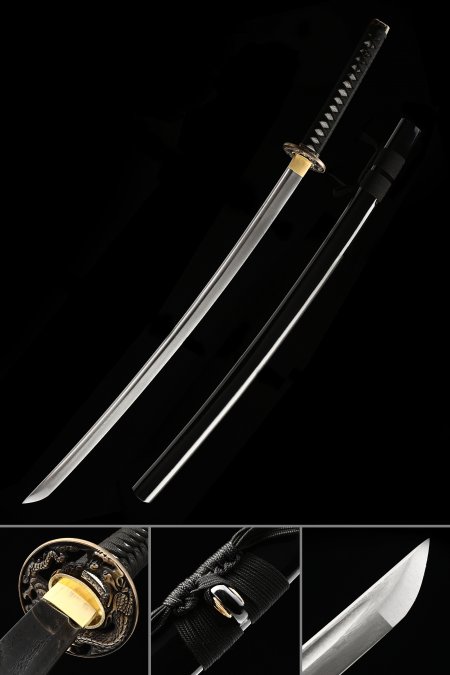
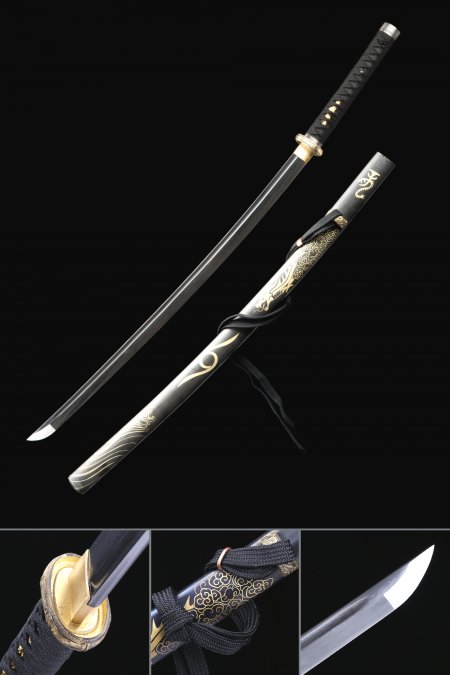
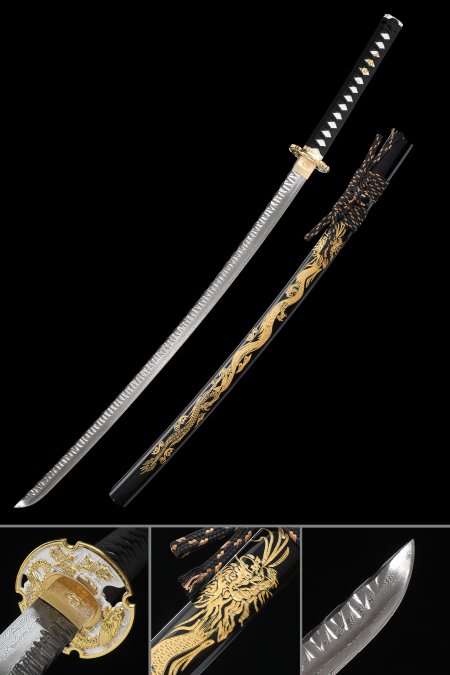
Damascus billets used in collectible katana are produced by forge-welding alternating layers of high- and low-carbon steel, then manipulating the billet through twisting, folding, or ladder-pattern grinding to reveal the characteristic flowing grain. In a display context, the primary value is aesthetic — the surface pattern shifts dramatically under different lighting angles, creating a visual texture no monosteel blade can replicate. However, the forge-welding process also produces a blade with varying hardness zones across its cross-section, which is a legitimate metallurgical characteristic rather than a purely cosmetic one. Collectors who appreciate Damascus pieces typically do so for the combination of surface beauty and the visible evidence of skilled forging work.